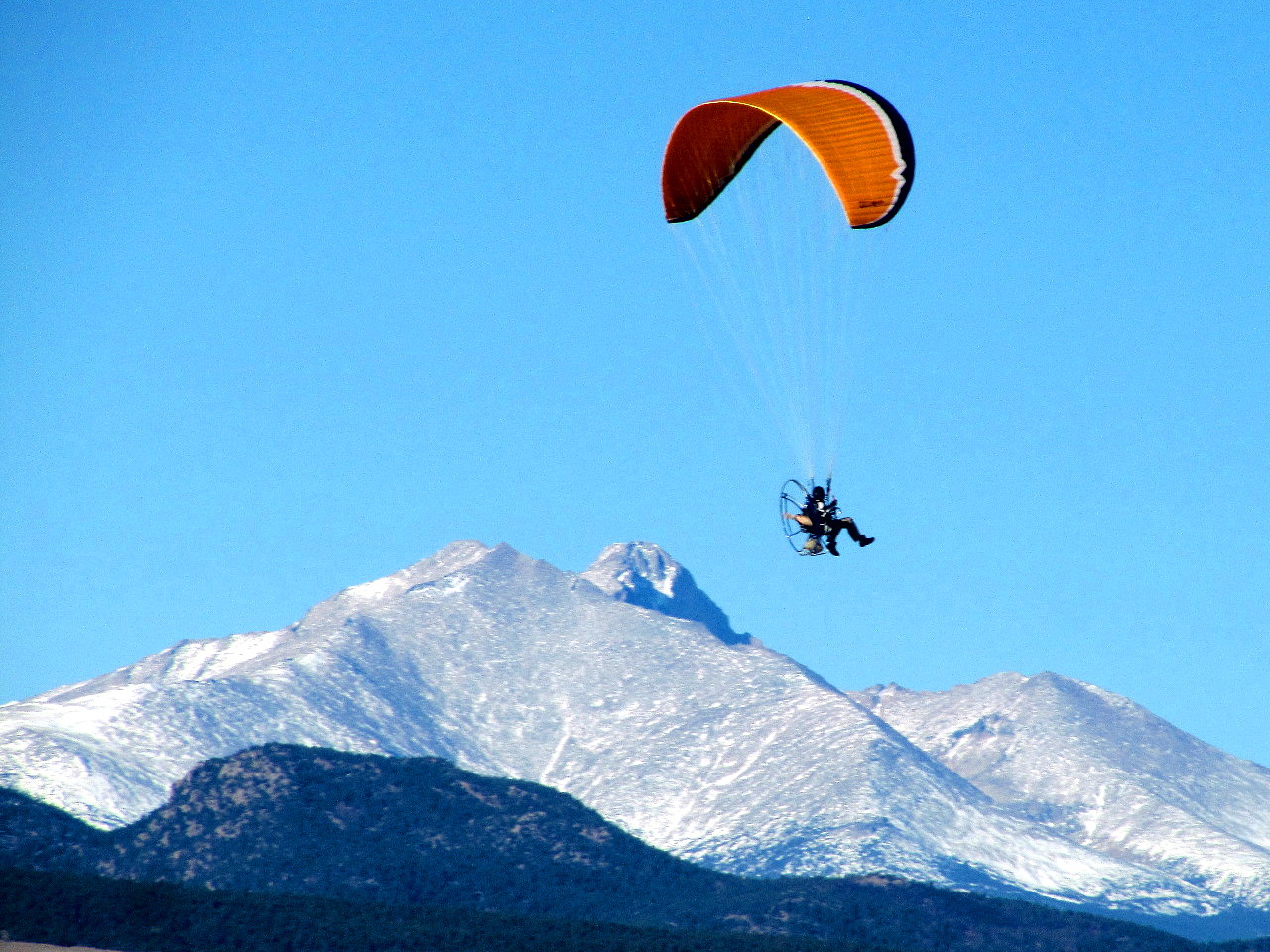
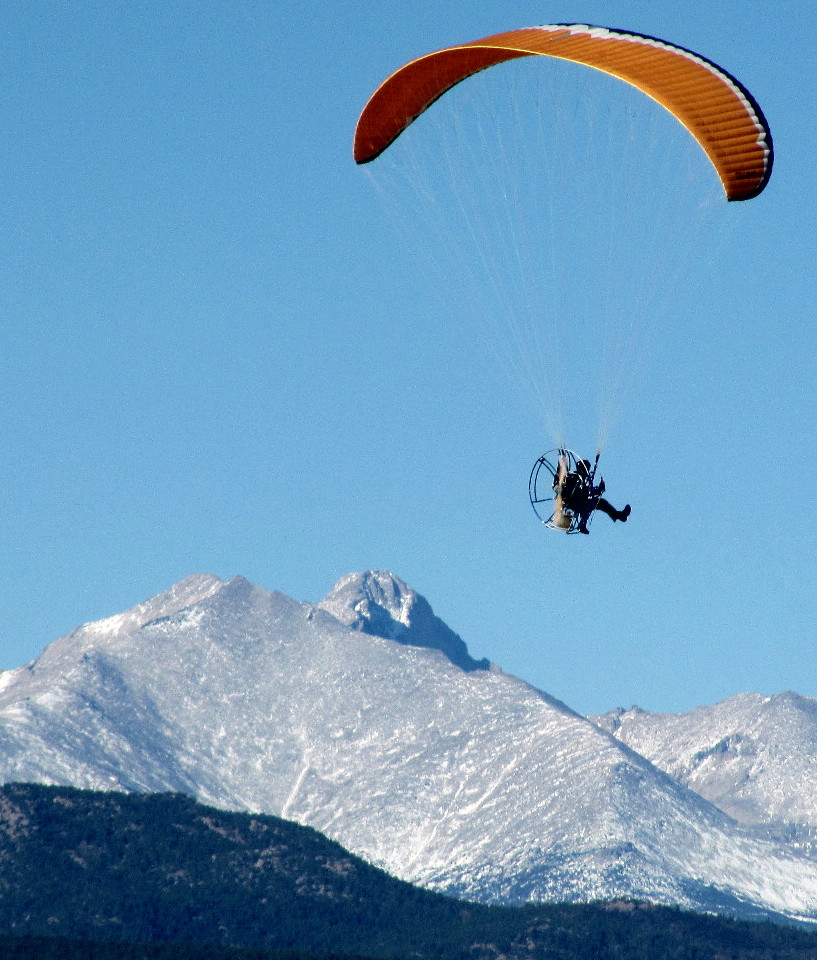
It was 42 degrees at home when I left for Vance Brand Airport. At Vance Brand it was 32 degrees. Damn ,I hadn’t prepared for flying in weather this cold. The weather prediction was for high winds but right now the wind was very light and running perfectly to use the road as a runway. The take off was smooth, the wing came up so clean and straight and I had to check to make sure that it was really stable and overhead ….I did pop up and touch down but there was no torque, so I guess moving the right hang point forward was the right thing to do. Once up… it was smooth but blowing much harder than at the surface. I stayed below 1000 feet and practiced carving turns with the trimmers in. It was amazing how much higher the wind was just above the surface. I was looking at the wind sock just barely lifting the tell tails while at 200 ft AGL it was topping 40 mph on the gps. During the 40 minute flight it shifted 180 degrees and I felt several “bangs” where the convergence was happening. The landing was picture perfect I could hardly feel when I touched down. Nice flight… WhenI got back to Boulder the winds had picked up close to 20 mph.
We left Johns house at 10:30am and arrived at the Salton Sea 4:45am. Unlike previous years we had chosen to “Power Drive”, to the Event rather than spend a night in Las Vegas. It was partly budget and part timing but it was quick and fairly painless for us to take turns and keep moving. As soon as we arrived, John set right out to build his campsite, while I stretched out on the front seat and napped till dawn. We set-up in my favorite spot behind the swimming pool. I was happy to see that we were the first ones but sad that the area wasn’t the grassy park that I remembered. They had stopped watering and the grass and it had all died, but…. there was shade and it was better than pitchin a tent on a dusty desert road adjacent to the field.
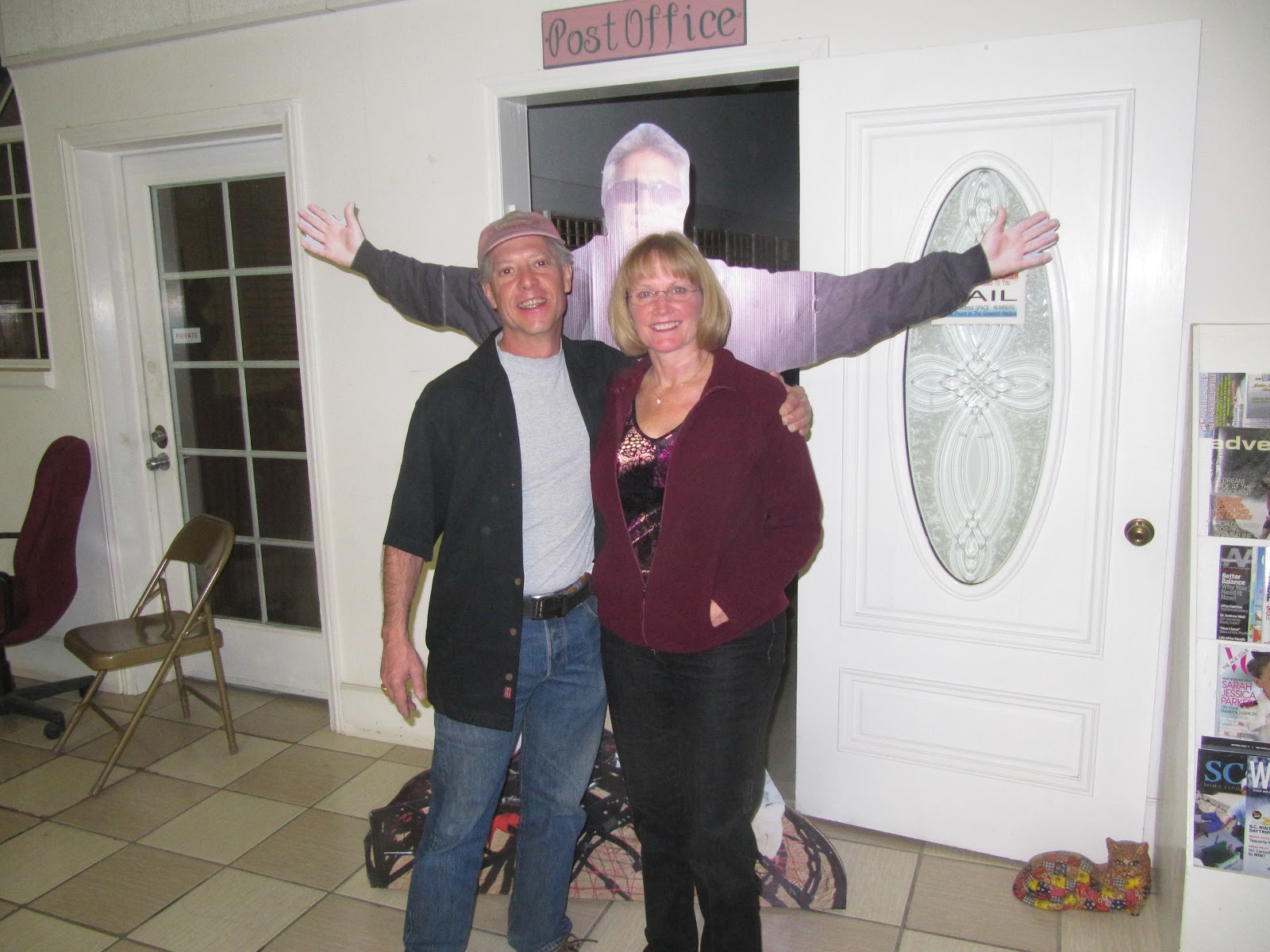
At 8 am it was a beautiful morning with light winds coming from the lake. John and I loaded the truck with our paramotors and drove to the field. The first thing I noticed as we walked up to the Registration tent was a life size cutout of Bob Armond standing by the entrance with his arms spread and a sign saying “Free Beer Tomorrow”. Some people were offended, but I just smiled and said “Yeah Bob”. We paid our fees, collected our Bob Armond Memorial T-Shirts and moved out the field to fly.
Michelle Danielle…Joe Onofrio…Jorden Danielle BOB ARMOND in SPIRIT
My first flight was special. I cruised the area and visited places I had fond memories of. There…. was the spot where I distroyed the Simonini Trike Buggy after launching with a huge tumble weed caught in the lines and there… was the old dome where my first Paratoys was held, I came here with Brian Smith all those years ago. I worked on trimming the wing that wanted to turn to the left regardless the wind direction. After some experimentation I was able to fly straight with the right trimmer out two stops. I was flying straight and feeling good about it but something was out of balance and it would take some time before I discovered the problem. I was not sure if it was the wing or the hang points.
The afternoon was marred when Phil Russman and Mike Robinson had a mid-air collision about 30 feet up over the LZ. I don’t know who was at fault but words were exchanged and Phil was asked to leave. At 6:00pm Mike called a pilot briefing and chewed the bunch of us out for a litany of wrongs. We had all received a page of rules but, as usual, the day before the fly-in, nobody was paying attention to the rules. I was no angel…, when the landing area was full of wings and I was out of gas, I decided to hell with it and landed in the launch area. We were all guilty. Bob was gone and this “new boss” just didn’t have our attention.
The event was not starting off well. The biggest problem was stolen equipment. One pilot had a wing stolen when he landed out and had to leave it behind while he carried his motor back to the field, other stuff was stolen from the Vendor booths and there was some money missing. Now…., I’ve been to many fly-ins and theft had never been a problem, so this was something new and not a good sign, for this fly in or future ones. It is no secret that Mike doesn’t love doing the Paratoys event and was planning to make it every other year instead of annually. So standing there in the twilight, listening to the ass chewing, I wondered if this might not be the last Paratoys Fly-In, at least the last one at the Salton Sea.
Day 2
Great day! Four long flights in T-Shirt weather. After dinner I hung with Chad and Greg until it was time to meet Dawn and show her the way to the Fly-In.
Day 3
Nice casual breakfast then out to the field to walk the line and introduce Dawn to the community. While Dawn and I were chatting with Michael Purdy we heard that there were 35 mph gusts west of us at the gas station … 10 minutes later it hit. A huge wind front blasted through the flight line. It was strong enough to rip the windsock from it’s mast at the center of the field. There were about a dozen pilots in the air and it was clear they were in trouble. All but one were able to get down, with only minor injuries and equipment damages. The last pilot was blown off shore. Dawn and I watched him work his way back to the beach only to be blown back out over the water every time he descended to land. Finally he went for altitude and was blown out of sight. I remember thinking that we were watching a man flying to his death.
(This is an excellent interview with Jeff Goin and Lance Marzack discussing the wind front that could have been a disaster.
The wind didn’t look like it was going to moderate so Dawn and I jumped into the truck and drove to the other side of the Salton Sea. I wanted to show her Salvation Mountain and I thought that if the lost pilot had been blown across the Sea we would at least be on the east side to offer him a ride. I caled Paratoys and told Brian where we were just in case he wanted us to do a recovery.
Salvation Mountain
The winds were light when we got to the East shore but twenty minutes after we arrived at Salvation Mountain the wind picked up and continued to build. It was not as strong and didn’t on as abruptly as it did at the field, but it was steady and it was clearly not going to be flyable, probably for the rest of the day.
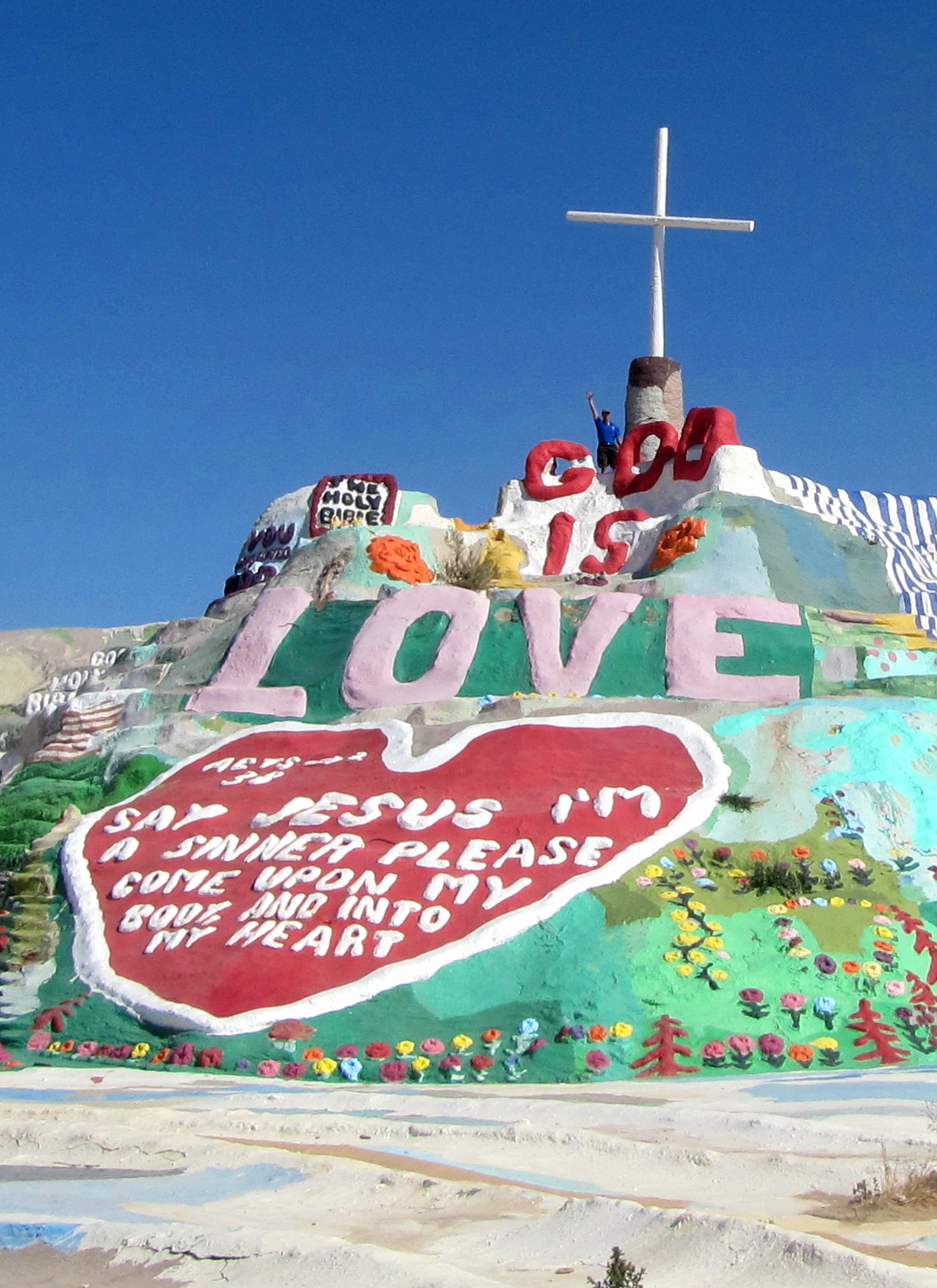
Salvation Mountain, …one mans mission to praise the lord with nothing but a bunch of paint and desert sand. Apparently “Old Lenard”, had been sick because we found “Get Well” letters tucked in little alcoves for him to find when he returned. After wandering around and taking pictures we went in search of Slab City. Last year I drove around for an hour and got hopelessly lost trying to find “The Last Free Place in America”. Slab City was made famous by the movie, “Into the Wild”, it is a squatters camp situated on the site of George Patton’s WW II training base. I was expecting a happy hippie commune but instead found only abject poverty, there were several dozen decaying RVs and makeshift shelters scattered across the desert. Some had the appearance of something out of the “Burning Man Festival” others spoke of refugees or counter culture fugitives. Needless to say Dawn and I were underwhelmed and only to happy to turn the truck into the wind and head back to the east shore to get ready for the big banquet.
ParaToys
This year it was a celebration. Our lost pilot had been found. We started the Banquet by having the lucky pilot telling his story.
Rich Kennedy “The Lost Pilot”
Rich Valentine had been in the air for 20 minutes when the gust front arrived. He was on the beach and quickly blown off shore. The winds were higher at the surface and so he found himself flying a box. At 1000 feet he was able to penetrate the gust and fly toward the shoreline only to be blown back over the water when he descended to land. After three or four cycles he looked at his gas and decided that his best chance was to run with the wind and make for the far shore 12 miles west. With a 40 MPH tailwind he arrived at Bombay beach in less than 15 minutes and landed in relatively calm air where he was met by a couple on their way to church. Since he had neglected to bring a cell phone there was no way for him to contact the fly in. He had no idea that we had called in the big guns and that there were two helicopters and dozens of people looking for him.
Jeff Goin…Joe Onofrio…Chad Bastian…Mo Shelton
John Fetz John Sieb Dawn McLane
After dinner the competition winners were announced and Michelle Danielle presided over the Bob Armond Memorial portion of the evening. She put her words to song and brought many to tears. The evening was capped off with the return of Phil Russman who had prepared a video tribute to Bob.
(The link above is Will Jones interviewing Jeff Goin and Lance Marzack about the near disaster caused by the tremendous wind front that hit Sat. morning)
Sunday morning I flew with the new com helmet and radio for the first time. Once again my luck with communication equipment is poor. The PTT button was only working intermittently but I could hear the other pilots just fine. If putting a new battery in the ear cup does not correct it, I will send the helmet back for repair. The conditions were very thermic. When I felt the left wingtip get lifted I turned into it and was climbing at 300 fpm (at idle). After climbing to 1500 feet I lost the thermal and so I turned north and enjoyed a leisurely flight to say goodbye to the Salton Sea. The winds had built to 10mph when it was time to come down and so the landing was almost vertical, I love it when I run out of altitude and energy at the same time. 🙂
Dawn kissed me goodbye and headed off to San Diego where she was going to catch a flight back home. It was fun to have her at the event and I was glad to have been able to introduce her to some great friends. The high winds ruined her shot at a tandem foot launch with Chad but she was a good sport, swallowed her disappointment and made the best out of it. What a trooper! I will do my best to get her some airtime soon.
The winds were predicted to be bad at Glamas Dunes so John and I decided to try for Las Vegas. Traffic was terrible but we arrived in Jean Nevada with plenty of time to hit the buffet and get a good nights sleep. The next morning we got up early and drove out to Lake Jean. The winds were 10 mph and gusting. What a bummer, I had forgotten how nice this place is. A perfect place to launch in all directions with some great elevation changes to fly around. Ah well, maybe next year….
It was cool and there was almost no wind when I arrived at the field. The first flight was uneventful, I played around for 30 minutes and finally landed when I couldn’t feel my fingers.
The second flight was almost a disaster. Once again I didn’t notice when the trim cam was below the hang point loop. The wing pulled hard to the left as soon as I started the runout and I almost crashed into a picnic bench before I slowed down. In fact I popped up for a second to clear the seat of the bench and the rear wheel struck the seat. I pitched forward and swung back just in time to land. My Lucky Day…. no damage except for cracked fiberglass strut.
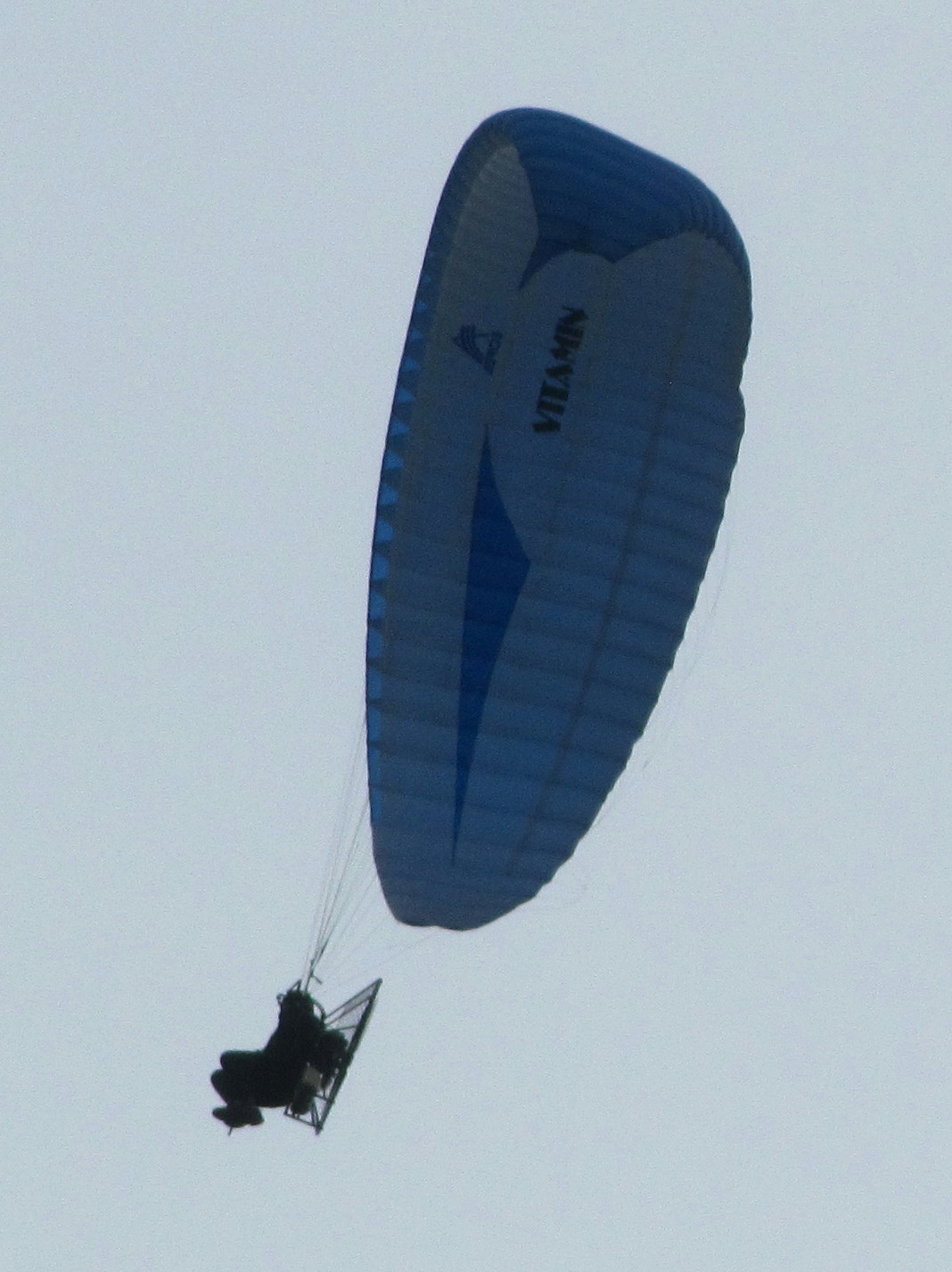
It was great today. Went flying the hill at 10:30 with Marek and Jerry. Marek flew his Wistler 2, 14M from the top. Light 2 MPH wind from the east. Boy did he run. Jerry and I flew from the medium launch. Great flights. Started to snow lightly by the time we landed. Headed out to Longmont to meet Joe O. Jerry made his first 2 flawless flights in 2 mph conditions with great forwards and on his second flight Marek joined him on my Spice 22. They looked like they were having fun carving it up. Jerry is a natural and landed with the hugest smile both times. So please welcome Jerry Patton to the Flock. He will be a fun addition beside being a great pilot. Now we have to ponder what wing he should buy. He already outgrew his Aeros Vitamin 30M student wing on his second flight. I’m thinking maybe a McPara Chronos 25M??? How about you Mike?
An unusually warm winter day and glassy air was just to good to pass up. I stopped at St Marys LZ in hopes of an early lauch, but the field was still wet and muddy so I went North to Vance Brand Airfield. No wind takeoff was smooth and so was the air. Last weeks shop time payed off handsomely, there was no belt slap and the vibrations were reduced significantly. There were a couple of small GA guys practising touch and goes and one overflew me a bit close for comfort. I didn’t think his vortex was going to be terrible but I banked and dove just to be sure. When it hit I had a one third collapse that popped out quickly. I was at least 150 feet away from his flight path and 200 feet below so it was surprising that I felt any turbulence. The wing wanted to turn to the right so I will remeasure and move the Riser loops again. Terry’s suggestion was probably right but I over did it when I moved the left loop forward.
I toured the area away fron the pattern, did a few touch and goes and landed after 70 minutes.
There was 4 inches of 3 day old snow on the field at Vance Brand. We were planning on a mid day flight despite the clear blue skies. Robert assured me that the thermals would be minor due to the cool air. I had never flown inland mid day and was a bit apprehensive but it had been awhile and I was game to fly. So after a short delay getting gas I arrived at the field where Eric ( new pilot … student of Robert’s) was waiting to launch. He had brought his mother to see the amazing flying machine. We chatted until Robert showed up and watched a stick of sky divers. They were having a great time sliding in fast and skimming along the skin of snow. My first attempt was from the pond toward the hangers. I motored up and down the course a few times to test the surface and see how the Falcon handled on the snow. The front wheel was tracking fairly well but as soon as I started a mildly hard turn the buggy would go into a slide. It was slippery and kinda fun. The CG is way behind the front wheel so when it broke loose it didn’t take much if any thrust to continue the spin.
Eric’s 5th flight
The launch was a bust. When I got close to lift off the buggy started to slide to the left. I was using minimal brake and max power. When I aborted the wing came down clean with no damage. Since there was no real breeze I layed out to try the other direction, moving 50 feet to the north to give me room to clear the swoop pond. Second attempt was the same thing. Looking at my tracks in the snow it was clear that as soon as the front wheel left the ground the trike would start torquing into a left hand turn. I set down twice to get back on track and finally aborted. The third attempt was the most dramatic. I allowed the rig to lift off and when it drifted back down I was at a dramatic heading not the same as the wing. When I touched earth the unit spun out and I was done. If it had been on anything other than a skin of slippery snow I would have rolled for sure. Remember Bubba’s?
Robert said the wing was surging and falling back due to the drag of the trike as it passed through different thicknesses of snow and perhaps I would have been better off using more brakes. It might have worked but launching with brakes leads to a slow takeoff and possibly coming back down, maybe at the wrong heading for the wing.
Robert setting up for launch
I think the “P” factor is at 2 o’clock …. pushing the trike into a left hand posture. No problem on hard surface but a bear on a slippery surface. Knobby tires on the back might have helped but I don’t think it would have stopped the left hand turn since the wheels turn independently. If I wanted to go balls to the wall I would have gone no brakes till the wheel lifted then popped up and prayed that I had enough lift to keep from touching. Risky business.
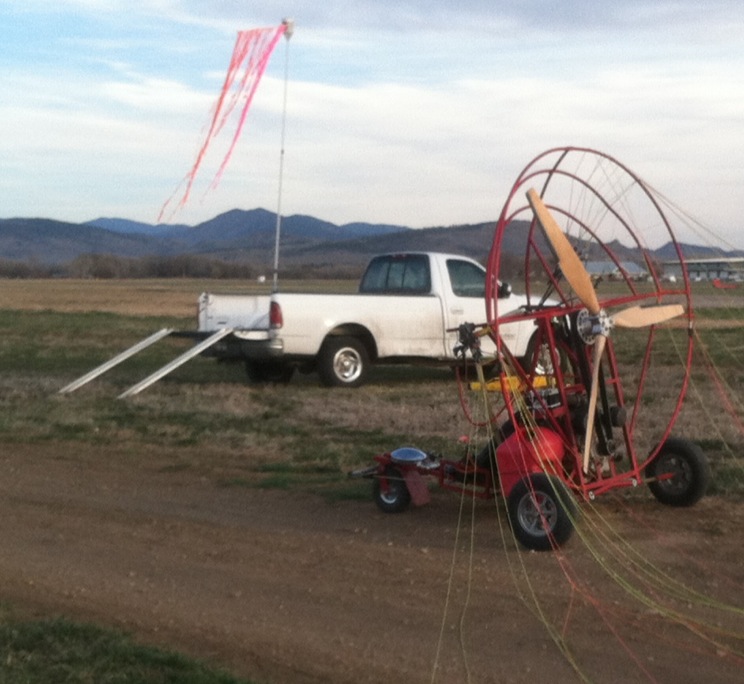
A couple of years ago I traded in a beloved Simonini Trike Buggy and became the proud owner of a Briggs and Stratton Trike buggy. The 4 stroke power plant was designed and built by Terry Lutke and the Flexfoil Trike was developed for PPG by Chad Bastion. Last year I traded in my 23 horse Briggs and Terry built me a Falcon powered by a Generac 32 hp with a 65 inch GSC triple prop.. The increased thrust more than made up for the increase in weight and and the climb rate increased from an average 125 ft/min to well over 300 ft/min. After more than 100 hours it is still performing flawlessly.
In process …note the low center of gravity
Unlike the Trike buggy that had the “Power Pod and Cage” bolted on, the Falcon is a “one piece construction” of all mild steel. With one piece welded trike…frame… and cage … there are very few connections to work loose. The motor mounts have been checked regularly but have never needed to be tightened. The bucket seat is also bolted on but has remained tight. On a couple of occasions I have had spectacular crashes that would have destroyed most paramotors but without exception the mild steel bent rather than broke and it was always an easy fix. Either a few minutes with a bicycle frame bending tool or some quick welding. When a section had to be replaced the raw material was easily obtained at Home Depot.
The biggest downside to going 4 stroke is the lack of fun things to do while not flying. Having spent the last 7 years immersed in this sport, I was comfortable with all the the wonderful little things that are a normal part of a PPG pilots life. The nights spent in the garage replacing compression springs or driving to the airport after dinner to pick up AV Gas. If I wasn’t searching the Internet for the best buy on Castrol TTS, I was waiting for the UPS man to deliver a 160 dollar starter sprocket. I was either working on the machine or flying it. For every minute in the air there was an equal or greater amount of time occupied with the care and feeding of my 2 stroke paramotor. If it was blowing too hard to fly…no problem, I always had a carburetor to rebuild or a pull start that needed maintenance..
Reliable
The heart of the Falcon is a Generac, OHVI 4 stroke motor. Thousands of these motors are built every year and the economy of scale makes it possible to produce a very affordable motor with excellent manufacturing tolerances and a beautiful fit and finish. They are designed to run thousands of hours at peak horsepower, so it’s not unreasonable to expect to fly hundreds of hours with nothing more than an annual check-up and oil change. When necessary, parts and expert service are readily available at the local lawnmower repair. Gone are countless hours tinkering with the machine. No mixing fuel, exotic tools or translating owners manuals. Now ,when it’s too windy to fly, the best I can do is wish for better air. You still have to be ready for a “motor out” and have an emergency landing site within the glide slope but the reliability of this motor instills a confidence that allows for flights that would not have attempted before. Quiet
When it is flyable, the Falcon is always ready to go and the first thing you notice is the happy rumble of the Generac. On my first flight it was so quiet that I completely forgot the step where I put in the ear plugs and put on the helmet. I realized my mistake just as I was taking off and few seconds later so did everyone at the Salton Sea when my ball cap went through the prop. …..WAAK….ear protection is still necessary but with a four stroke power plant, noise is reduced by thirty percent or more. At cruise with the RPM’s reduced it is possible to have a cell phone conversation.
Smooth
The next thing you notice is that the Generac doesn’t suffer from the constant vibration that plagues two stroke motors. With a well balanced prop its possible to forget all about the power plant and enjoy the ride. Flying a two stroke I was often ready to land at 45 minutes or an hour. Without the vibration I’m much more relaxed and feel like I’ll be able to fly as long as the gas and weather will permit. Cross country flights of 100 miles or more are certainly possible.
Now for the cons… First…There isn’t the instant power you get with a two stroke. The big prop takes longer to wrap up and you can’t modulate the throttle like you can with a two stroke. It is still possible to fly the contour of of the dunes but you have to anticipate the power requirements and use the brakes very carefully to get that extra little bit of lift when you need it. It is not as agile or sporty but the more I fly the less I care to pull hard banking wingovers or swoop dive. Another thing is the all up weight is almost 400 pounds and without going to a huge tandem wing, its way over placard. I have no doubt that the wing can handle it but the brakes require more pressure and it will probable shorten the normal lifespan of the wing. Take offs are faster and require more runway. You give up some flexibility when you go from foot launch to trike and you give up a little more when you go from a light trike to a heavy one. The days of pulling off the highway and launching on a whim are not gone … But … the opportunities are few and far between. At the least you have too look a little harder for an LZ. The trike itself is stable on the ground at high speed but trying to launch from a bumpy horse pasture can be a challenge, especially when a bump pops you up a little too soon. My most spectacular crash occurred when I was launching at Bubba’s “High Altitude Fly In” and was popped up at high speed, but… not high enough. When the trike came back down I was not perfectly aligned causing a roll on two axis. The buggy was slammed hard but the damage was minimal. It bent but did not brake.
The Falcon isn’t the perfect paramotor but it is certainly the champ when it comes to affordability …. reliability …and comfort.
I got to the field a little earlier this time. There was a very light breeze from the East (Weather Underground predicted.) While I was unloading the rig, the wind shifted to the West and increased to 8 knots. ( THIS WAS A 180 DEGREE SHIFT) It didn’t feel like a good time to launch so I hauled my wing out to the center of the field south of the runway and kited for a bit. The Eden III was dancing overhead, there was plenty of lift but it kept shifting 30 degrees from left to right. I had no trouble keeping it up but it wasn’t a stable air mass. It continued to build with gusts every few minutes, the air was bouncing between 6 and 12 knots and continued to vacillate. It was not looking good. There was a band of clouds running along the front range (mountain wave). There were also large lenticular clouds East of the wave that that I thought might indicate high winds aloft. Whatever it was… the sky was not settled and I wasn’t comfortable.
I didn’t think I was going to launch… but hope springs eternal. The sun was behind the cloud band and I thought there might be a chance that when it dropped below the band that there would be a favorable change. Sure enough it did… it was still from the West but it decreased slightly and the gusts were coming down. I had walked back to the truck and was still uncertain…. So I loaded the kiting harness and powered out to where I had left the wing, that was built into a nice wall. If I wasn’t going to fly at least I could get some good kiting in. Picking my way around the swoopers sandpit I drove out to the wing. The wind was manageable but I was still concerned about gusts. Taking extra care I hooked-in, this time making sure that the the trim cam was above the hang point loops and not likely to slip and get caught hanging the trike from the cam buckle.
Beaver moon over the runway
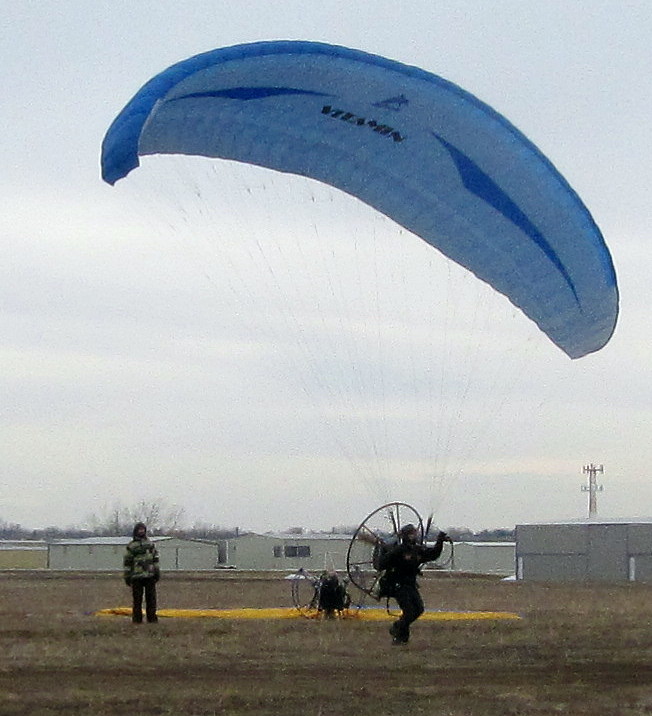
The launch was clean, I did use brakes to get a little extra lift but quickly let them go and was climbing at 200 ft/minute. The air was unstable with pockets of lift and sink. The wing was surging and the wind speed was increasing with every foot of altitude. At 400 feet it was 20 knots and at 600 feet it was over 30. I was glad to have flown but it wasn’t a lot of fun. I was barely penetrating into the wind and being blown way over the hangers every time I turned downwind. Eventually I was caught in some nasty turbulence and decided enough was enough. Turning East I set up for final over the truck. Decent was almost vertical and the touchdown was light as a feather. I let the wing fly after shutting down the motor and kited from my seat for a couple of minutes. If only the air had been as stable at altitude as it was at the surface.










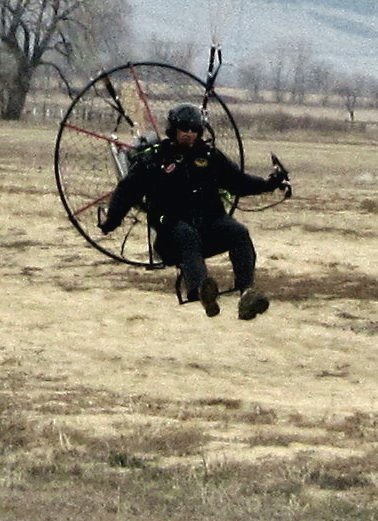
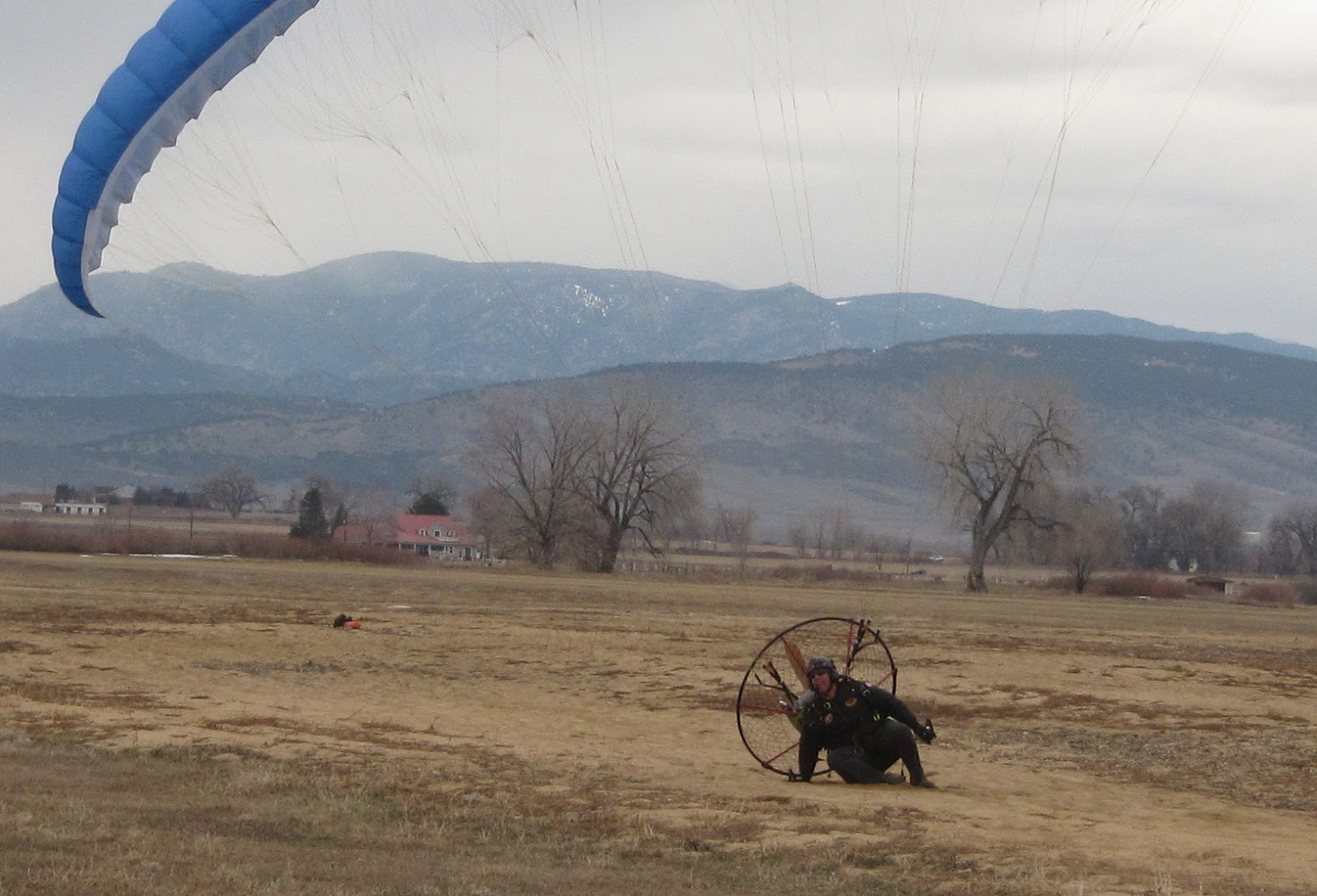
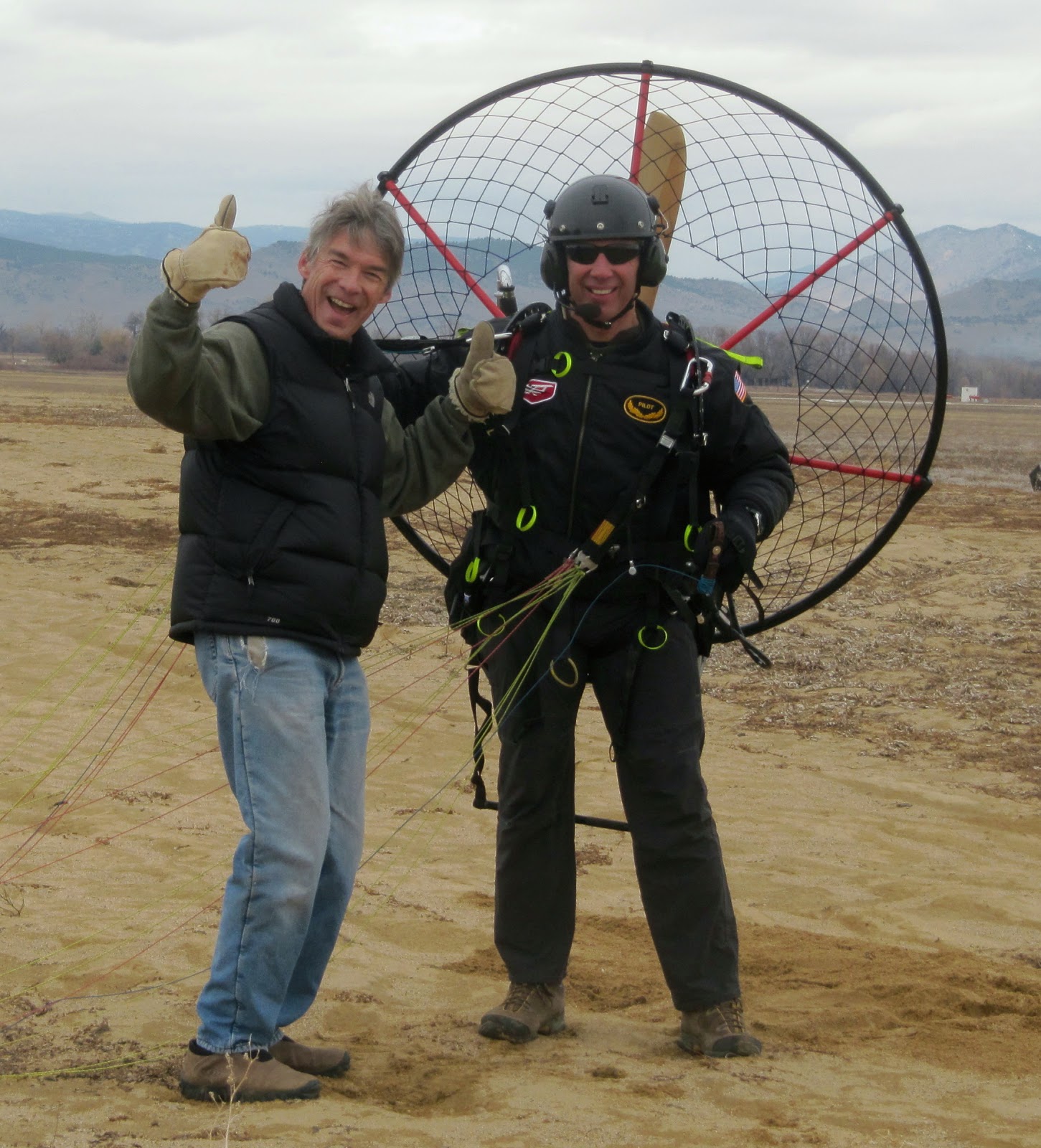




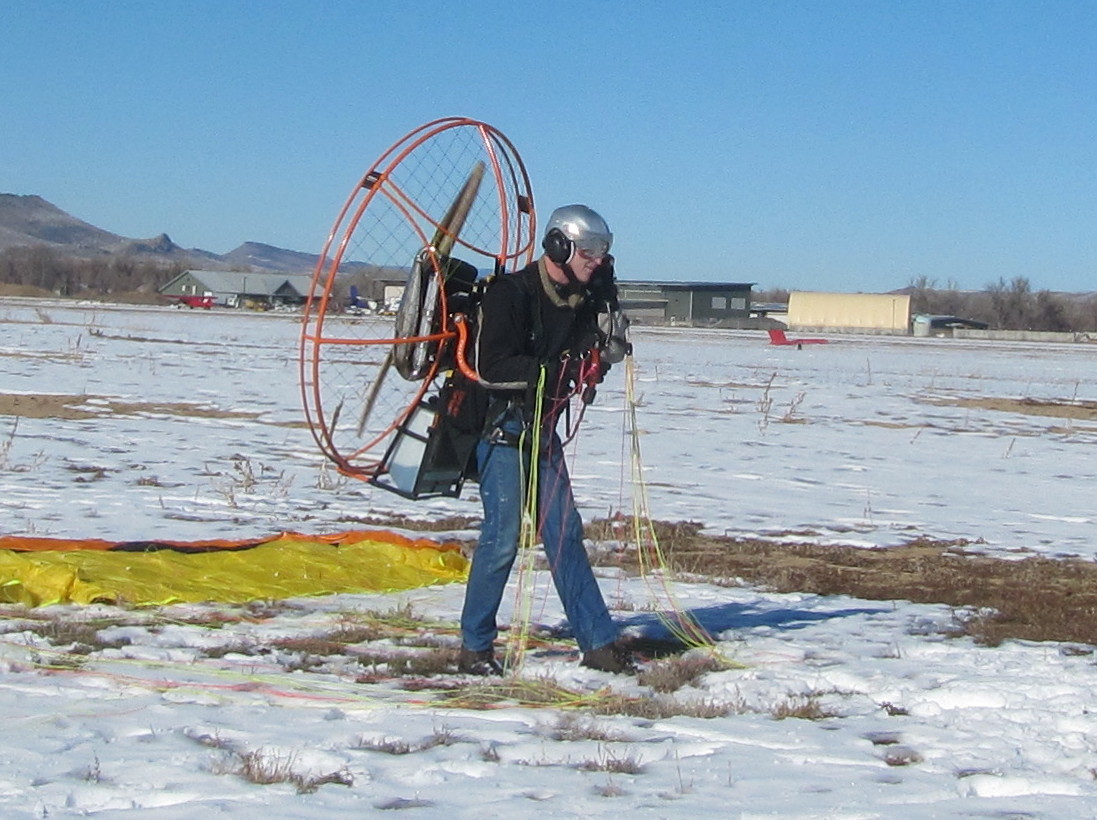





 Powered Paragliding. A most Personal form of Flight
You must be logged in to post a comment.