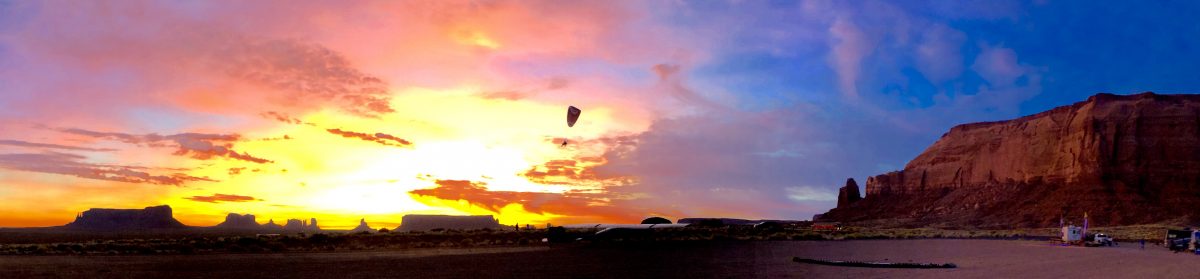
I admire those young guys
that sail North
Hoping to see seals
basking in the sun
But…I’m an old man,
who sails South, to see the wildlife on North Fort Myers Beach.
They say, it’s mating season.
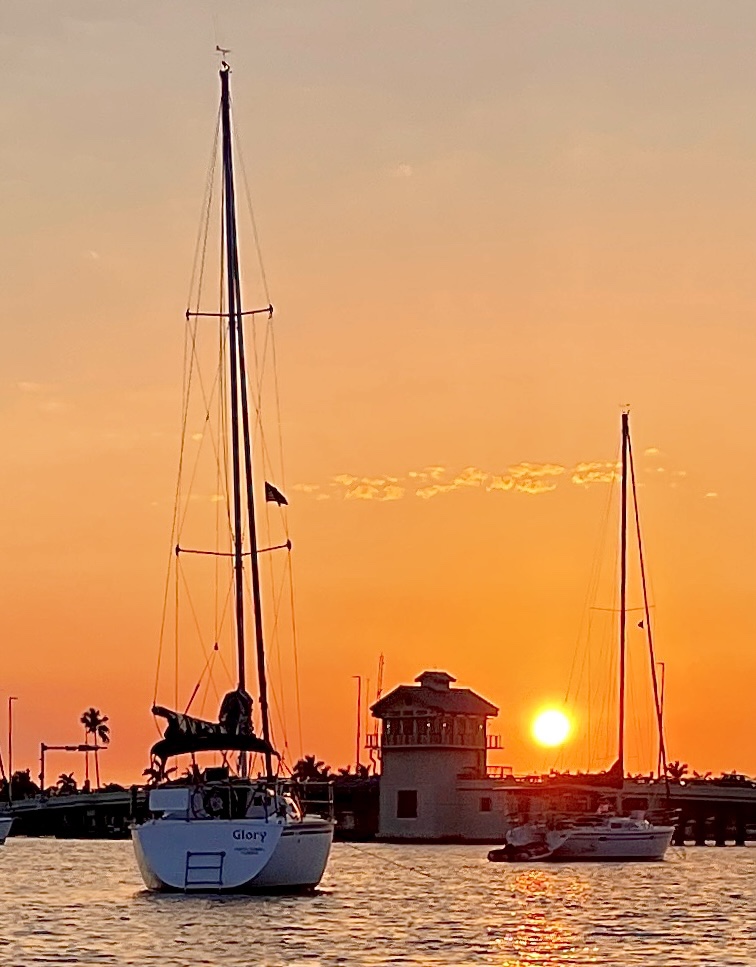
By land or by sea….?
It was time for the traditional Bon Voyage dinner. The question was…. should we finish provisioning the boat and cast off to Fishville or would it be better to run over in the sports car?
Parking was going to be a challenge either way. Finding a place to tie up depended on getting there just as somebody was leaving. While securing a parking spot in the maze of Fishermans Village required shrewd tactics and a bit of aggression. After all, it was high season in Southwest Florida. We opted for for cunning and speed… jumped in the Toyota and sure enough, scored the number one parking spot in the whole complex……..It was an Omen.
It was Friday night and busy as hell so…. we got on a long waiting list at the Village Brew House and strolled down the pier to see what other options we had. At the next restaurant, my muscle memory kicked in and I led Glenn through the bar to waterside dining. One glance at the menu convinced us to keep looking. Neither of us wanted to start a night passage with a bellyful of edamame and sushi. At the end of the pier was Harpoon Harrys, it was packed, every table was filled, except a primo spot right on the water…..It was an Omen.

Harry’s Blackened Grouper Sandwiches were excellent. We chowed down and watched the sun set and the moon rise. Then, when the Harbor Queen pulled in with her cargo of Pale Riders from up north, it was time to go.
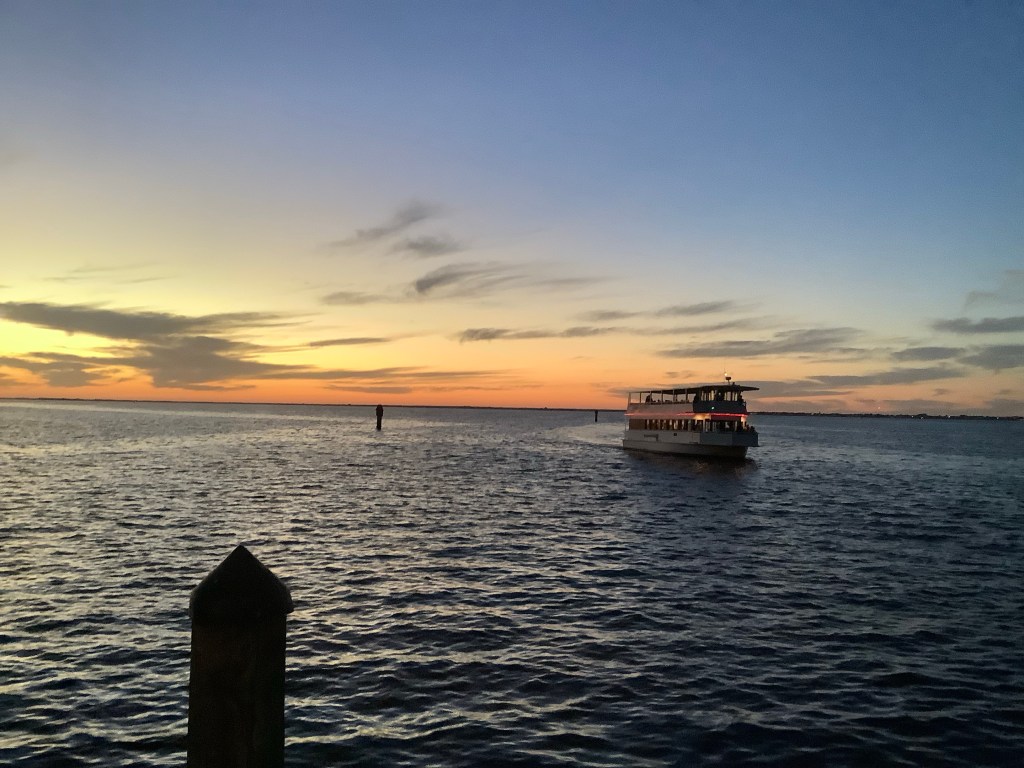
We made a last minute stop at the CVS and cast off at 2130 hours The ride down Harbor, wasn’t fast, The sky was clear except for a enormous full moon and few puffy little clouds. Only the very brightest stars were visible. The moon turned the carbon sails to shimmering gossamer. They looked the wings of a huge dragonfly. It was very cool.

When we set off, there was good wind on the beam but when we rounded Punta Gorda it was dead astern and decreasing. Sailing wing on wing, we ran 3.5 knots VMG. About 2300 hours the Fish and game officers came alongside, inquiring if we had seen a small (22ft) sailboat that had gone missing. We had not and that was pretty much the last boat we saw until dawn.
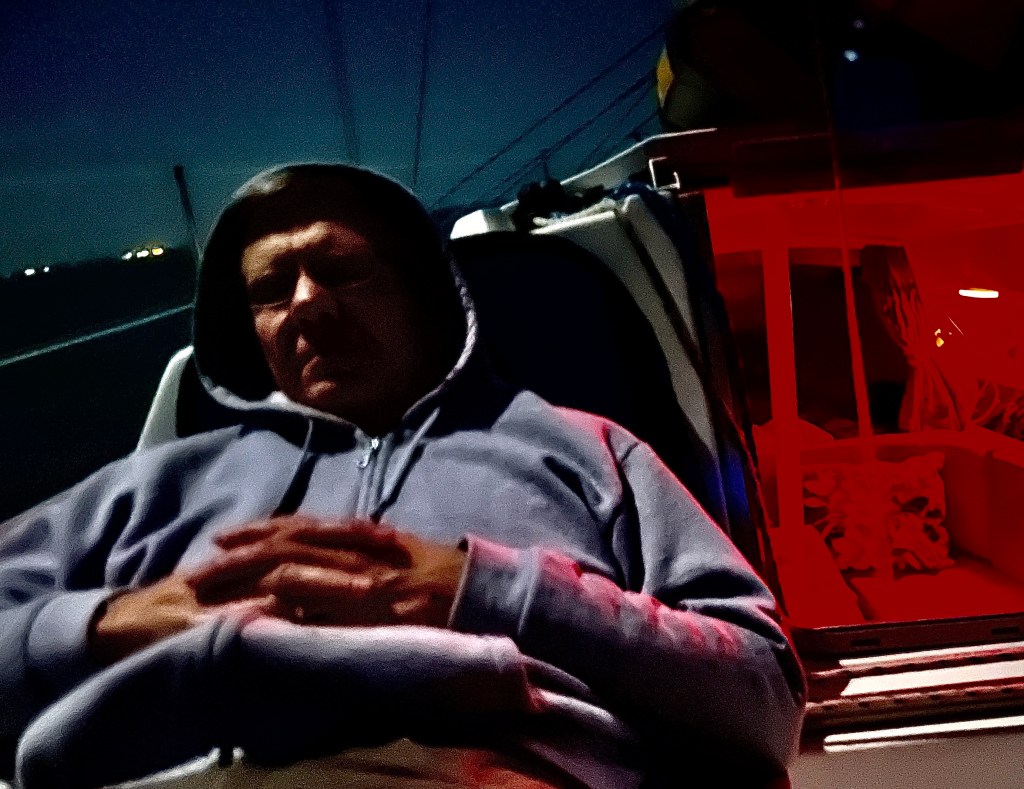
We approached Boca Grande after high tide and enjoyed a 3 knot bump that increased our ground speed dramatically. We rode the flood out to the gulf while I smiled. The view was amazing , I could see the details clearly on either side of the pass. There wasn’t any traffic to follow out but the chartplotter kept me on course until it was safe to turn south. The wind picked up slightly and the boat settled in at 5 knots VMG. The moon was high and the seas were light.

At sunrise we were approaching the southern tip of Sanibel Island. Glenn was fresh from a good nap so I laid back in the cockpit and let him helm the boat. An hour and a half later we turned East toward Fort Myers Beach. The approach wasn’t simple, we had to divert to the south before making our final approach to the entrance of Matanzas Pass. At 1000 hours we passed under the Fort Myers Beach Bridge. I spotted an open mooring ball at the front of the mooring field. We were about to pick it up when the field manager came alongside and informed us that the space had been reserved.
“But Sir…. it states very clearly, right here, on my chart plotter, that the balls are first come first served”. That’s when the “Ball Cop”, explained to us that the “transition of management”, from the Pink Shell Resort to the City of Fort Myers, was still a little blurry. I called the number they gave me and we were assigned ball #34, which was way back in the cheap seats just like the last time I was here. Rather than pay with the DockWa app as instructed, I called the office to cover the $17 ball fee. It’s going to be interesting to see who’s name is on the charge. Pink Shell Resort or Fort Myers?

After, catching old number 34, we did a little housekeeping and inflated the dingy. The trolling motor wasn’t fast but it got us to the bridge, against the current. At the dingy dock we hooked up with Dawn. Who had braved the traffic and driven down to deliver my AWOL shaving kit. She absolutely saved the trip. I’ve been on a steroid therapy since last May and I don’t want to imagine what my condition might have been without those Superman pills. Thanks Dawn, your… My Hero!

We strolled across the island to the famous, Fort Myers Spring Break Beach. The T-shirt shops were busy. Plastic sandals were going for $75 and the cash registers were singing. Glenn found a place selling white logo Tees, 2 for $10. I smiled, it’s exactly the weight and thread count preferred by Wet T-shirt Champions the world over.
Following the wildlife, we found ourselves at the mall where we had a classic “beach feast”, hot, greasy and good! All around us, America’s youth were dancing to a song they thought was their own invention. Just as we had, a half a century ago.
The tide turned while we were ashore so we ended up motoring “uphill”, against the current…. again. Someday I’ll get the timing right and the sea will deliver us to and from, the bar.


It had been a long day and an even longer night. I had visions of going ashore after dinner but once the sun was down, neither Glenn or I felt like raising hell. I watched a little YouTube and crashed in the forward berth.
Note to self…..We really need, two nights at Fort Myer Beach. One to recover and reconnoiter and one to celebrate. I mean….. after all … we sailed all this way to see the wildlife….and they say…….. it’s Mating Season”
The next morning, we woke refreshed and ready. There was a light fog that burned off as I brewed coffee and broke out pastries. Glenn and I sat in the cockpit and watched the commercial fishing boats, cruisers, speed boats, and sightseers transit Matanzas Pass, At 10, we dropped the ball and motored out from behind Fort Myers Beach.
For more than 20 years I have trusted Garmin. I was following the, “auto route”, to Pelican Bay, and noticed that it was not taking me under the 110 ft. Sanibel Causeway Bridge. It was telling me to go west and cross where there was only a 12’ clearance. I ran the auto route twice more and it kept taking me under the low part of the causeway. After all these years …. Garmin had let me down.
We turned back and motored under the bridge. There were dozens of fast movers in the channel, some without colors but many were flying the Trump Banner. They were churning up the waters pretty good but Glory powered through just fine. After heading North for a bit, we connected with the channel that lead to the ICW. (Inter Coastal Waterway). Glenn brought up the Bose and we cranked up the tunes. it was a beautiful morning in every way, clear skies, nice breeze, good company and nostalgic tunes. Everything was going great. Then, while I was re-telling an old story about our summer camp days, I felt the keel drive into the sand.
Grounded! It happens to everybody sooner or later. I’d been following the fast movers who were leaving the red marks to port. Wish I’d paid more attention to the chart, it was clearly marked that the red should be left to Starboard. When we hit bottom, I knew it wasn’t going to be good. I tried to drive out but it was obvious that we wouldn’t get off under our own power. I reached for my wallet and the TowBoatUS card. It’s the only insurance I don’t mind paying, $150 and your protected from huge towing fees. Well… as I’m retrieving the phone, who should be running down the channel TowBoatUS! We hadn’t been aground 5 minutes and there he was. It took 10 minutes to tow us off the bar and another 10 to do the paperwork. The gods were still on our side.
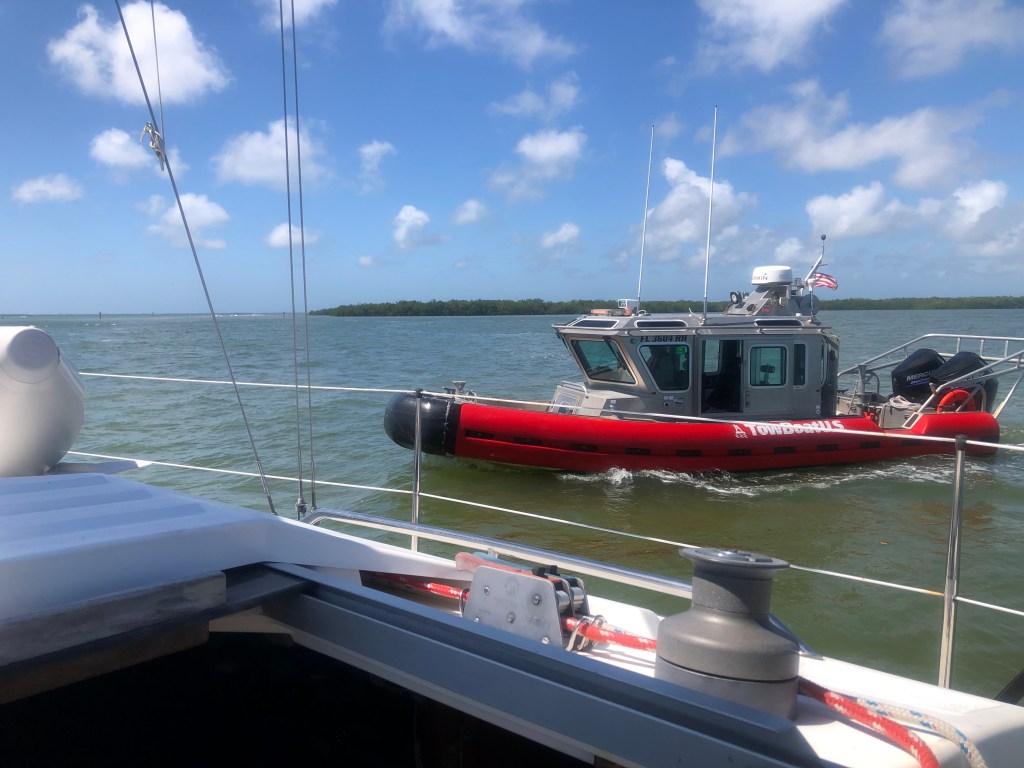
We crossed under Pine Island and caught the ICW North. I rolled out the Genoa and we drove North at 6+ knots, motor sailing. It was a gas. I’d forgotten how much the sail stabilized and smoothed out the bumps. Motor sailing, isn’t just for Fat Bellied Stogy Suckers. We sailed North with a steady stream of fast movers coming and going.

We passed Cabbage Key, Useppa Island and arrived at Pelican Bay mid afternoon. Plenty of time to “drop the dink” and go exploring. From the Rangers dock there was a dirt rode leading to the other side of Caya Costa. A thick jungle rises up on either side making for a nice shady hike.

I knew Caya Costa was a state park but didn’t know they had campsites. As we approached the west side of the island, we passed several groups of primitive campers. No vehicles or electricity or any of the accoutrements of modern “Glamping”. For a moment, I was transported back 50 years, to when the Rainbow family held their festival at Strawberry Lake. Long haired kids with no inhibitions played in the jungle while their parents, looking very much like love children waved as we strolled past. When we got to the beach, I tested the waters and was surprised to find the gulf already warm in March. We took a few pictures and headed back on the path to our anchorage.
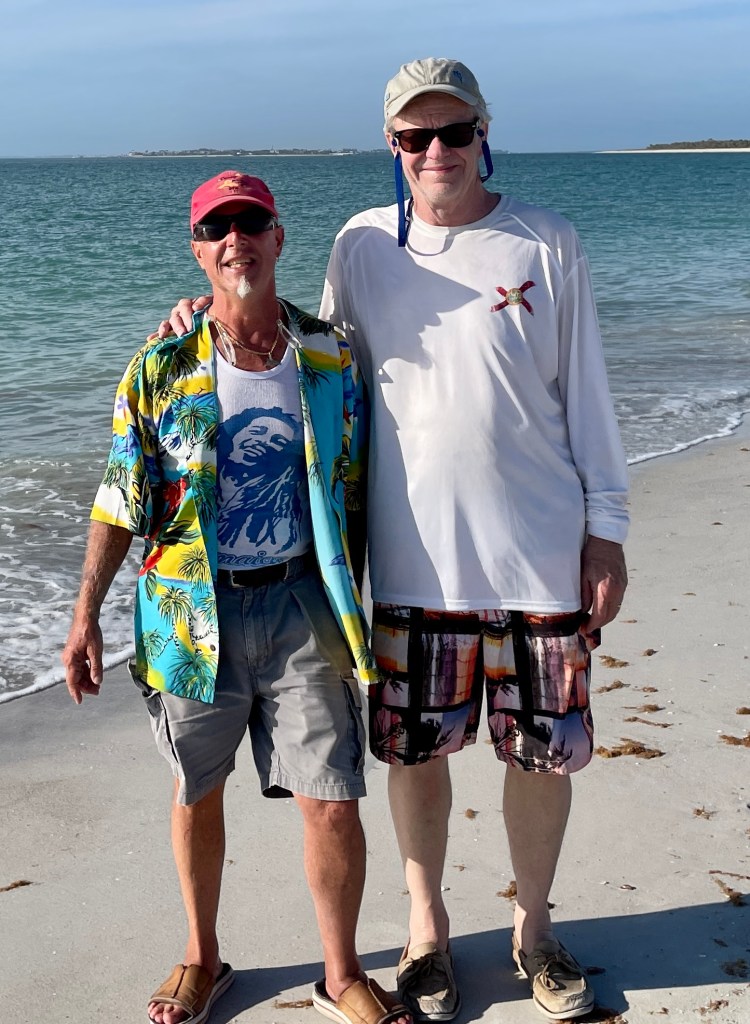

Dinner was steak with cold slaw and potato chips. The new ceramic briquettes were a big improvement to the MAGMA BBQ. The heat was distributed better and the steaks were the best I’d ever done aboard. As usual, I’d brought way too much food and it made me smile at the sweets and delicacies, I would be eating over the next few weeks.
After dinner, Glenn introduced me to the world of dance music re-mixes and medleys. I kind of knew what a mix was but not really. What Glenn played were time capsules of 80’s dance music that covered a wide range of the music that defined our twenties, Prince, Annie Lennox, Patty LaBelle. I especially like a grouping that I recognized from he Beverly Hills Cop soundtrack. Good stuff! ….
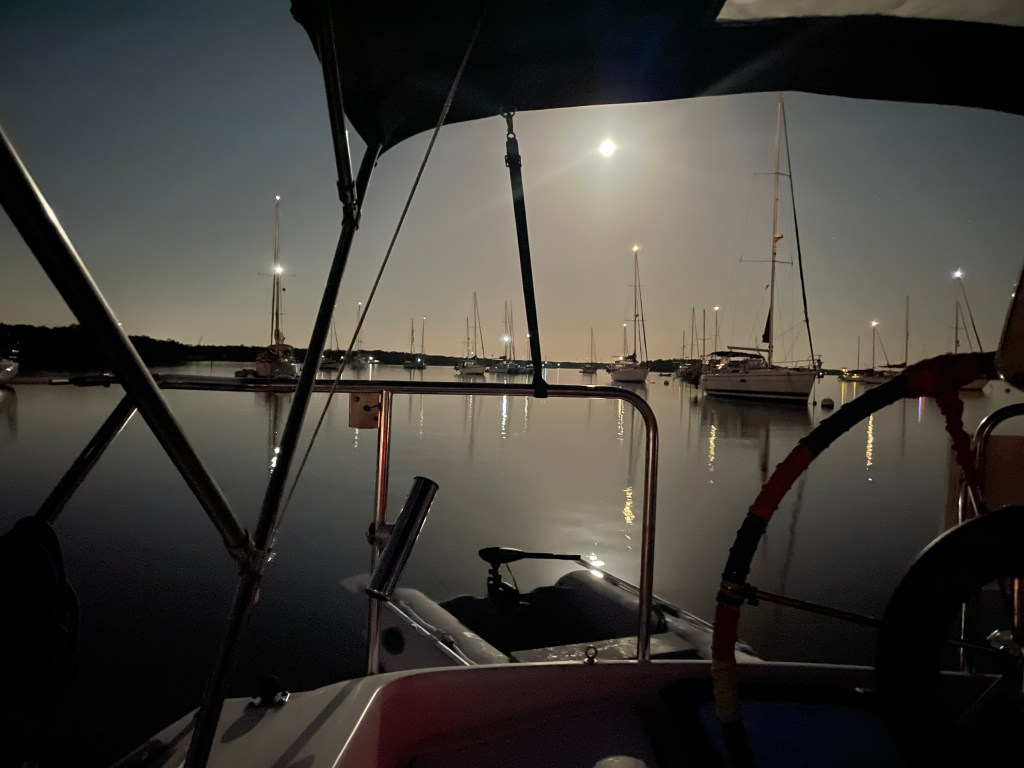
After dark the anchorage was beautiful. It was dead calm and the lights from the other boats and the moon, lit up Pelican Bay, like a big garden party. The air was cool and the sleeping was good.
In the morning, we hauled the dingy , raised anchor and headed back to Cabbage Key. The plan was to stop at the resort, have breakfast and proceed to Matlacha and Burt’s Bar. When we got there I was delighted to see that we had beaten the crowd. There were plenty of slips available and a dock hand to catch us. We secured the boat and walked to the restaurant where Jimmy Buffet had been inspired to write, “Cheeseburgers in Paradise”.

When we entered the famous old Florida eatery, the manager informed us that we were too late. If we wanted to eat … wait 45 minutes for lunch. I grumbled but there was nothing I could do about it. Actually, it turned out to be a good thing, I climbed the tower and took some nice photos of the area. Glenn went in the other direction and discovered the bale of gopher turtles that inhabit Cabbage Key.

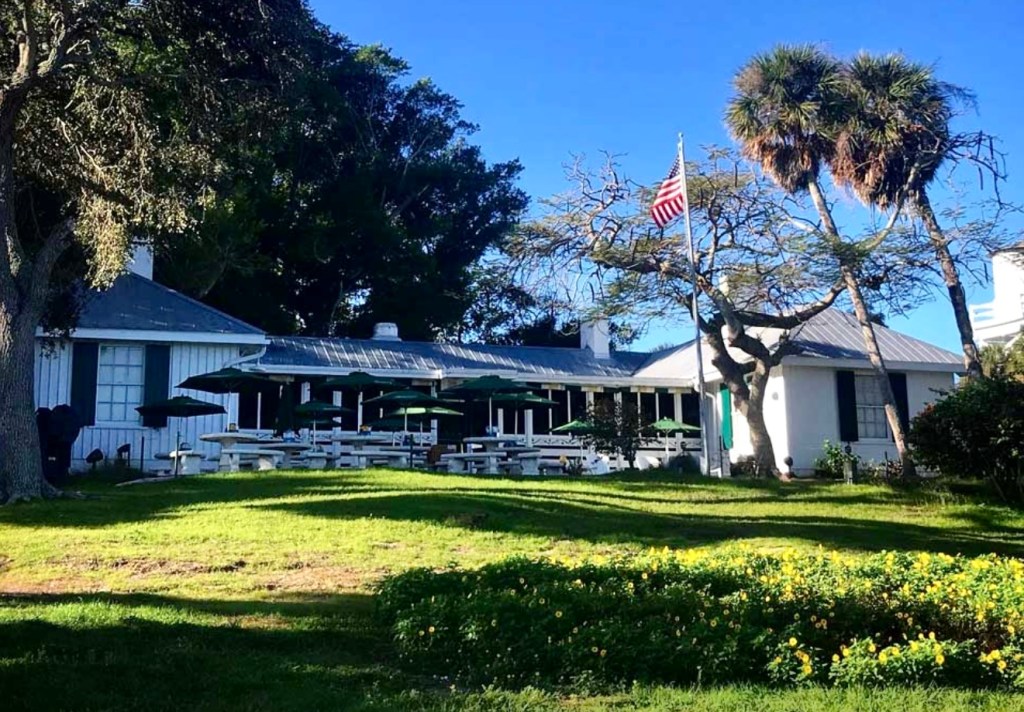

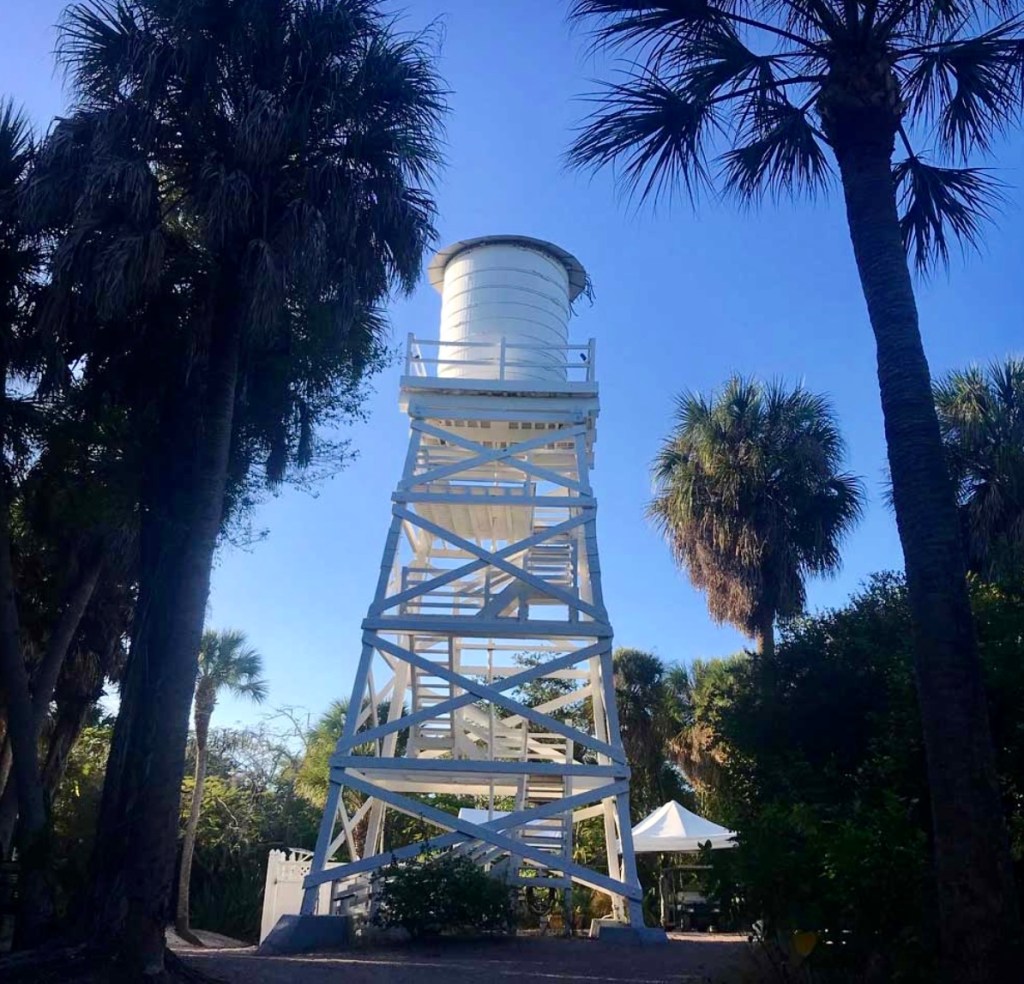

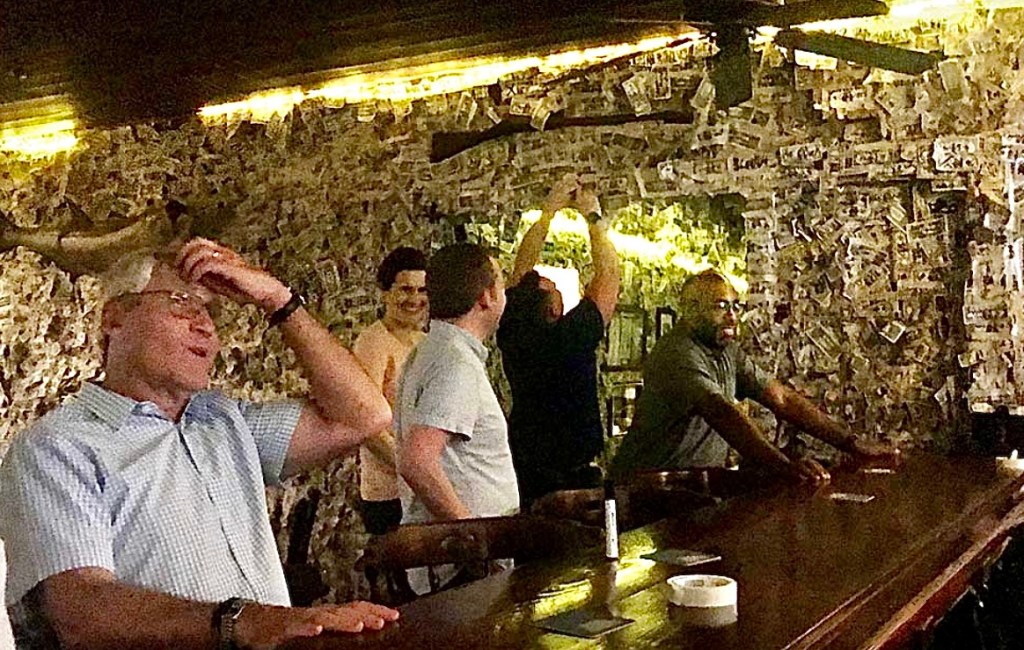
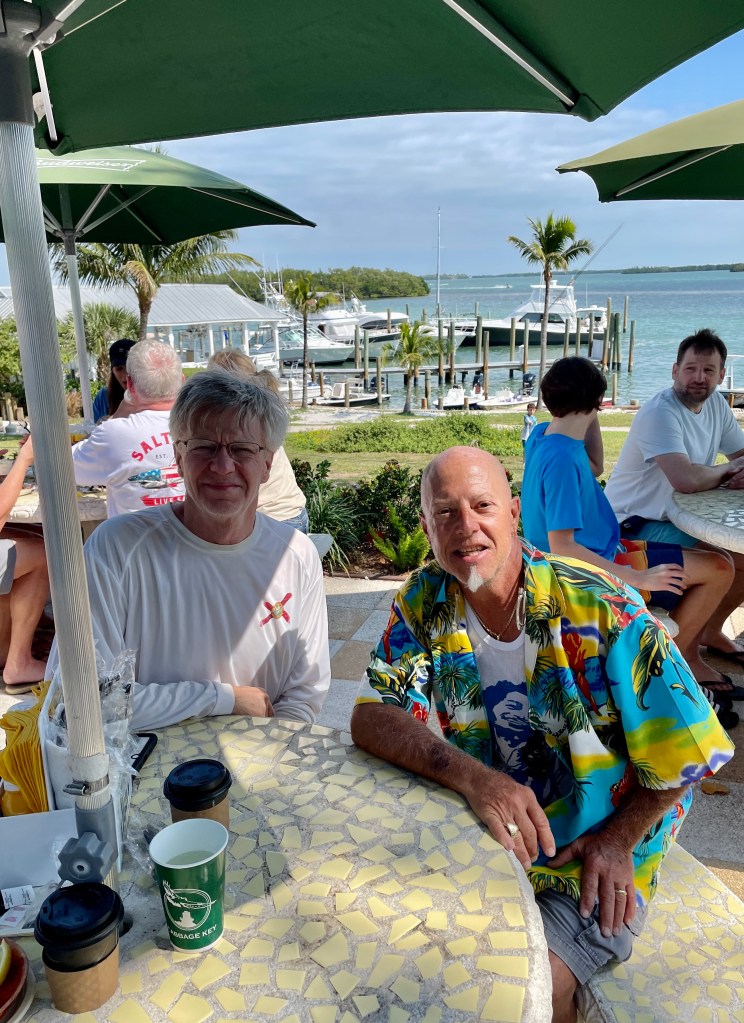
While we were exploring the resort, the tour boats arrived. In thirty minutes it went from abandoned to packed. Every table was filled and the guests were borrowing pens to write their name on dollar bills to pin to the walls of the dining room. I’m glad we waited, Glen had scored an excellent table overlooking the Marina. I had smoked salmon and Glenn had their signature Stone Crab.
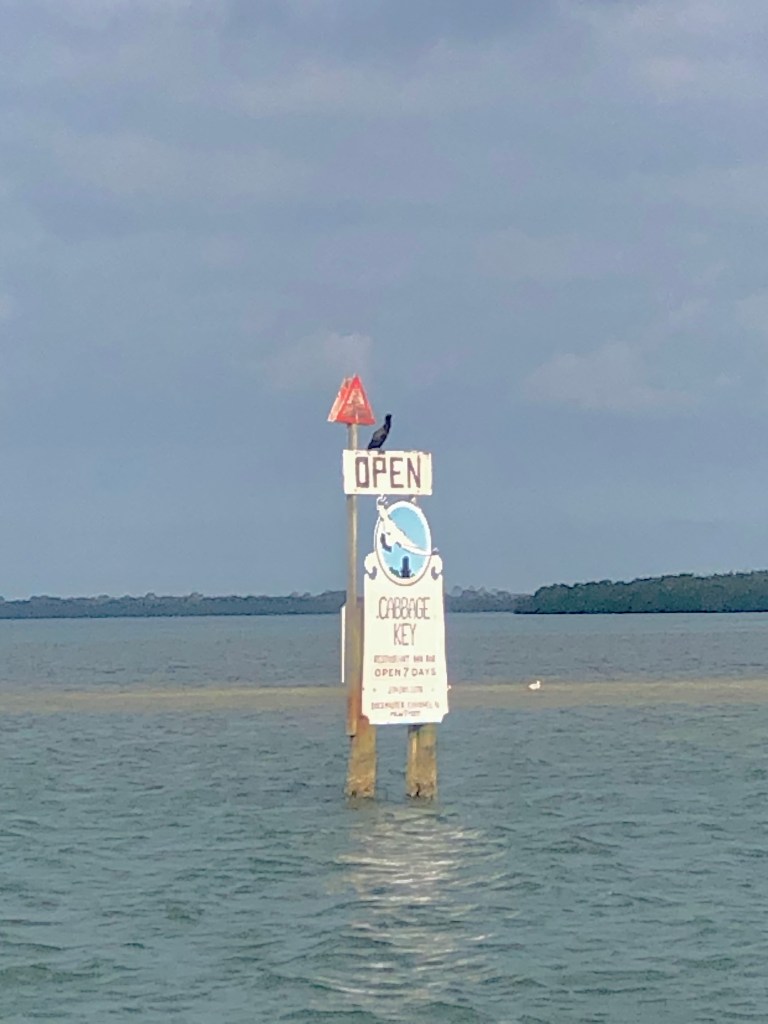
We left Cabbage Key a little after noon. I was concerned about a strong wind pinning us from behind and there was a confusion of boats jockeying to get our slip. Fortunately, the dock hand controlled our bow with the painter and Glory backed out clean. I’d considered a shorter route to the harbor that had been suggested by Navonics but after the fiasco with the Sanibel Causeway, I opted to retrace our course back toward Pelican Bay and not turn up until we were well above the shallows.
The trip to Matlacha was wonderful. The winds were favorable to sail all the way to where the channel narrows down for the approach to Matlacha. Staying close to the markers, we avoided the shallows and arrived at the bridge. After a few big circles the bridge master stopped traffic and raised the span for us to pass through to. On the South side of the bridge, the Punta Gorda Sailing Club was at anchor on the last day of a casual cruise that consisted mostly of eating at the best restaurants on the causeway.

I circled around and we attempted to drop hook close to Burt’s bar but the anchor wouldn’t set in the grass close to shore. …. Probably a good thing. Our second attempt was 100 yards further out, close to the wreaks but in good holding ground. We took the dingy over to Burt’s and ate with my racing Co-Captain, Artie Sa and his wife Jacqueline. After dinner we walked the causeway. Most of the businesses are closed on Sunday night but at least Glenn was able to see and get a feel for the place. At our turnaround, there were a couple of kids seining for bait fish. They knew what they were doing and were absolutely enjoying the audience. Their casts were spot on, with the net opening nicely, but …. No Joy. We returned to the boat, told more stories, listened to old tunes and crashed by 10.
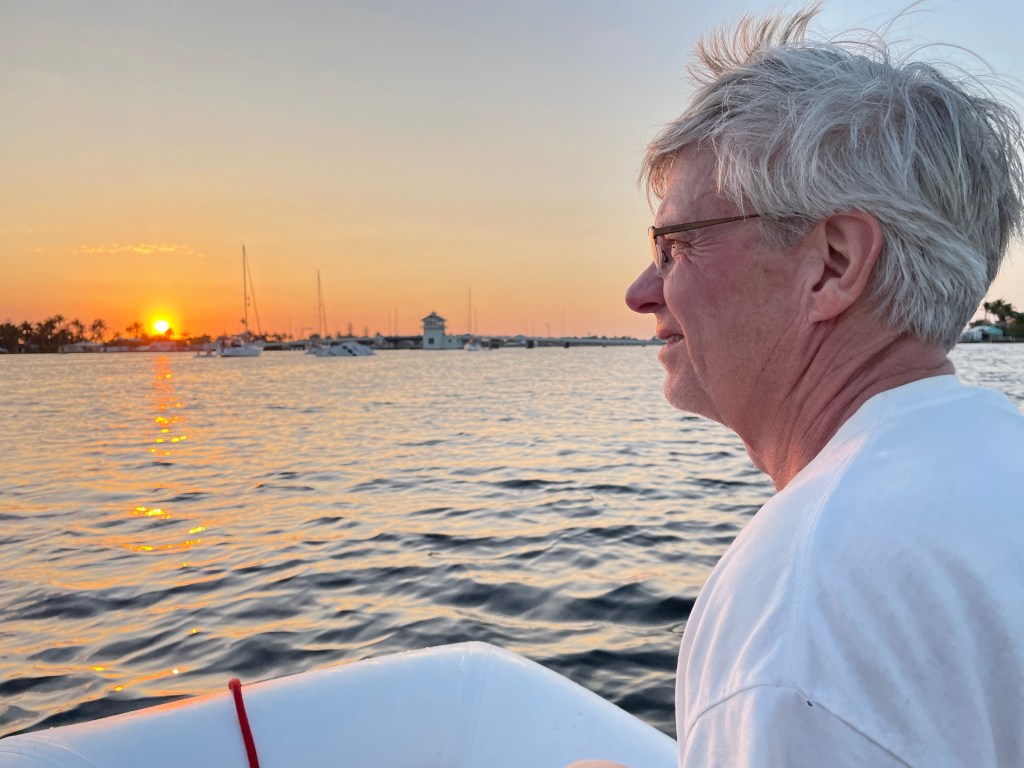
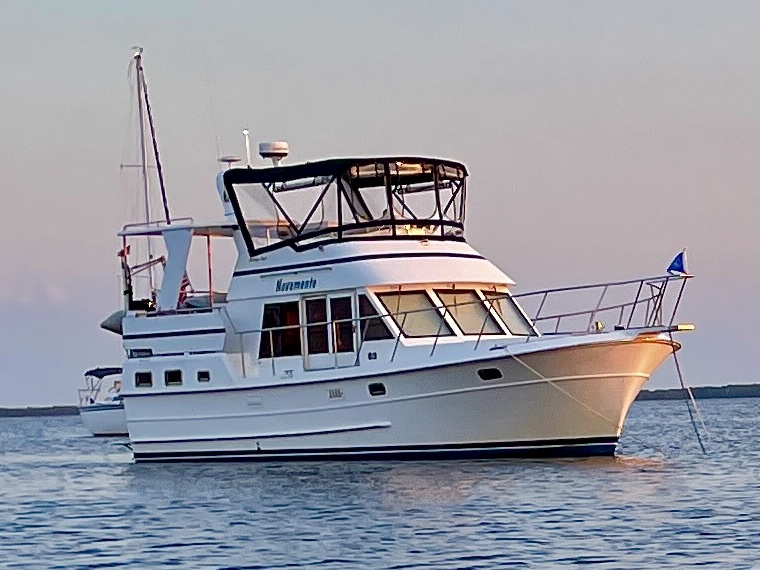
Last Day.
It was a cool morning with light fog. The anchor came up clean and soon we were spinning around, waiting for the bridge master to open the bridge. I embarrassed myself by touching bottom at the first marker but we’d hit it slow and were quickly off and making our way up the channel. Once back in big water, I raised a reefed main and let out half of the Genoa.
I kept the diesel running to get us home in time for Glenn to catch his flight and was shocked and dismayed when it surged a few times and stopped. The batteries were good but I couldn’t get it to start, so we sailed. Glenn and I ran through the possibilities , none of which were easy fixes. Finally, just because I could , I took the 1.5 gallons of diesel that was stowed in the lazarette for emergencies and dumped it into the tank. She fired right up! It’s a mystery, I’d just polished the gas and topped off the tank. There was no way we could have burned 11 gallons of diesel in the last couple of days. Maybe there was a problem with the fuel filter, or maybe, I’d only thought I’d filled the tank. Regardless, the engine was running again and I wouldn’t need to beg a tow or attempt to sail into the canal system. The ride back to Punta Gorda was a quick close reach, in 18 knots of wind. At one point the wind caught the dingy and I had to go forward to secure it.
Note to self…. Secure the dink!
When we landed , Glenn went inside to clean up and I offloaded the boat. It had been a great trip. The gods were kind to us.
Cheated Death Again!
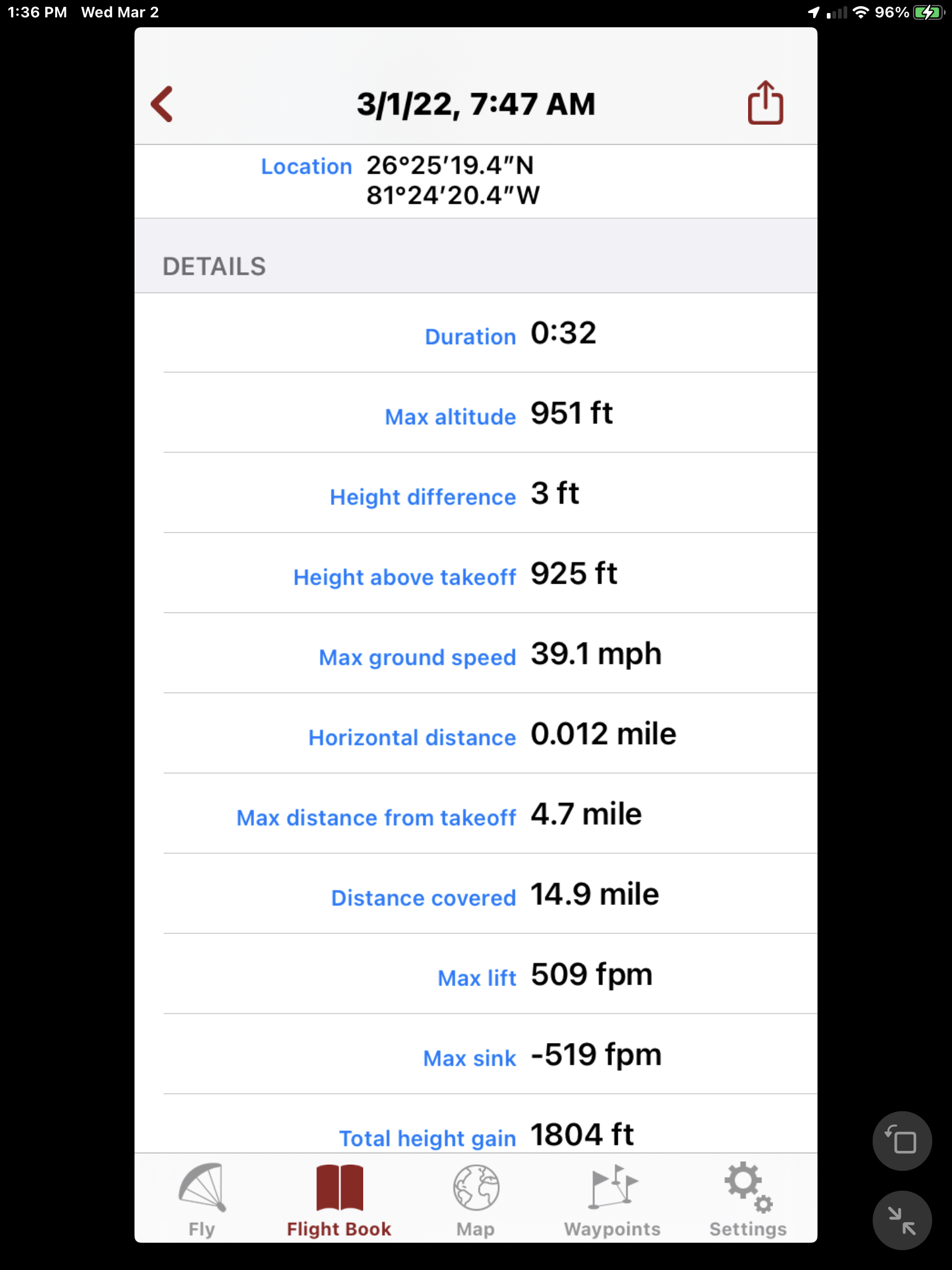
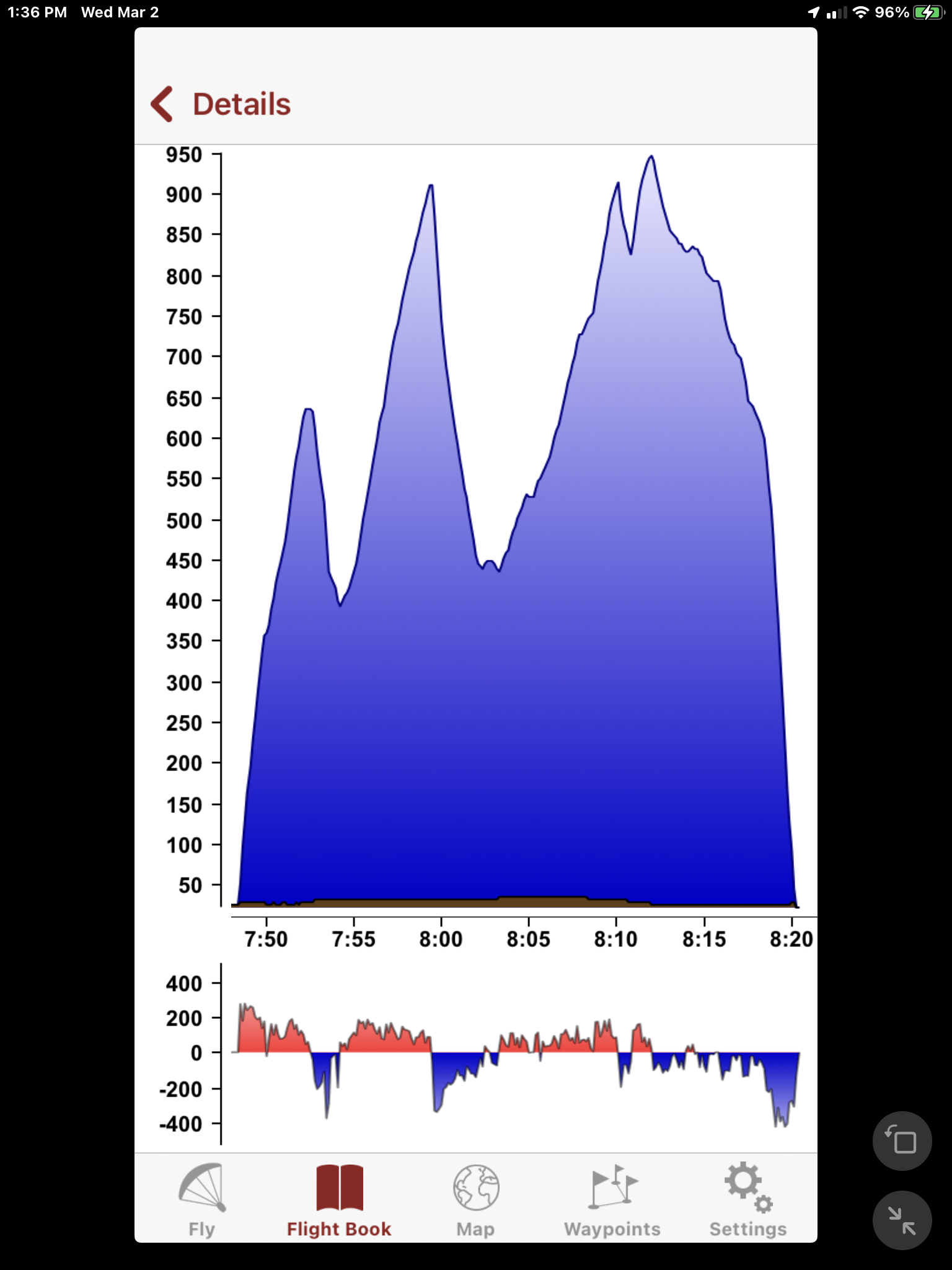


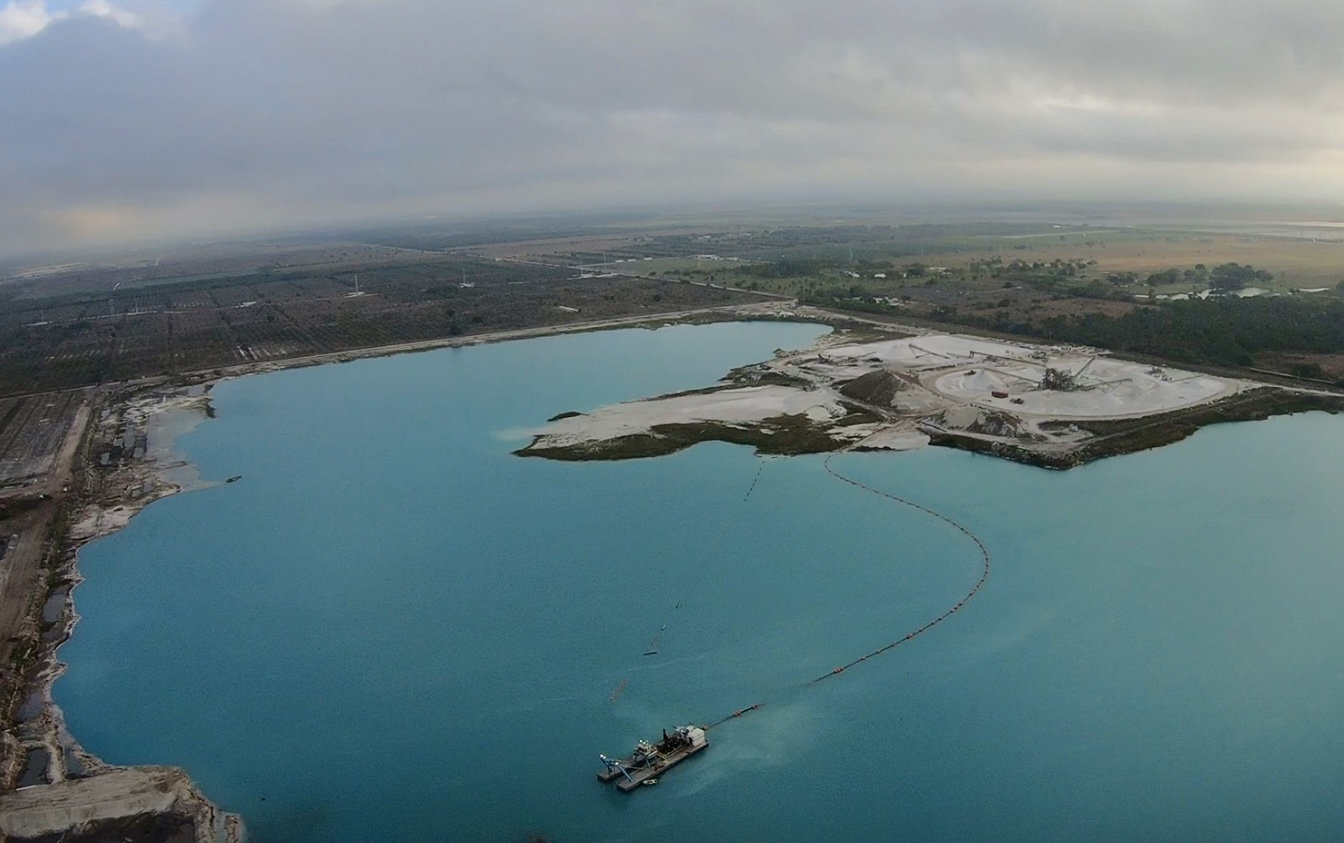

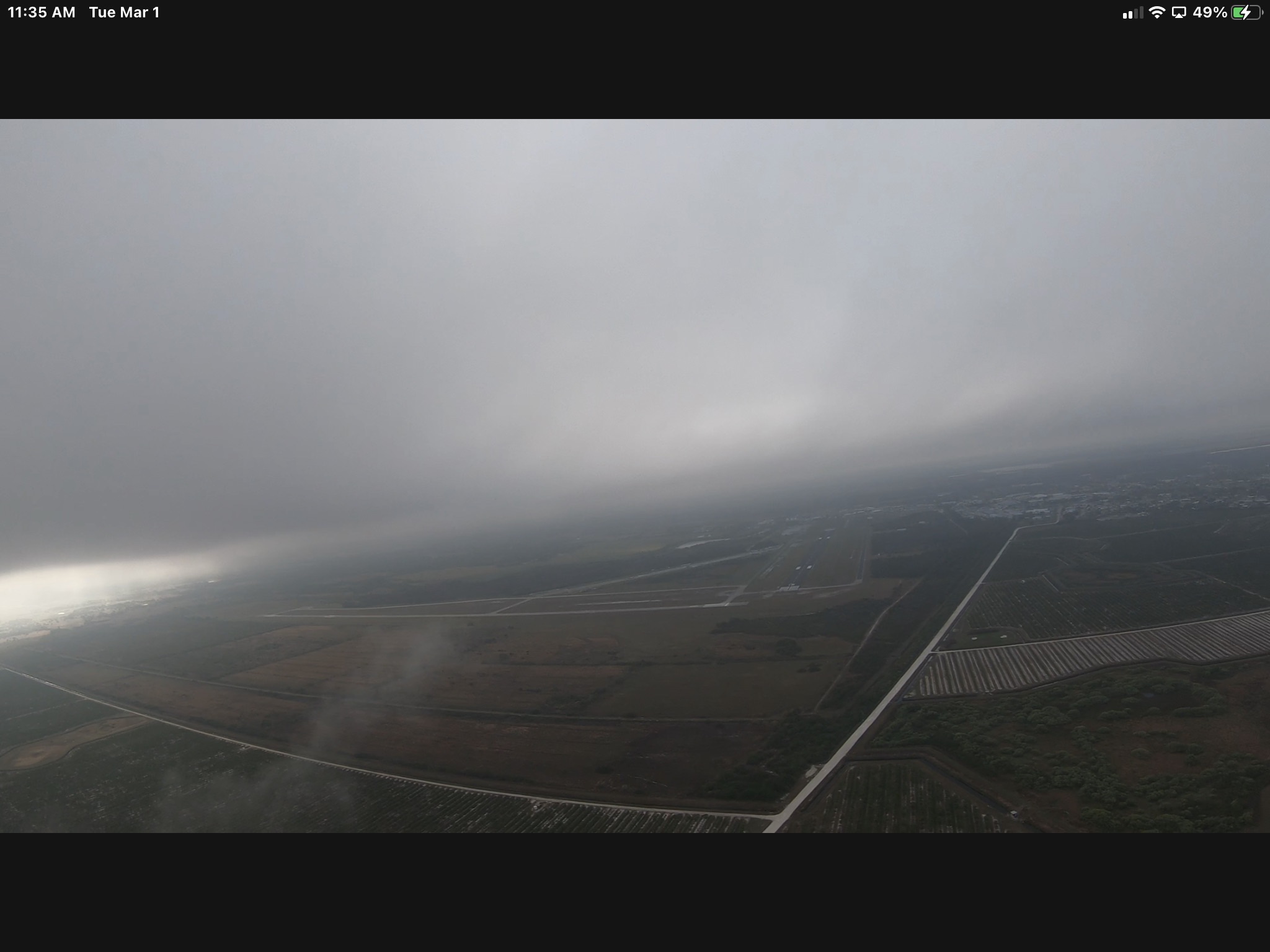

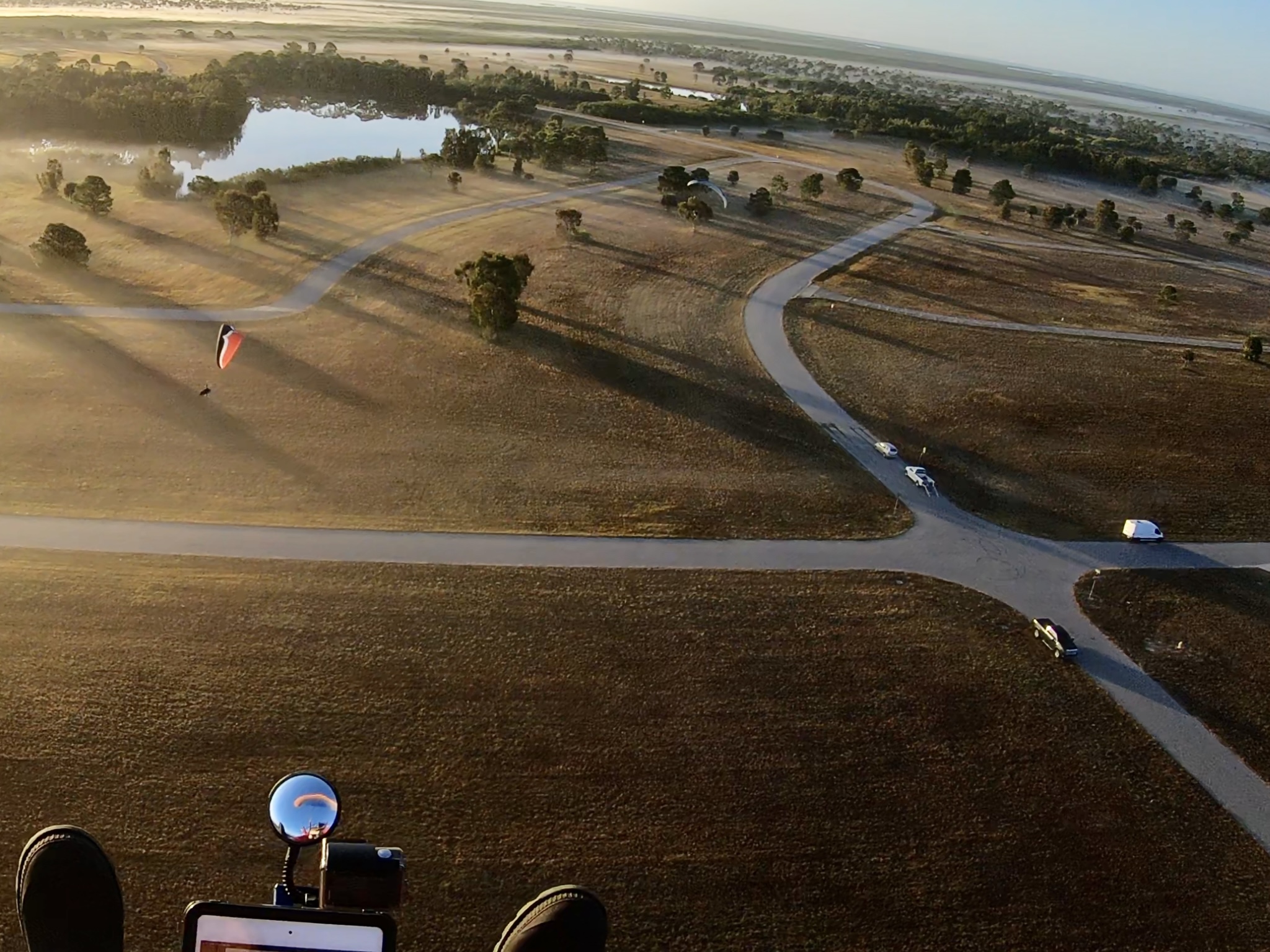
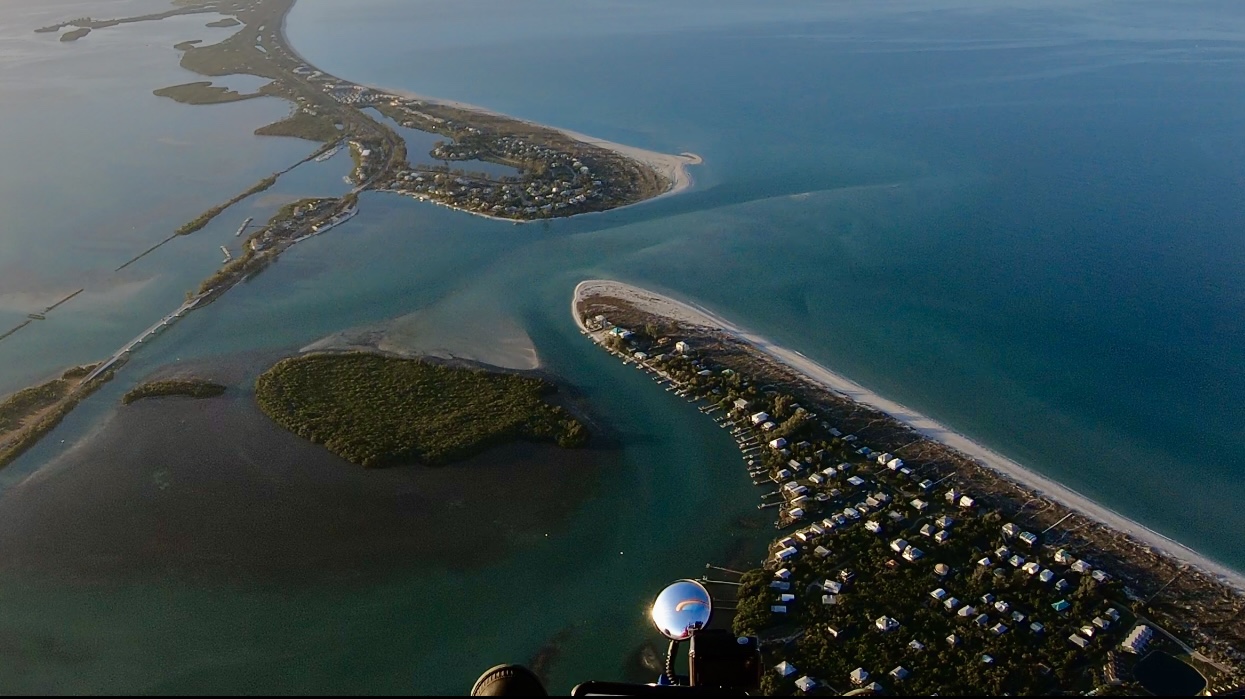
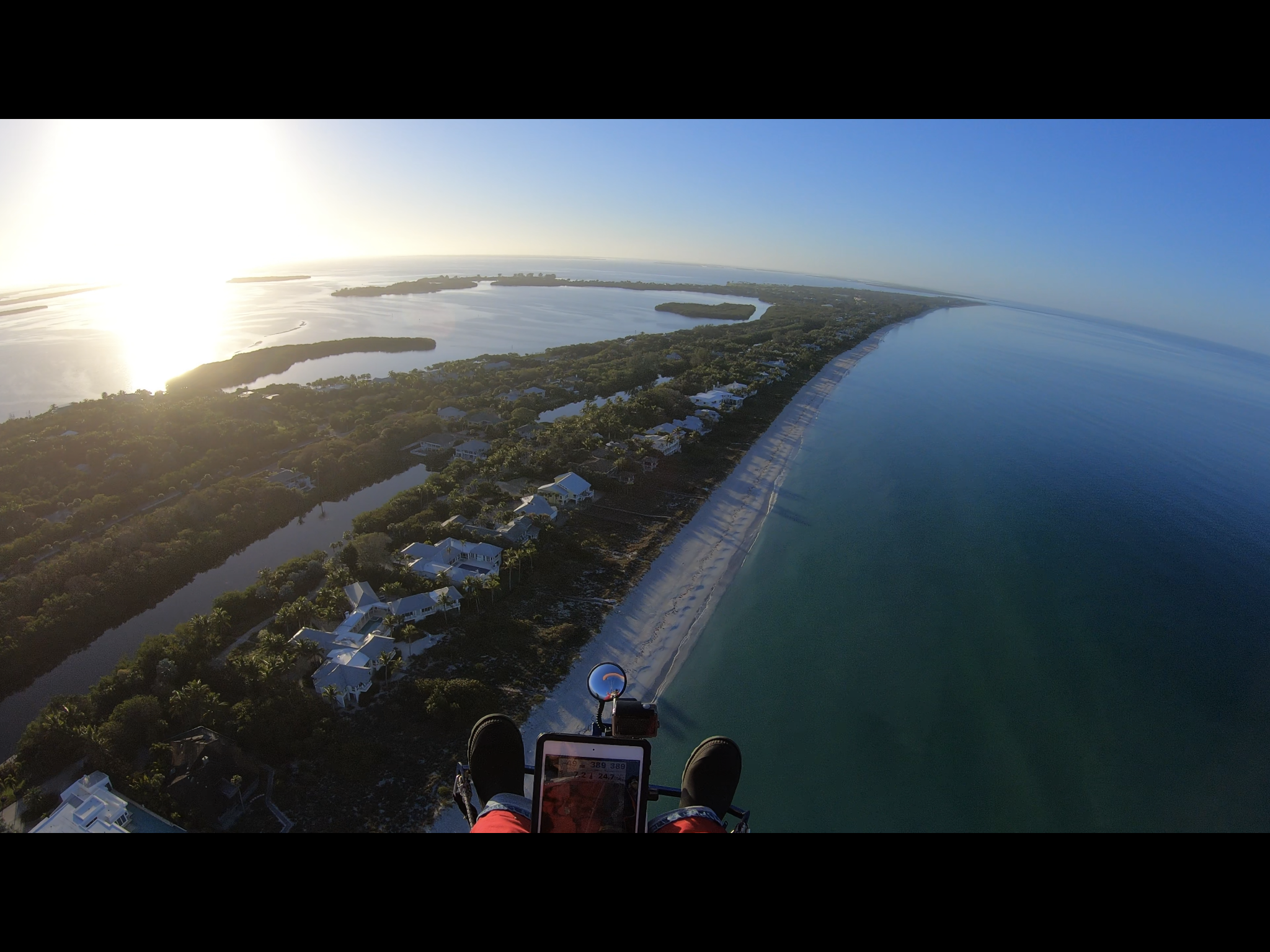
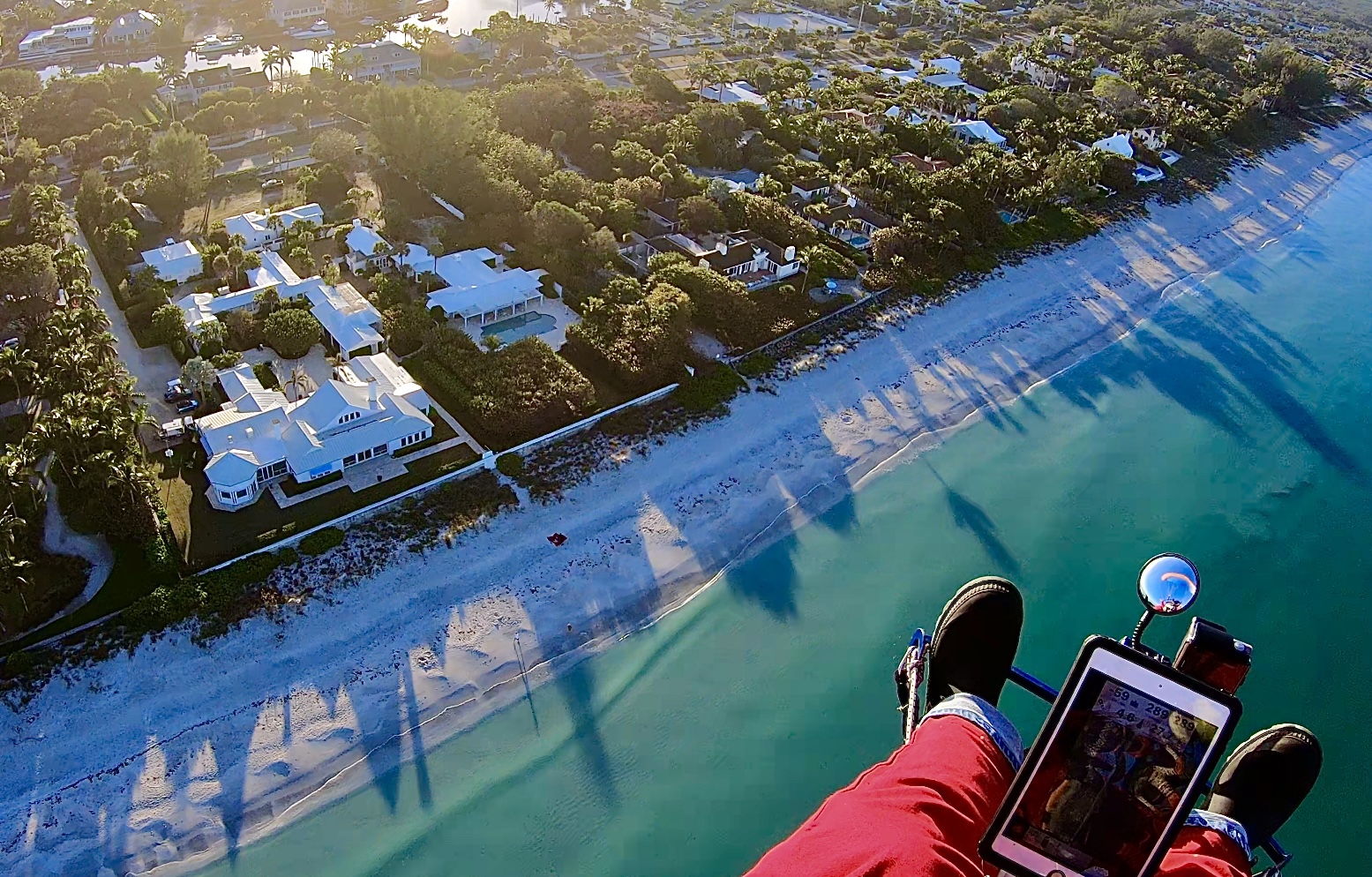


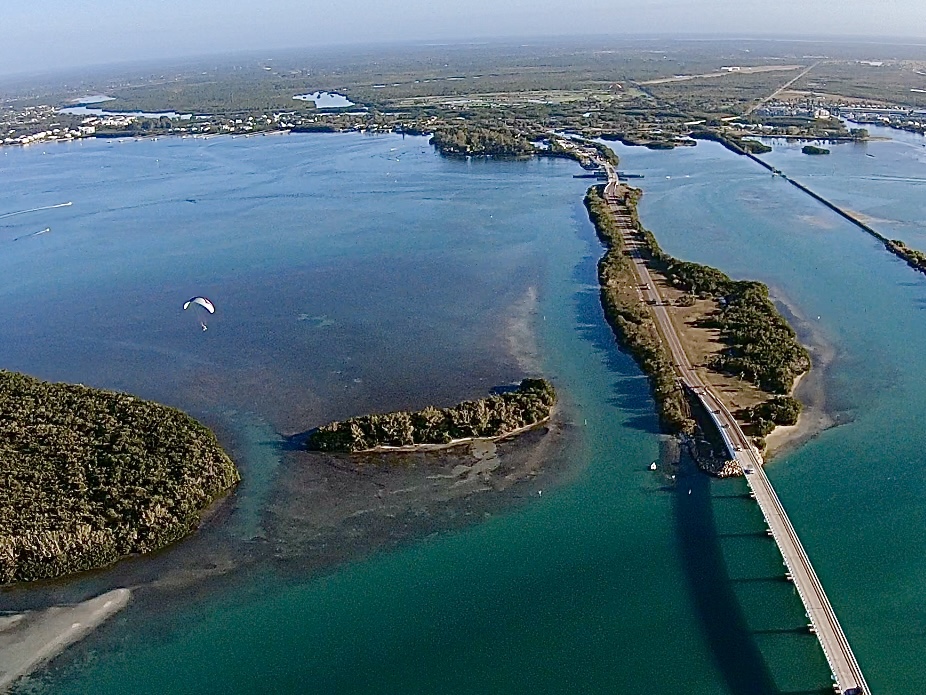


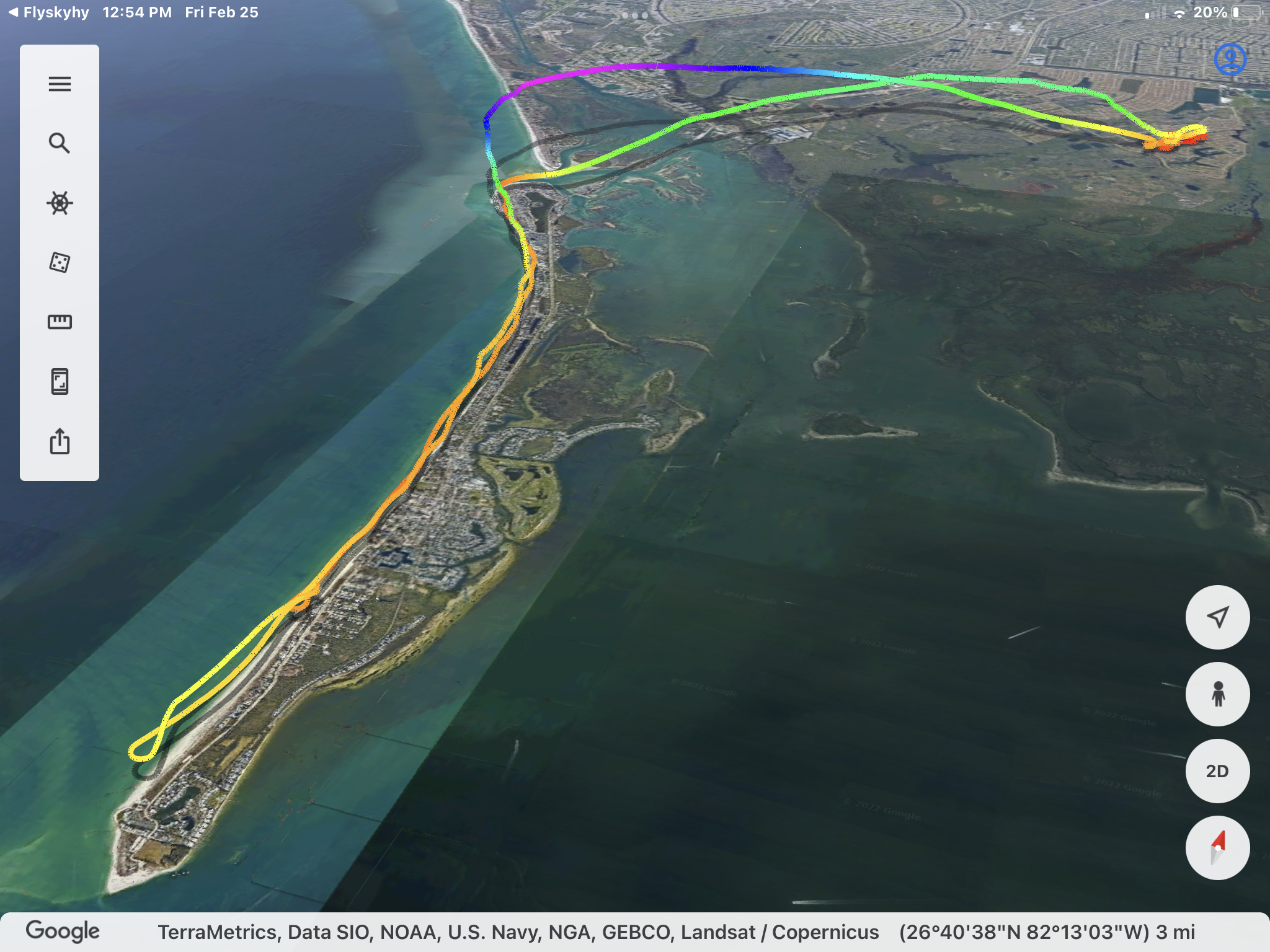






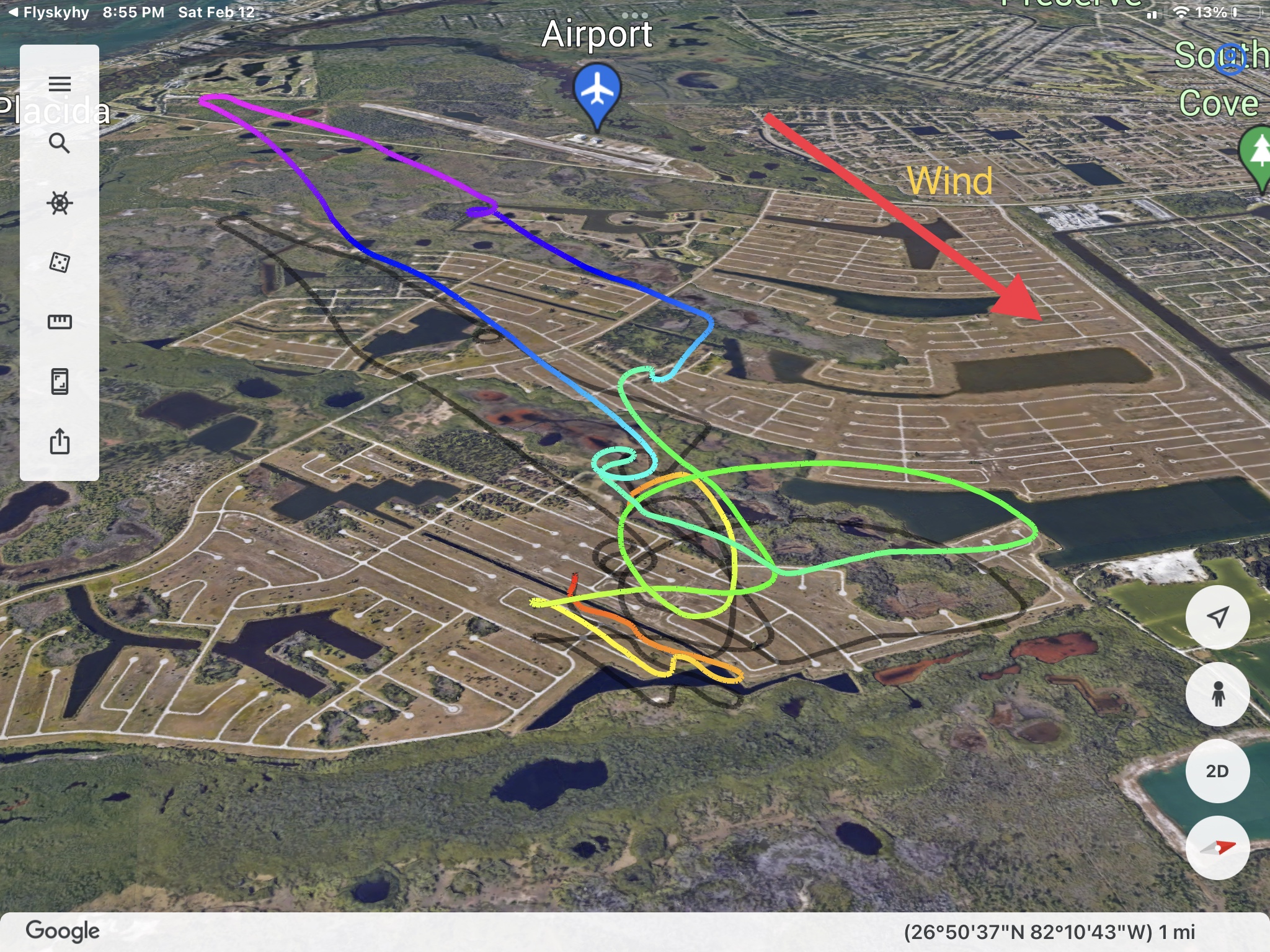
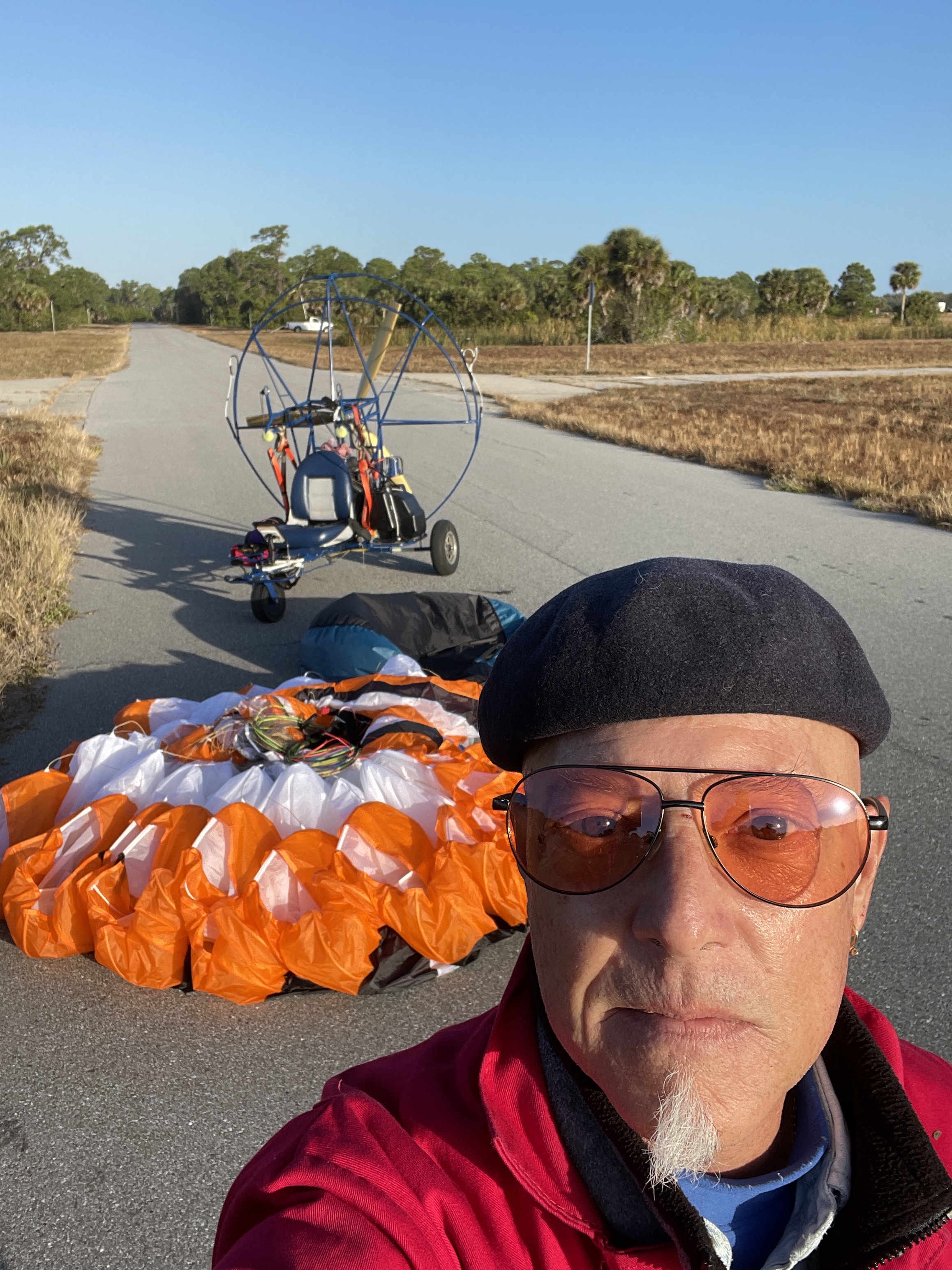

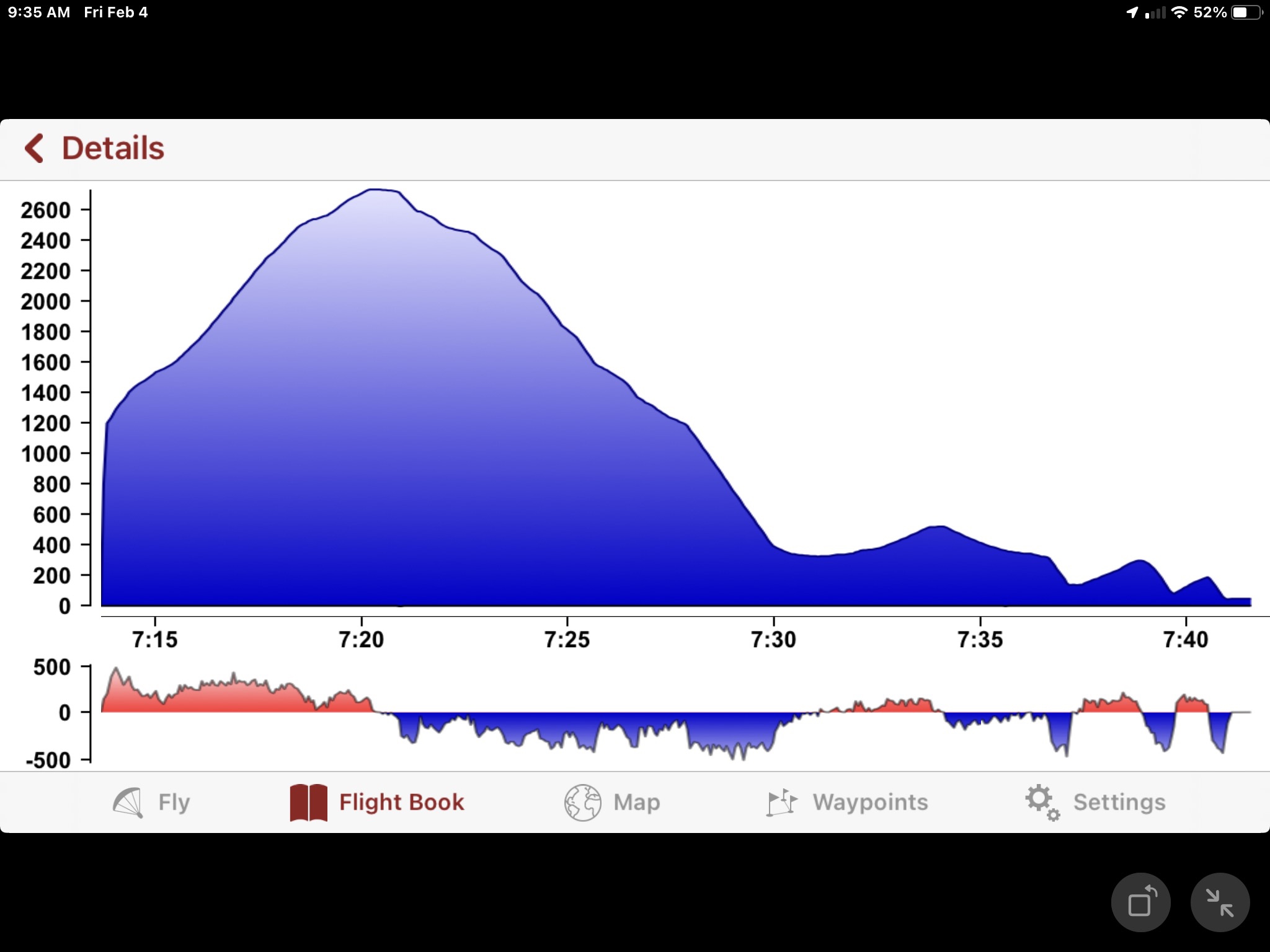






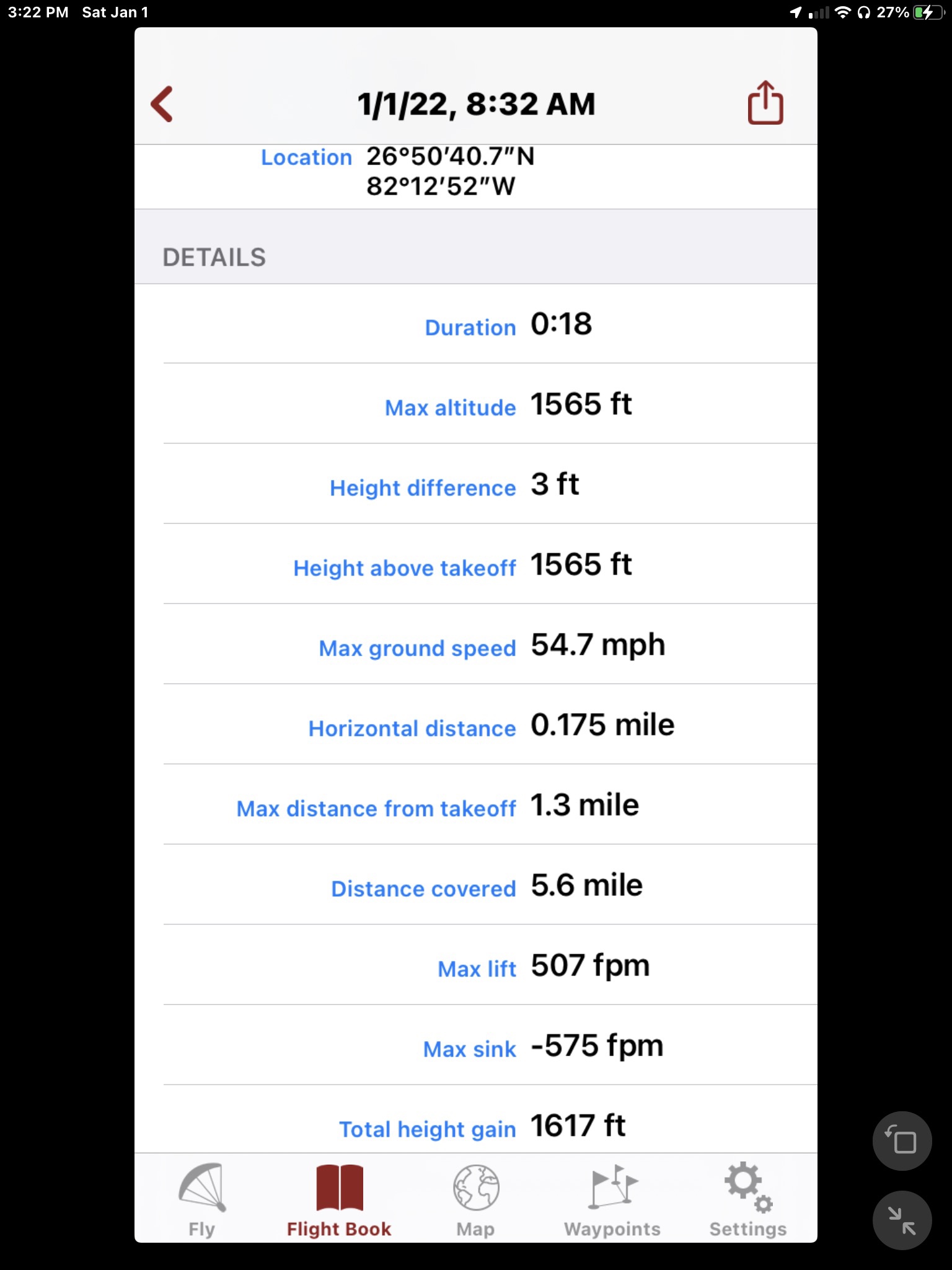
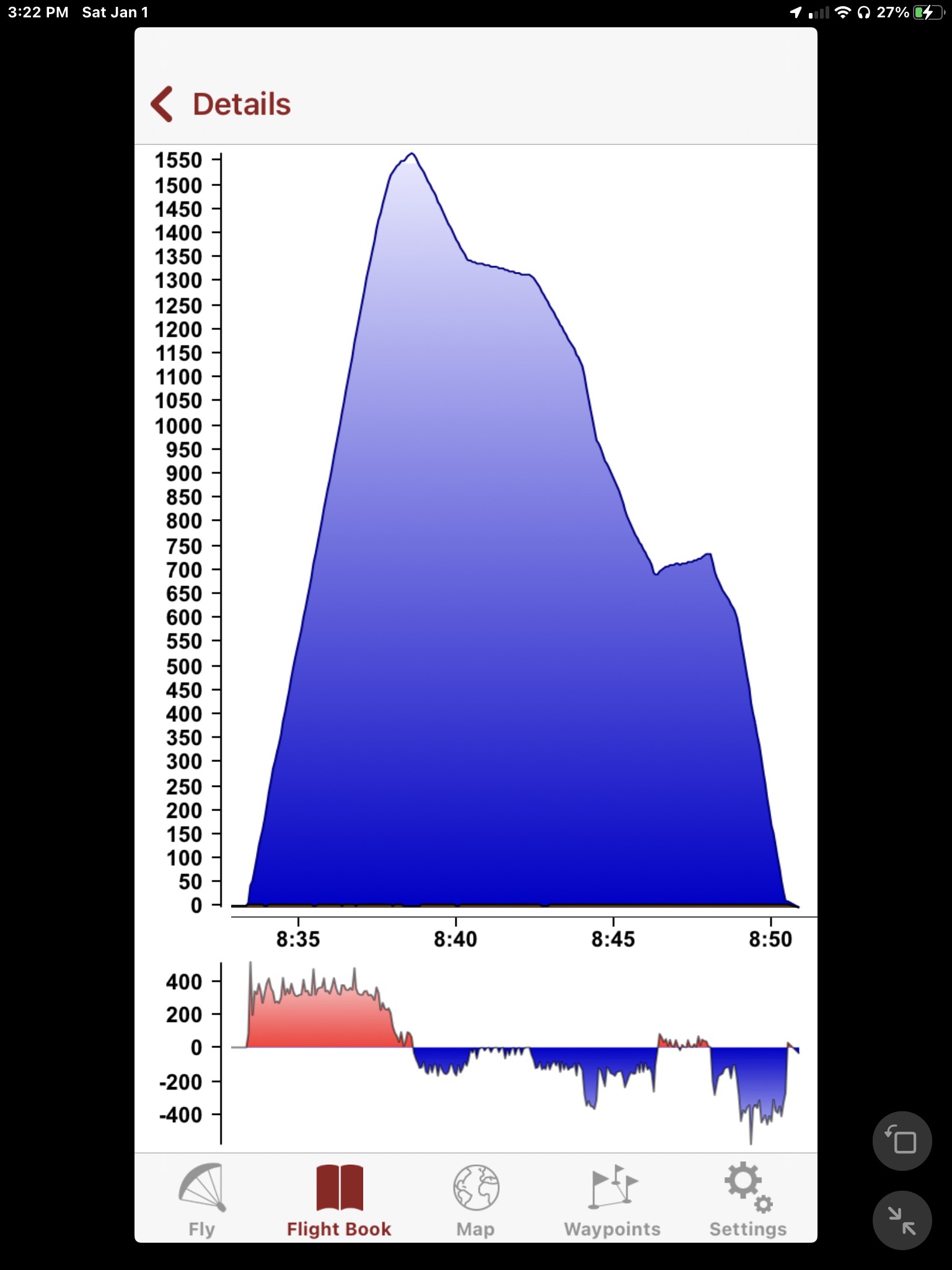


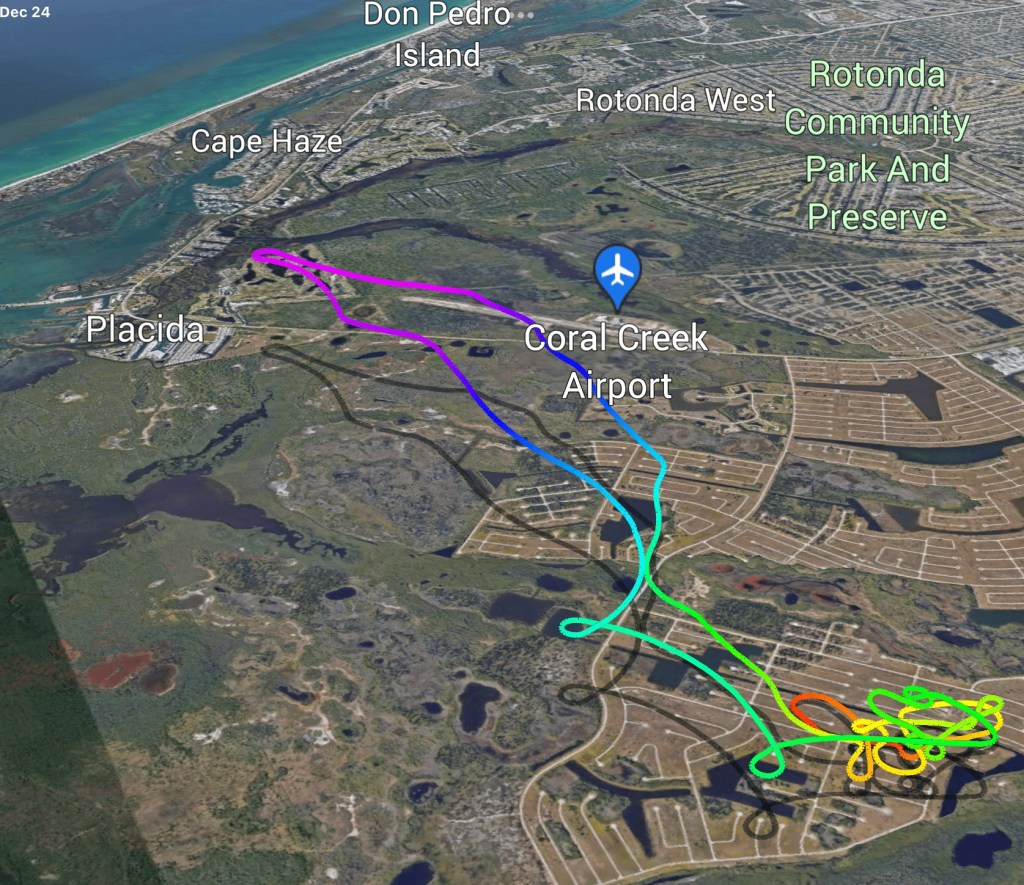


 Powered Paragliding. A most Personal form of Flight
You must be logged in to post a comment.