It might be a good idea to add some pressure in the back tires to reduce rolling resistance during inflation and roll out. If that does not work …then try some wider tires. The downside of bigger tires is that the buggy will not fit into the bed and will have to travel with the back of the buggy riding on the lowered tailgate. It might not be a problem but I don’t think I’ll be able to handle rough terrine as well if the tailgate can bounce up. Maybe if I use the ramps I can dampen the tailgate.
Today I saw the benefit of the A assists. If I’d had them engaged I wouldn’t have blown a launch I could have grabbed the assists and added some forward pressure. I think I’ll hook em up next time and use them as a guide to the A’s.
Author: JoeO
#275 Simms

The recent rains have jump started the prairie grasses making it a much slower surface to launch from. It took 3 attempts this morning. the first two because the buggy bogged down after clearing the ramps. I think if I’d kept the A’s in hand I might have saved the second launch but the wing fell back and I just couldn’t get enough speed to get it back overhead.

Then…on the 3rd attempt I didn’t clear the brake lines properly and the right hand line was looped up and over the b risers. It cleared itself quickly but there was a moment when I was considering an abort.

The RPMs have come down 150 to 3550-3600 and it’s decreasing the climb. I’ll back off the pitch a little bit and see if I cannot get it back up to 3750.
The Garmin 176-C is shutting down when shaken so I’ve removed the mount and will do everything with the Foretrex 102 from now on.
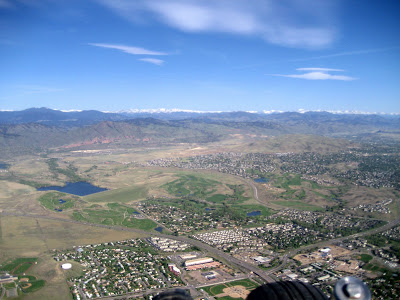
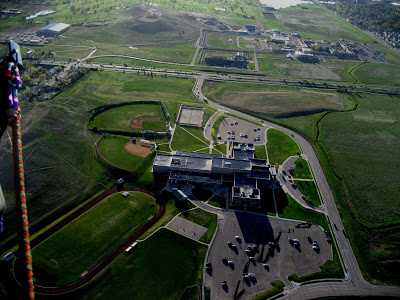
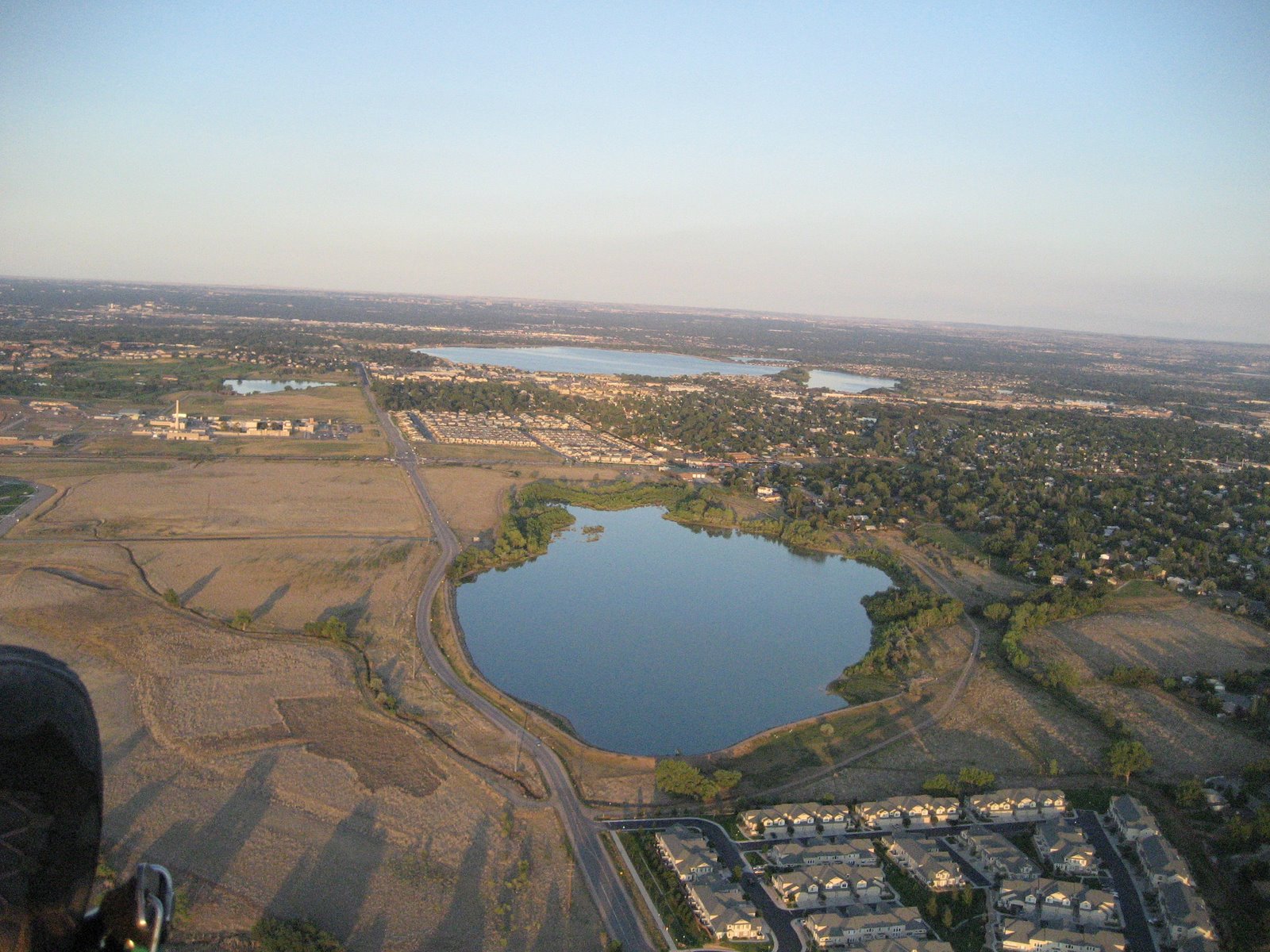
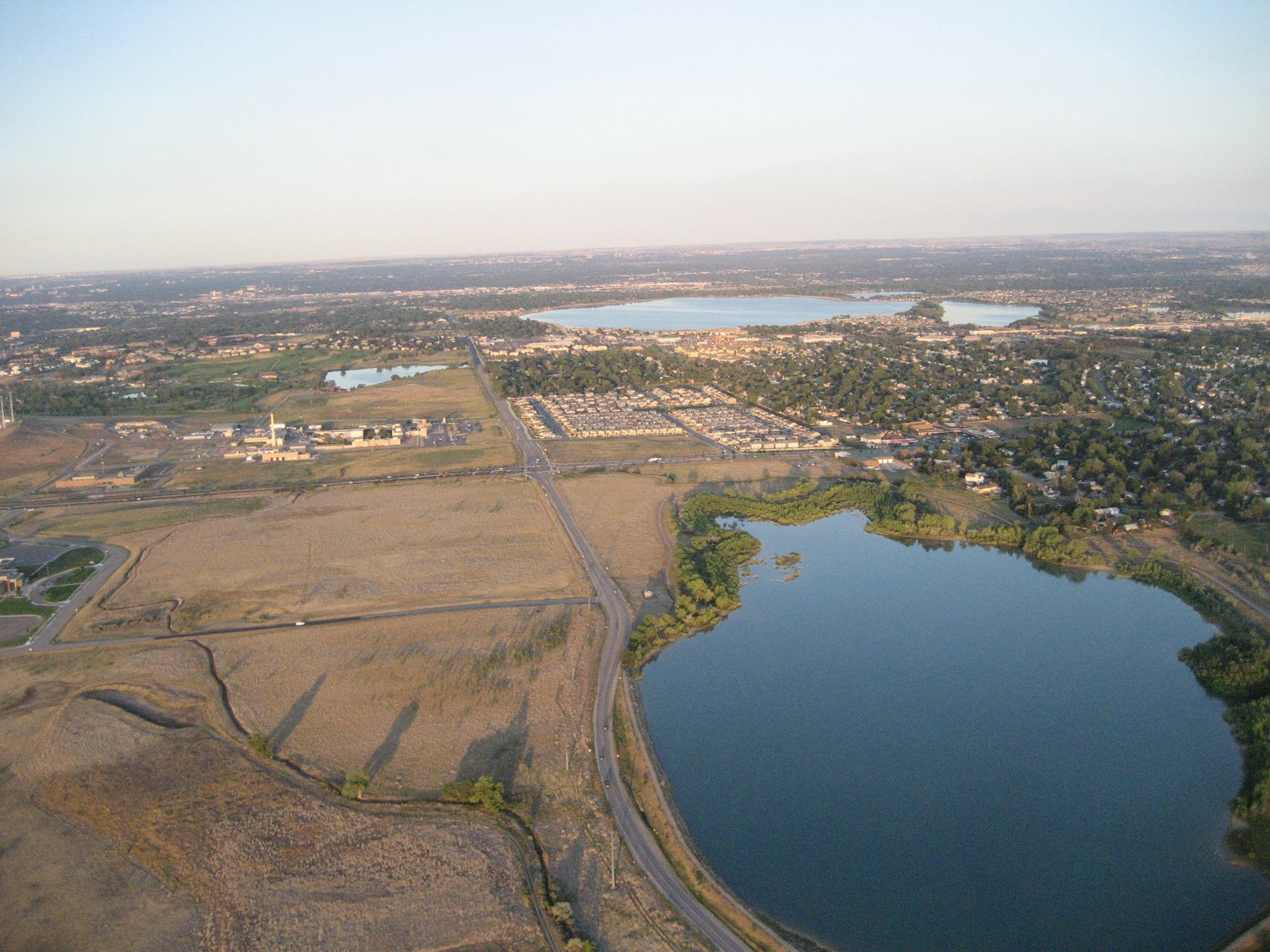
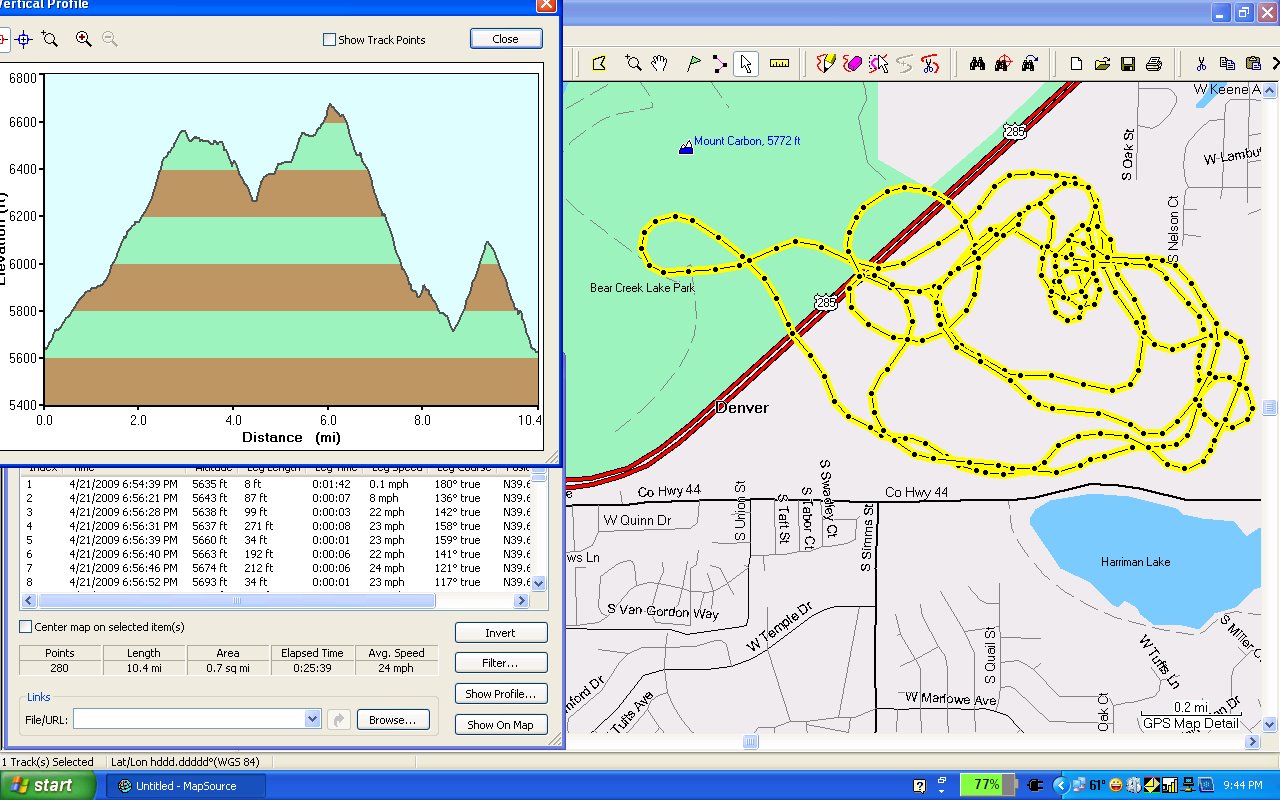
This morning the air was very calm until 6200 MSL where I ran into mixing air and some early thermal activity. It seemed to get worse the higher I went so I came back down to 500 AGL and enjoyed making turns over the patch as well as the High School and Prison.
I look forward to trying another wing…this powerplay likes to dance and I’m not so fond of the way the buggy is dancing under it.
Next flight I’m going to move the hangpoint loops 3/8 inch forward to increase the thrust vector and hopefully improve the climb.
All in All after the hassle of launching….It was a good flight. Only 25 more to 300!
274 Simms

273 Simms
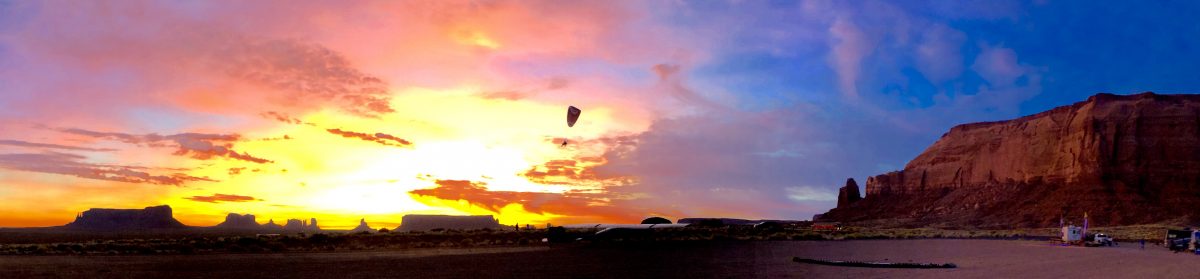
Big puffy cumulus over the plains and wind blown cumulus in the foothills. I got to the field right at 7:00pm and sunset was at 8:00. It was blowing 12 mph from the south west swinging all the way over to north west and back. Marek and I kited for a bit and Tracy even took a hand at kiting the sting. At 7:20 the sun set behind the foothills and we knew there was going to be a short window of good air. As I was getting the helium tank out some cool air flowed in without a breath of wind…I popped a black balloon and sure enough it was smooth and dead calm up at least 300 feet.
Marek got up first and with a little manual assist from Tracy to get the buggy rolling on the super soft soil I followed. The wind had started to pick up from the west a so I was forced to take off toward the wires and turn as soon as possible. The run out was a bit long and I noticed some bad friction on the right side but it didn’t prevent a clean right hand turn over Hwy 285. I followed around till I was heading toward the high school and took a minute to get some altitude and take the twist out of the right brake pulley. The air was nice and smooth at first but as I got to 6000 feet there were the beginnings of not bumpy but mixing air.
The Thumper was spinning at 3650 and I noticed that there is a little lurch when I goose it from idle. Probably getting a little belt slap as well. It sure sounded sweet when I backed off the throttle and…at idle I could not hear anything at all. For some reason I chose not to use the Emoitic plugs and IPOD and enjoyed the comfort of standard foam plugs. I’ve been missing allot by filling my head with music. It pays to be able to hear the motor and it would be great to flip back the ear cups when I’m descending or maybe even at level flight!
Over the High School I did some slow turns and worked on slight changes in the throttle. It would be nice if I could find a simple way to increase the throttle travel but I’m finally getting used to it. It helps to use the two little fingers on the throttle and the bigger two on the brake.
After climbing to 6200 I did slow descending spirals over Soccer field and and made an approach toward the truck. The air had “turned” down low…there were areas of sink and lift making it difficult to make a long low approach so I did a fly by at 40 feet and went around again. Turning clockwise at full power I was really disappointed with the climb but it was as much sinking air as lack of power. Hopefully a new set of blades that are two inches longer will be enough improvement to make me happy. Maybe I’ll even be able to get a little bank on a full power turn. 
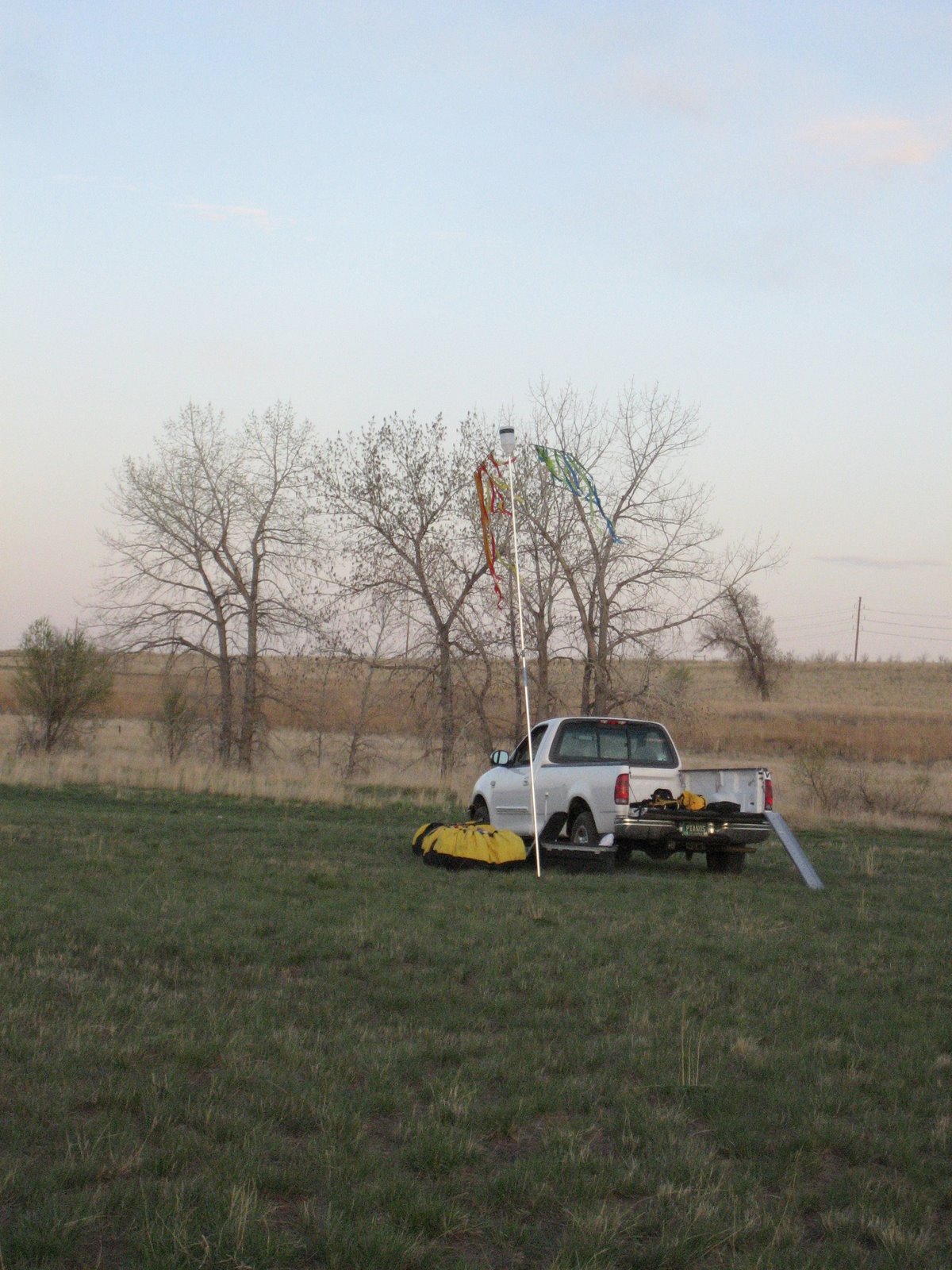
The second approach was smoother and I set down right by the truck. Tracy hung around while we packed up and promised to e-mail some photos if he got anything good. Short but sweet….Just what I needed to kill the funk after spending the last 4 hour stretch alone at the store.
Explanation of two stroke power by Mike Noland
Note to nubes about thrust ‘tests:
Two stroke engines are about managing very rapidly oscillating pressure pulses. The pulses are managed by intake tract configuration, intake valving(usually by flexible reeds), shape, size, angle, and timing (position and angles of edges) of ports, ignition timing, and timing of exhaust pressure pulses reflected back by expansion chambers.
When intake and exhaust pulses are timed to push the most fuel/air mix into the cylinder as the ports close, you get the most power. The speed of the pulses is affected by rpm; it’s not possible to make the engine charge at maximum efficiency over its whole rpm range.
Tuners are left with some choices. Motors can be tuned to produce a high power number across a narrow rpm range, or lower number across a much wider range. Engine makers who tune for peak power, like a motocross bike, like to compare their peak numbers to FBs, because FBs are tuned to produce a lower number across a wide range, like a street motorcycle or a conventional airplane engine.
The engines tuned for peak power work best for flying styles that resemble motocross racing; if you do a lot of acro such that your throttle is always either wide open or idling, you’ll be happiest with something tuned for a peak power number. The engines tuned for useful power across a wide range of rpm are better for level cruising. They easily hold constant rpm over a wide range, which means you don’t have to pay close attention in order to cruise along in level flight with your engine running smoothly and happily.
Engines tuned for peak power very much want to run in their narrow zone of efficiency, which is often at a power level too high for level flight. If you run them where they are happy, they climb. If you insist they cruise level, they are harder to hold constant, and because they are out of their zone of harmonized intake pulsation, port timing, and exhaust pulsation, they run raggedly and blow a lot of unburned fuel right through.
A while ago, a friend who had only flown motors tuned for peak power asked to fly my FB Solo 210. He ran it up on the ground, and was concerned that it might not make enough power. When he launched it, he ran 20-25% farther than he did on his peak-tuned motor. His climb rate was not as good as it was on his peak-tuned machine. Not good so far.
His attitude dramatically changed once he leveled off and went for a cruise. His radio chatter was all about how incredibly smooth, smooth, smooth the 750-hour-old FB was. He went on and on about how easy and relaxing it was to fly. It appeared to him to be more powerful flying level than his peak motor, and at those low rpm levels, it probably was. He landed smiling, and ordered a FB Simo the following Monday.
No matter what your salesman tells you, your two-stroke can’t have both killer power and Cadillac cruise. If you want a motor that runs like a car over a wide range, cruising comfortably and economically over long distances, the peak power guys will out-climb you. If you want the thrust king, it won’t be as pleasant to fly on long cross-country trips. Those are two-stroke facts of life.
Fly high,
Mike Nowland
Flight 272 Simms
Flight 271 Simms
No Fly Day in April
Pros and Cons of the Thumper
The biggest downside to going 4 stroke is the lack of fun things to do while not flying. Having spent the last 4 years immersed in this sport, I was comfortable with all the the wonderful little things that are a normal part of a PPG pilots life. The nights spent in the garage replacing compression springs or driving to the airport after dinner to pick up AV Gas. If I wasn’t searching the Internet for the best buy on Castrol TTS, I was waiting for the UPS man to deliver a 160 dollar starter sprocket. It seemed like I was either working on the maching or flying it.
For every minute in the air there was an equal or greater amount of time occupied with the care and feeding of my 2 stroke paramotor. If it was blowing…no problem, I have a pull starter to rebuild.
These days… things are different, because the heart of the “Thumper” is a Briggs & Stratton, twin V, 4 stroke motor. Thousands of these motors are built every year and the economy of scale makes it possible to produce a very affordable motor with excellent manufacturing tolerances and a beautiful fit and finish. They are designed to run 10,000 hours at peak horsepower, so it’s not unreasonable to expect to fly hundreds of hours with nothing more than an annual check-up and oil change. When necessary, parts and expert service are readily available at the local lawnmower repair. Gone are countless hours tinkering with the machine. No mixing fuel, exotic tools or translating owners manuals. Now ,when it’s too windy to fly, the best I can do is wish for better air. You still have to be ready for a “motor out” and have an emergency landing site within the glide slope but the reliability of this motor instills a confidence that allows for flights that would not have attempted before.
Flight 270 Simms
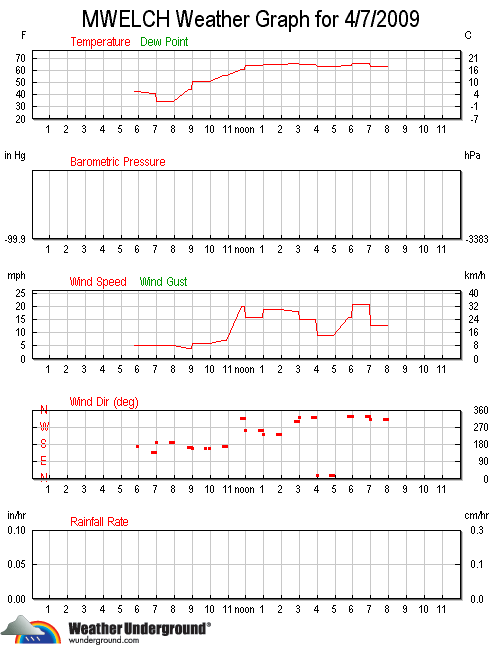
The wind speed chart shows moderately high & gusty winds from the south south east. Sunset was at 7:00pm.


You must be logged in to post a comment.