


Flew a Nuvik tandem. First impression was that the wing required to much pressure and was sluggish.
No sale
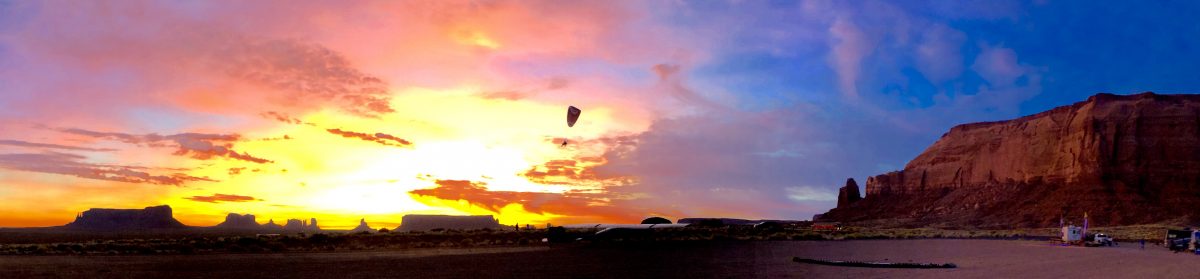
Demo of Nuvik tandem wing
Flew a Nuvik tandem. First impression was that the wing required to much pressure and was sluggish.
No sale
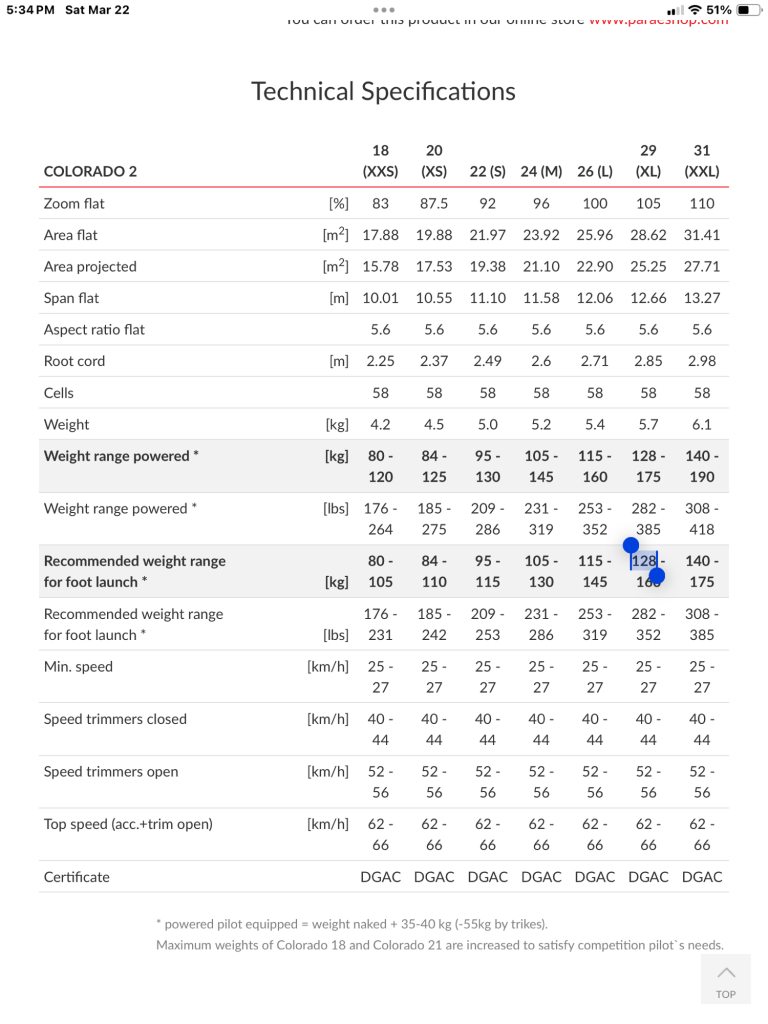
Demo of the MacPara Colorado 2, This wing is 27m which is 6 meters smaller than my current Colo (1st gen)27.
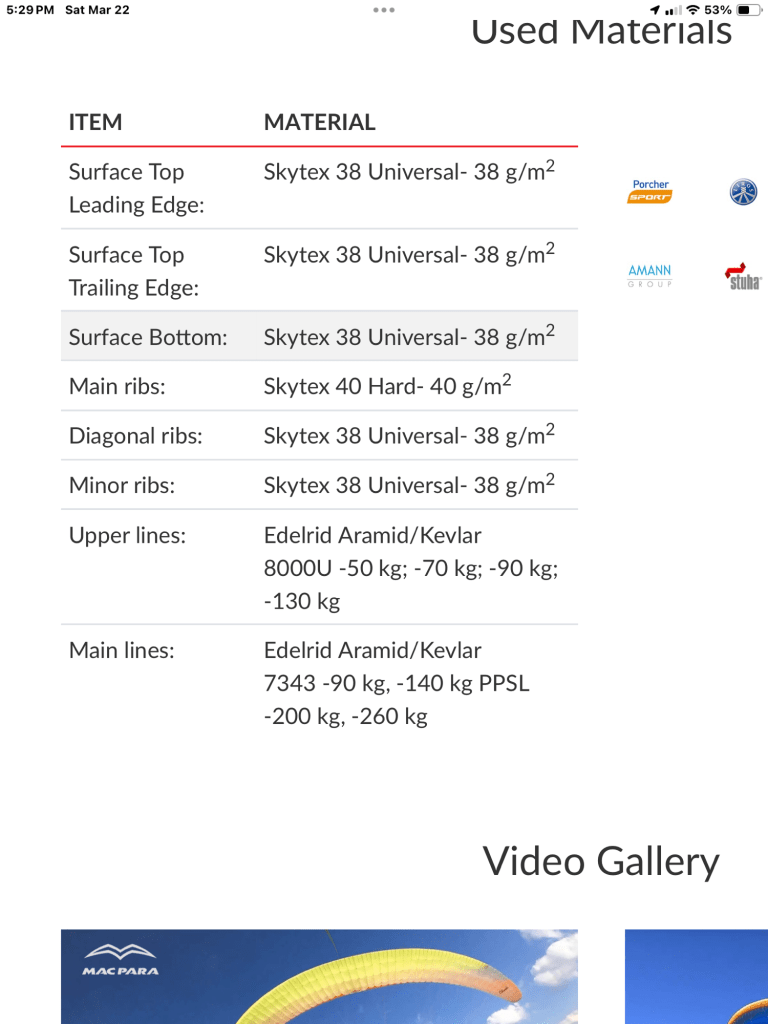
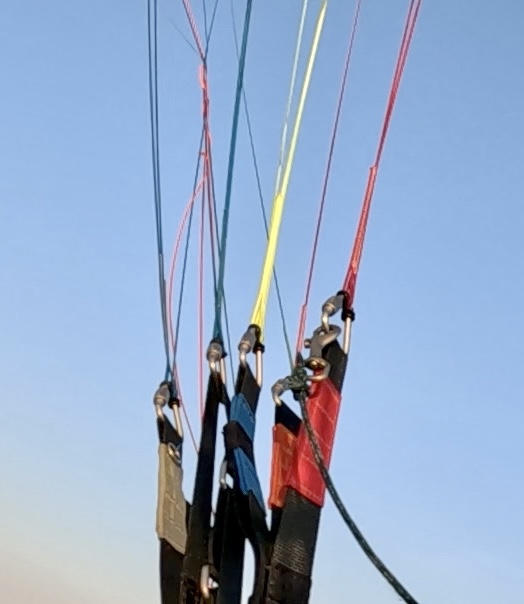
My first impression was how light this wing is. Partly due to the six less meters of fabric also the sailcloth seems lighter. The un-sheathed lines have been replaced with sheathed and the cascades have been simplified. Accordingly the risers are simpler and the webbing they are made from is a lighter spec. They still sport 2-d steering and two finger wing tip toggles but lack the bungees on the WTS to increase resistance.
It’s the same basic design style but without the expensive refinements that made the Colorado special. Sky-tec has been replaced with rip stop. Complex risers have been replaced with simpler ones that limit the pilots ability to tweak the steering configuration. High tech wind cheating un-sheathed lines are now thick Kevlar. The brake magnets were acceptable but weaker than the mod. 1, at least they are still on both sides of the toggle, which is stiffer that the previous wing.. The price was still a hefty $4600 but that can attributed to inflation and profit seeking because this wing is clearly less expensive to produce.
The wing came up a little crooked but responded to input and stabilized quickly. I chose not to use A-assists which was probably a mistake because I released a bit early. Fortunately the wing didn’t fall back.
Initial climb out was excellent but there was a noticeable pull to the left that had to be adjusted using trimmers. Cruise RPM WAS 3100. I was at the top of the placard for this wing and it showed with increased speed and stiff brakes.
The flare authority was poor but that could also be attributed to the pilot and unfortunately there was only one flight so no comparisons are possible.
The tip steering was fine but I wasn’t impressed with the 2-d steering. Again, more flights would have been helpful.
The temperature at launch was 40* F with nil wind. I would have liked to gone up to 2000+ ft but the cold air was keeping me low. No hard yanking and banking today.
Overall, it’s a nice wing that would be a lot of fun with a lighter rig but it’s not the wing for me.


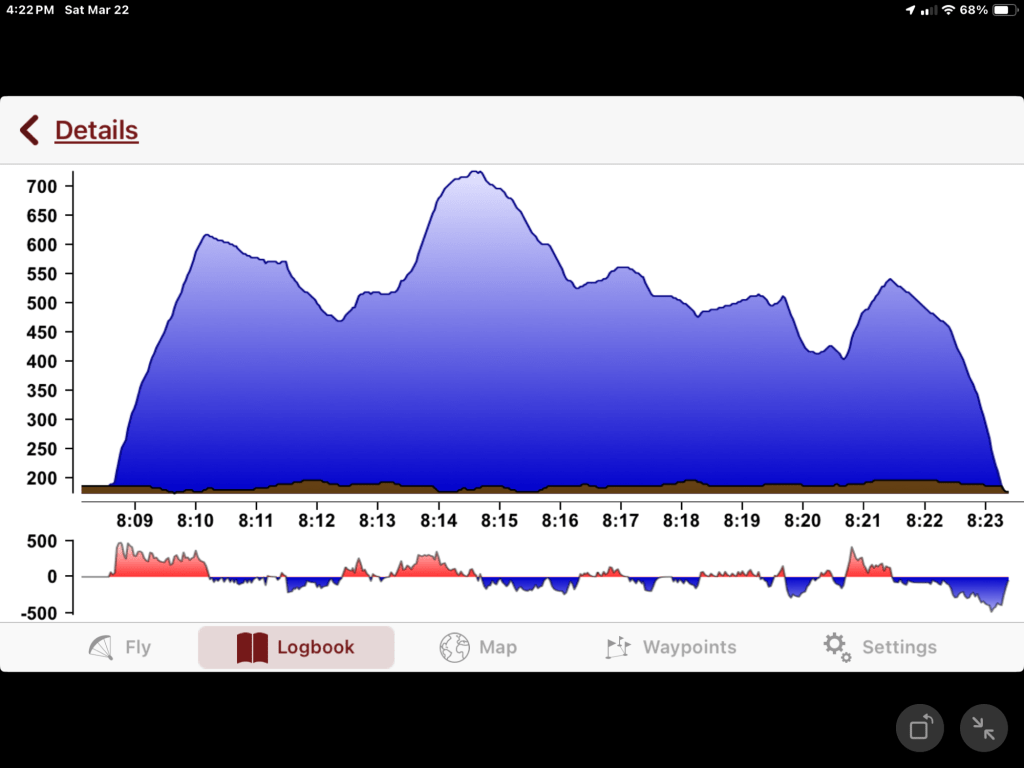



It was a long drive but it was worth the time and money to know for sure that the Colorado 2 was not for me. It’s going to make a lot more sense to have new line sets on the APCO. and Colorado that add this wing to the inventory for considerably more money.
It was a beautiful day for a test flight. Yesterday Troy, “The Krazy Kracker“ and I installed Robert Kittila’s Throggle. A throttle that has the brake toggle fixed to the body of the throttle body allowing the pilot to start the engine after he has the risers in hand ready to launch. Visually it’s a work of art. A black matte handle contoured to fit the hand with a groove cut for the brake toggle. The start, kill button and throttle/cruise control are molded into the top so that all the controls are within reach of the thumb. The cruise control is an aluminum tab that is easy to adjust and engage.
The first flight was cut short when I noticed a line tangle right after lift off but everything worked as advertised. The second launch was also a short flight but it allowed me to test the throttle.
I hope Robert finds a market for the throggle but it’s not me. After a very short flight I found a couple of things that were show stoppers. Probably the biggest is that it’s not easy to clip the throggle to the risers and I’m not sure they would stay attached in every situation. I like to park the brakes and give my arms a rest. Theoretically, with the throggle you set the cruise control and park the brakes but that doesn’t work for me because even when I’m out of the brakes I like to have control of the RPMs. It’s cumbersome to keep reaching over to adjust the cruise tab especially when it’s attached to the magnets. Incidentally the cable is too long and it looked like if it came off the magnet, it could easily be sucked into the prop. So …. I stopped testing parked brakes right there.
One issue was during the launch. I like to have my hands on the A lines during inflation. It’s possible to hook the #1 A with the thumb and control the throttle but once the wing is up, the A needs to be released and the thumb lever also gets released when that happens. So… for a moment the thrust is reduced. On a hard surface, like this morning, it was no big deal because the cart had very little drag but on grass the cart would slow immediately causing the wing to surge, forcing me to brake at a low speed to keep the wing overhead. It would delay the launch and add unnecessary complexity. The A assists can do the job without me being in the A’s but I like to feel the wing during those crucial seconds.
The thumb throttle control works fine but the spring tension had to be reduced to accommodate the short lever weaker thumb. I can imagine that without using the cruise control the thumb could get pretty tired.
Another problem was the way we wired into the motor. The starter can be engaged at any time whether the key is in or not. It can be tapped during a flight or perhaps while we’re standing around in the garage. It would be much better if it only engaged when the key was turned to run. That can be fixed if I change my opinion and decide to continue with this throttle. As it is, I’m going to have to rig some kind of mid-cable leash that will prevent a lost cable from going into the prop.. I’d like to put a Velcro hand strap across the body but I’m afraid that the toggle Not In the nifty groove would be too thick for my small hands. Plus …. Velcro adhesive doesn’t want to adhere to the 3D printed nylon.

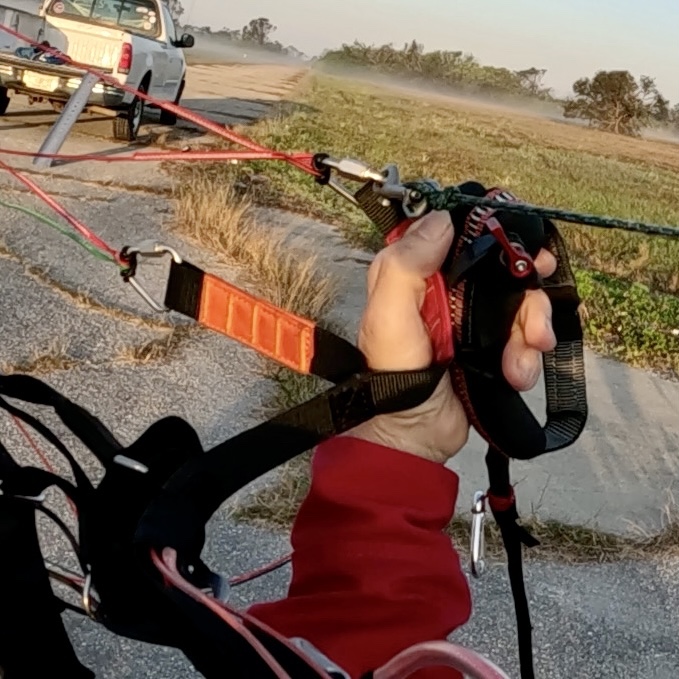
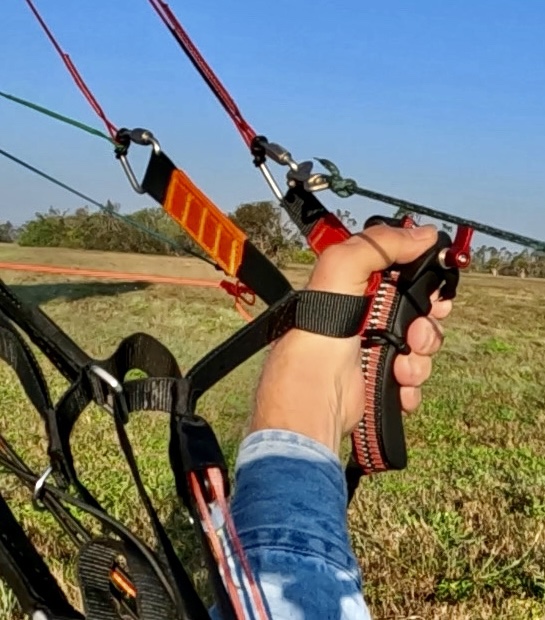
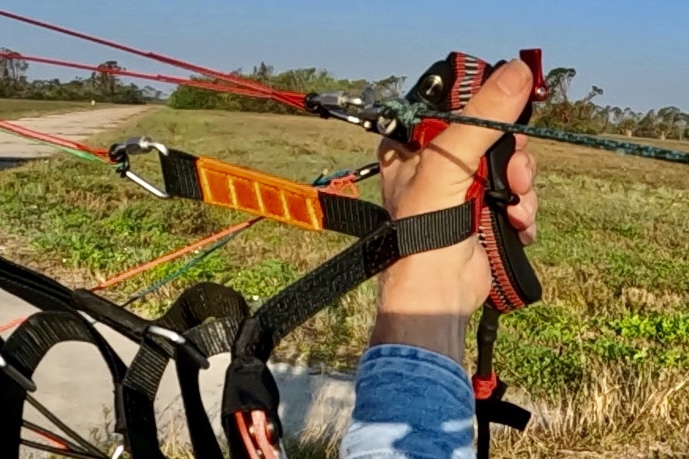


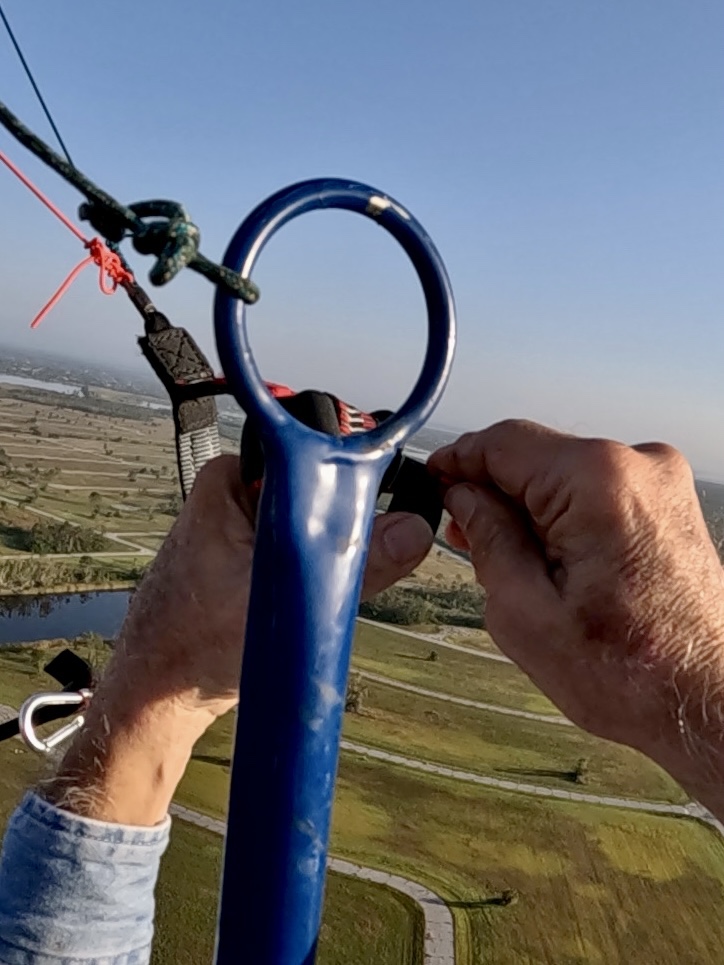

I might have a couple more flights with the throggle but right now I’m pretty sure I’m going to re-install the old lever and be on the lookout for a new one with a start and kill integrated to the body of the throttle.
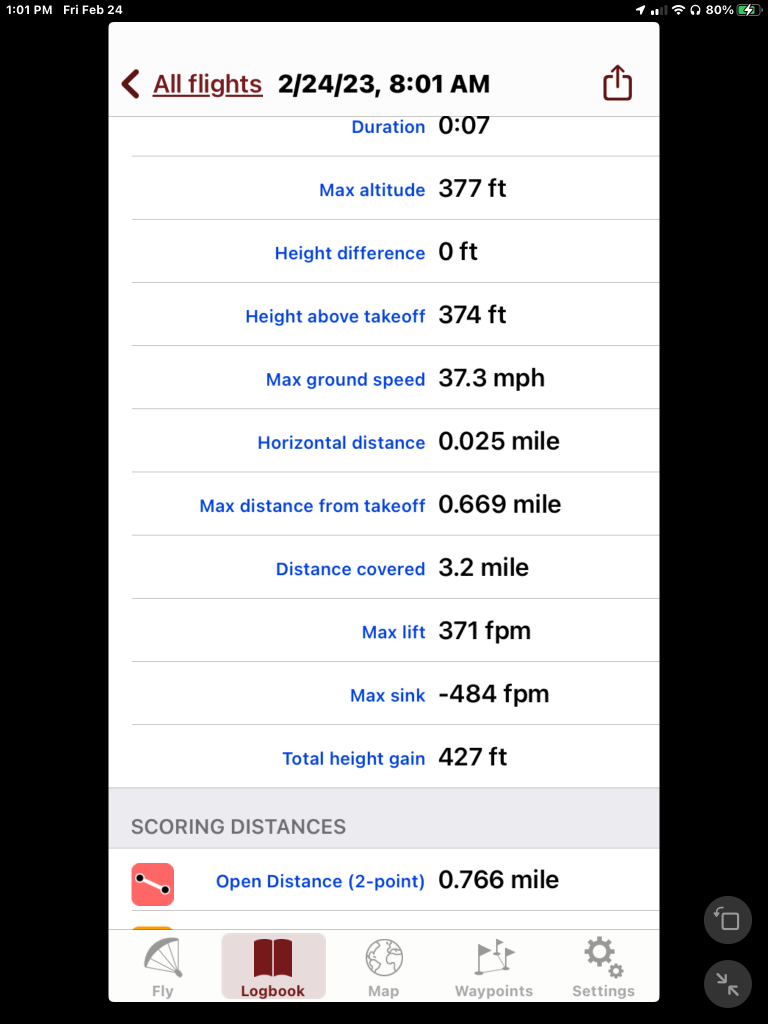
Black wire is ground, red to the coil, the other two blue and yellow to the electric start relay.
My first impression was, “this is too big for my hands. I couldn’t reach all the buttons and controls unless I could changed hand position on the fly.
But… The biggest issue on my mind, was that, the throttle was going to be integrated into the brake handle. Which meant, that, I wouldn’t be able to modulate the motor while using the WTS.
And… With my current wing, (APCO LIFT EZ), the WTS is what you use when in reflex mode. The brakes are forbidden and using them in Reflex mode could well cause a collapse. I suppose, you could hang up the brakes, set the RPM and fly that way but it would be a different style of flying. No backing off the throttle when coming out of a hard turn to dampen the bounce.
How hard would it be to disengage the brake lever to use the WTS? It would probably mean another strap to attach the throttle to the hand, the same as a conventional set-up.
I fashioned a strap using one wrap and an adhesive backed piece of “male” Velcro attached to the body of the throttle. Moving the strap around the handle I was able to find the sweet spot that put all the controls within easy reach.
The twist ties are not necessary. The brake handle nestles into its groove nicely. I don’t think the throttle would fall out of the brake toggle, even if it were hung in the risers. Yet… it can be removed easily, allowing the pilot to go to the WTS.
Day 2
This morning after a nice sunrise flight, I started the swap. After a trip to the hardware store and a few bruised knuckles, I was ready to test it…
First attempt was a huge success. It started right up and the kill switch worked. The second attempt was a disaster. It took awhile to figure it out. What happened was, the start button failed and stuck in the start position. I think the machine is alright, the starter was red hot but I was able to pull the battery cable before it burned. I spent the next hour removing the throttle. I wanted to reinstall the old throttle but it needs a new brake cable that won’t be available until tomorrow.
I’m returning the unit to Robert and look forward to seeing the next generation.
Update… the job is done. Three layers of metallic gold and 3 coats of high gloss topcoat.
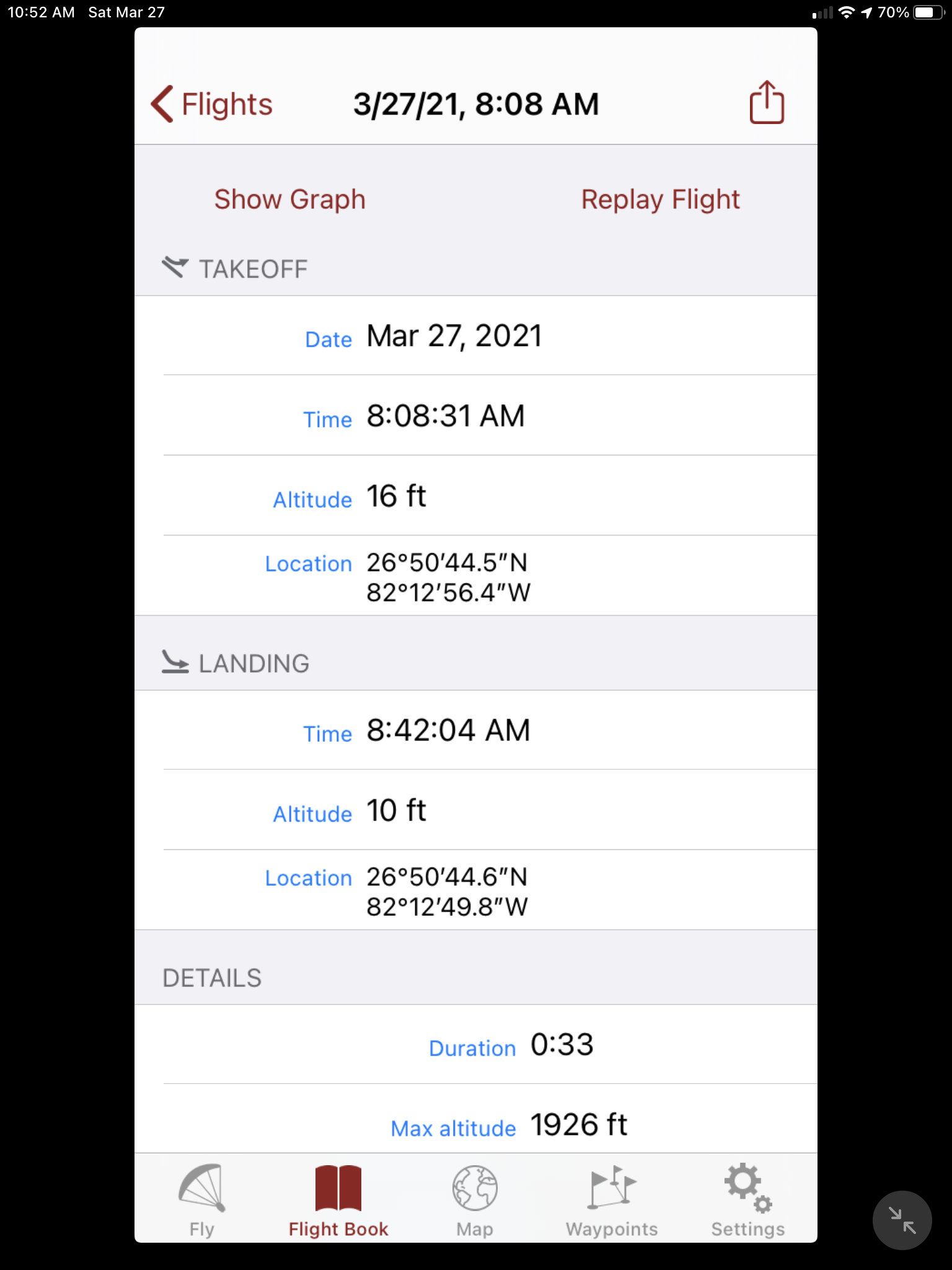
This was a very satisfying flight. Yesterday, I was at Lake Suzi and decided not to fly, it just didn’t feel right. The wind was cycling between 3 and 8 mph and shifting randomly through 45 degrees. I didn’t want to have another 2 minute pucker flight because I was being thrashed as soon as I cleared the trees. So, with not a small amount of reluctance, I turned back and headed for home.
It’s early in daylight savings time, the sun is rising at 7:30. Like yesterday, I got up at 5:30 and was out the door an hour later. The predicted winds were 30 degrees off the forecast, making for a cross wind launch at Suzi so at the last minute, I changed plans and skipped Suzi and went to Placida instead.
There was a beautiful pink full moon setting as I drove over the El Jobean Bridge. When we hit the dew point of 70 degrees the windshield fogged up. It was certainly a much warmer morning than usual.
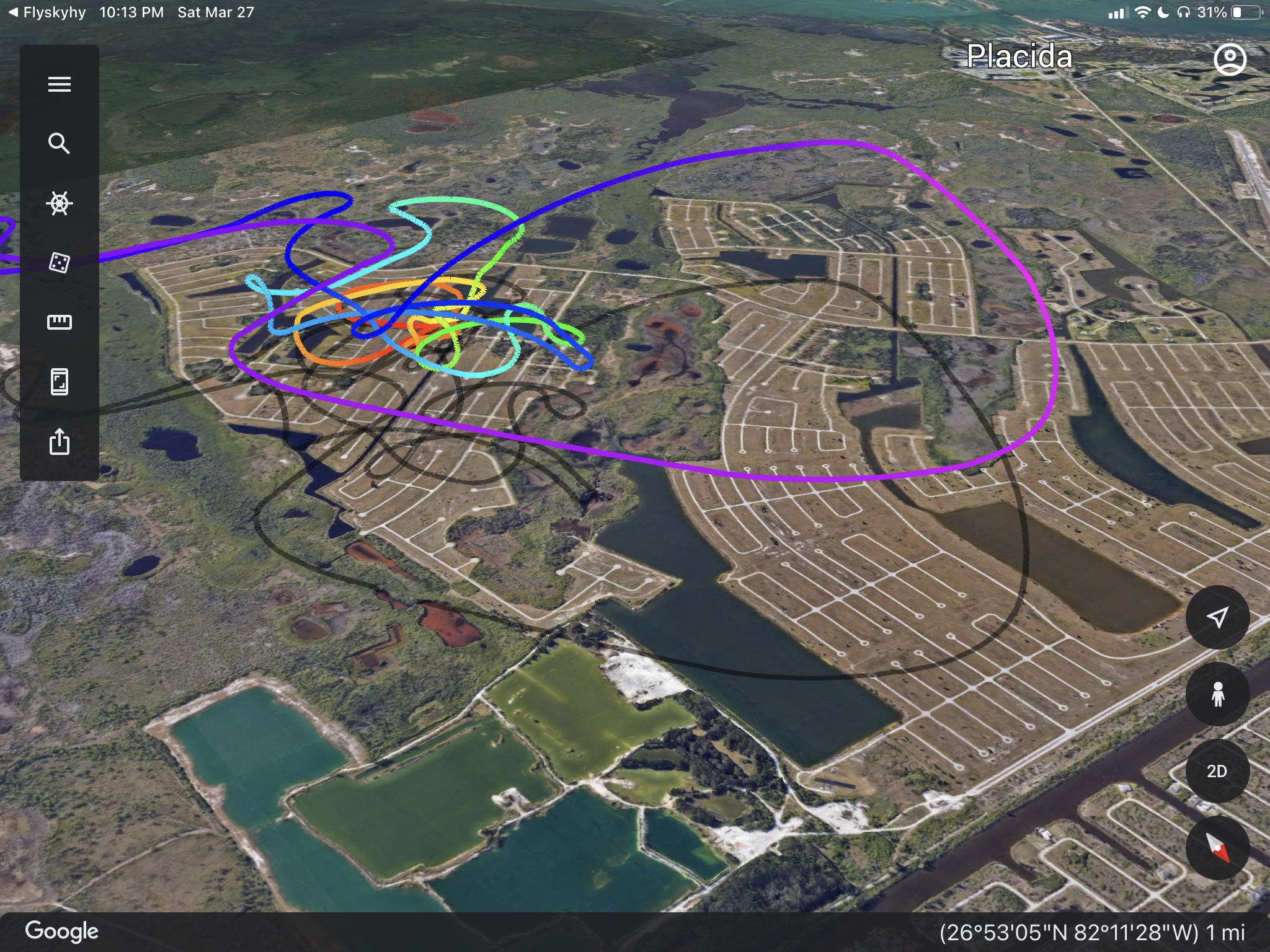
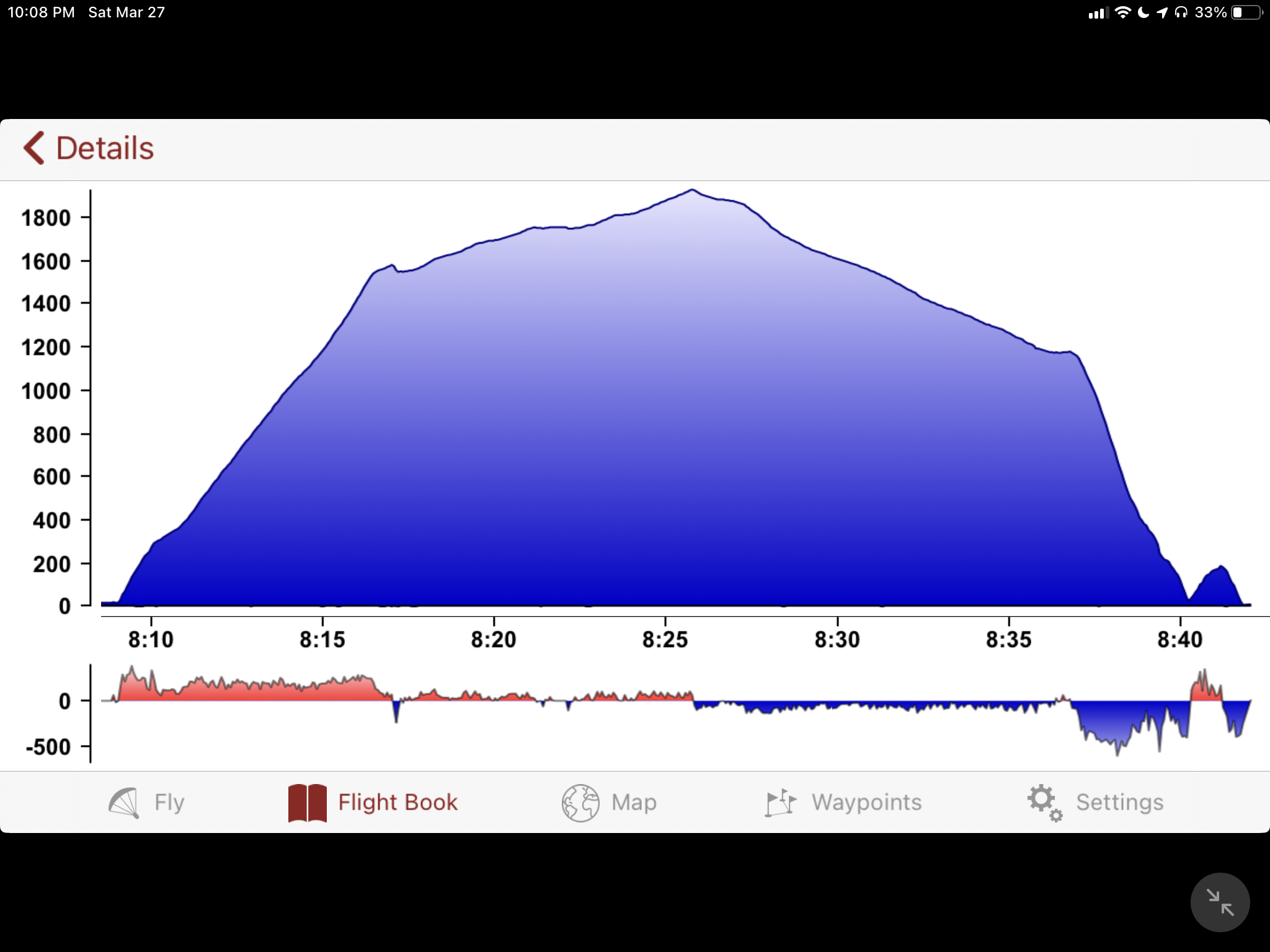
The inflation and runout was,” the best overall “ in a long time. It took about 150 feet to reach takeoff speed but the rotation was clean. It was a little twitchy up to 300 ft and the winds aloft were 45 degrees further south. The clouds were coming in bands. Flying just above them, it looked like a total overcast. The cloud bands were moving southwest at about 12 mph. I’m adverse to landing blind, so, I paid close attention. I was confident that I would not lose sight of the surface but the overcast illusion was persistent until I was 1000 feet above the clouds. They were thickest to the north and very light over the Gaspirilla causeway.
I quit climbing about 15minutes into the flight and enjoyed “buttery air”. The only turbulence I encountered was my own prop wash after some button hook turns. The decent was smooth to 500 feet where it got spicy real quick. I setup to flyby the windsock and hit some nasty sink at 200 feet. In a heartbeat I was 100 feet lower and still descending . I powered up and flew level through some strong rotor coming off the jungle. Eventually I got above it and circled back to a surprising soft and slow landing.
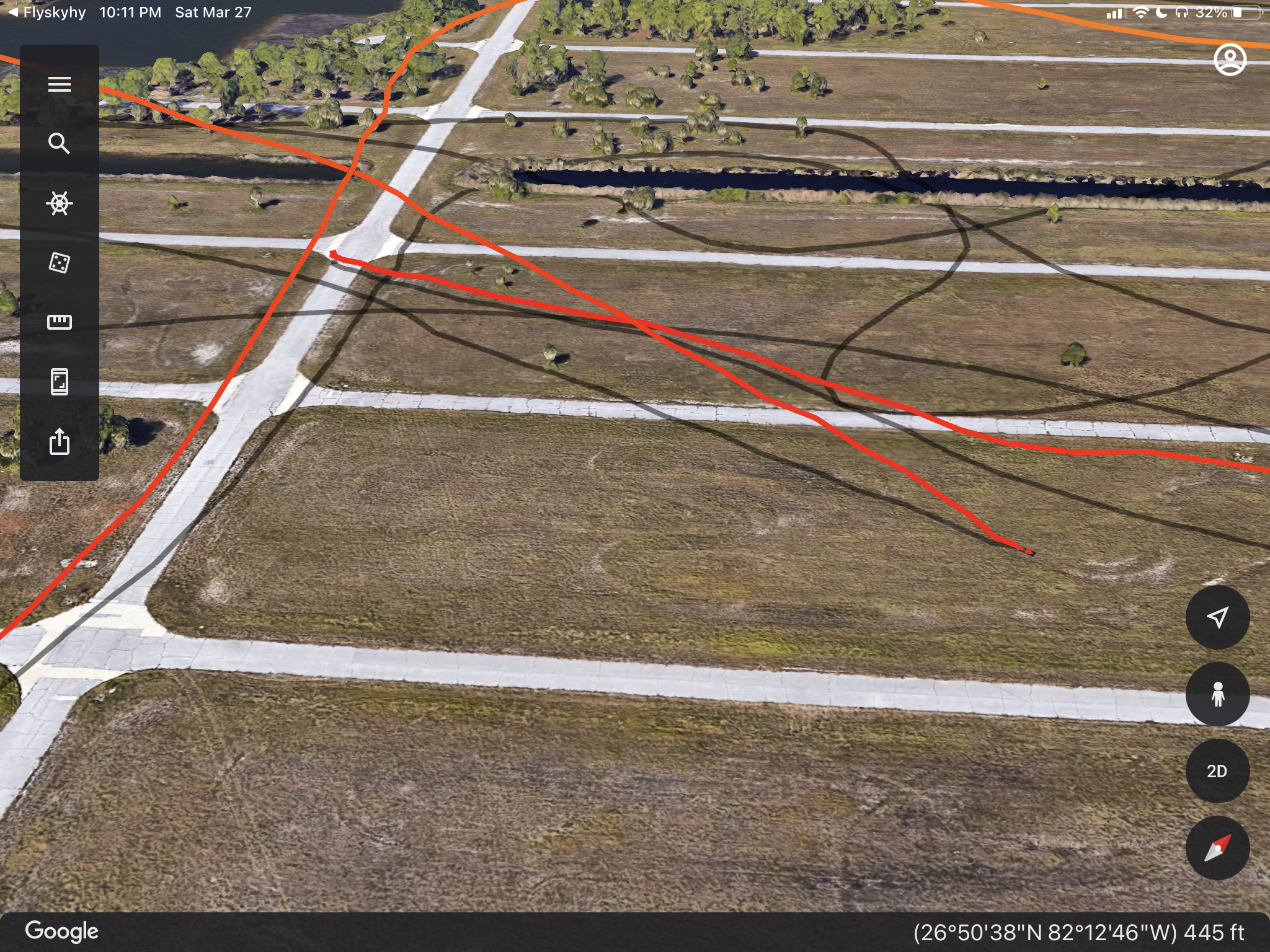
The APCO Lift EZ did really well with the turbulence despite being trims in for landing. I was getting pushed around pretty bad but the wing didn’t oscillate. Today would have been a good day to experiment with 2D steering while I was at altitude in smooth air, I really should have tried flying the wing with both wing tip and brakes together.
After the flight I kited for a bit. Again, the wing felt great. It was a bit damp but still came up nicely. Another point of note; this was the first time I flew with the new flight suit and swamp boots. No bugs or wet feet. No weeds snagging my legs and at altitude I was warm and comfortable. It fits great, even after I landed and tied the top part around my waist. (The alterations cost more than the suit). I’m not sure I care for the color (red) but performance wise …. I’m happy.
 .
.

 Powered Paragliding. A most Personal form of Flight
You must be logged in to post a comment.