
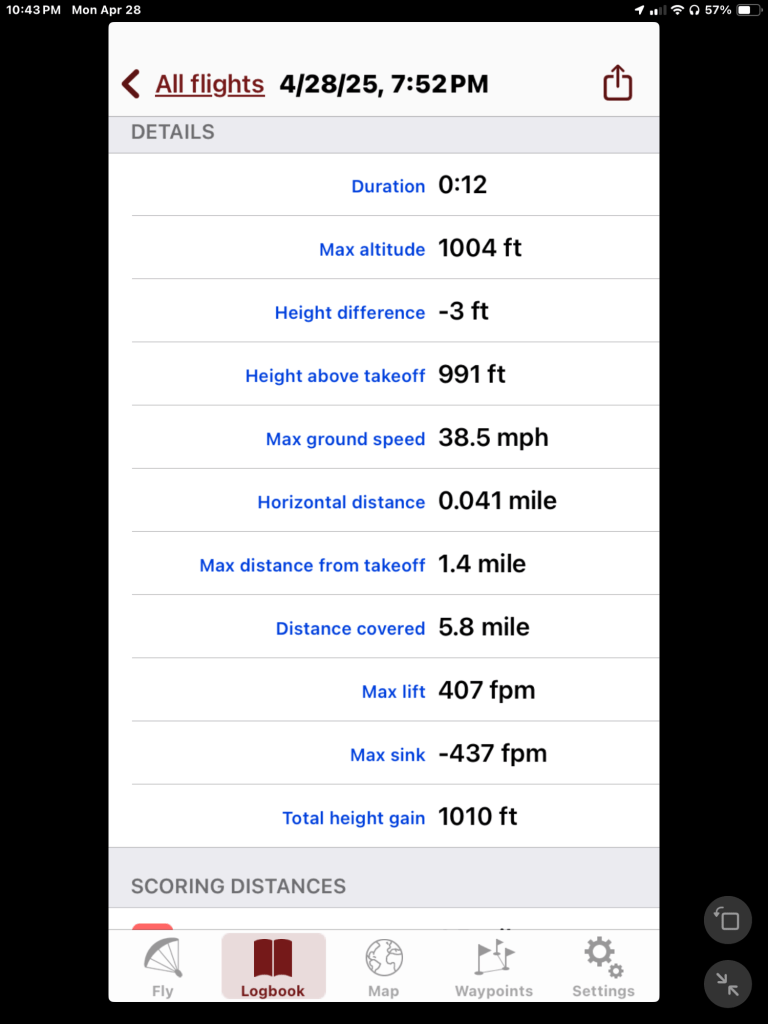


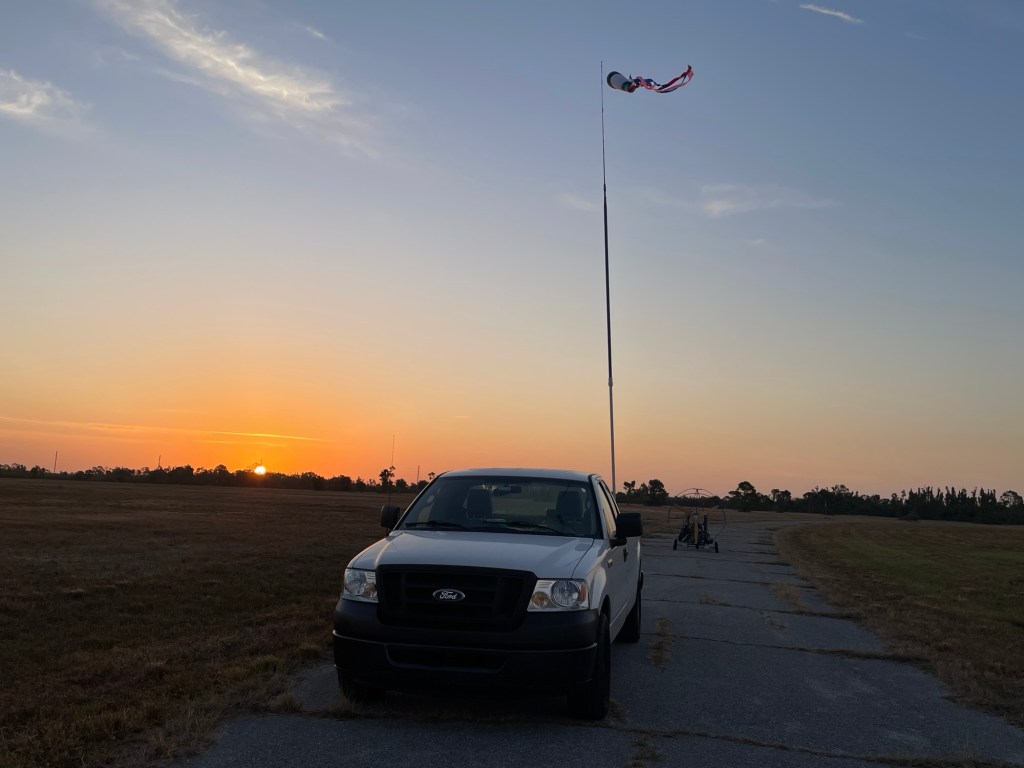





That was spicy. The winds were variable from the northwest 4 to 6 and building. I drove around a bit looking for a decent launch and settled on a section of road East of the poles about midway to the eastern border of the patch.
The wing was layed out 45 degrees off the runway with room to inflate directly into the wind and make a quick turn down the runway. I wasn’t proud of it but it looked doable.
The wing came up crooked right off the bat and swung far left and right and left again before it started to settle down. I could feel the trike getting light on the outside wheel with each swing. I should have waited another 20 feet before powering up but managed a slightly off center launch into some very bumpy air.
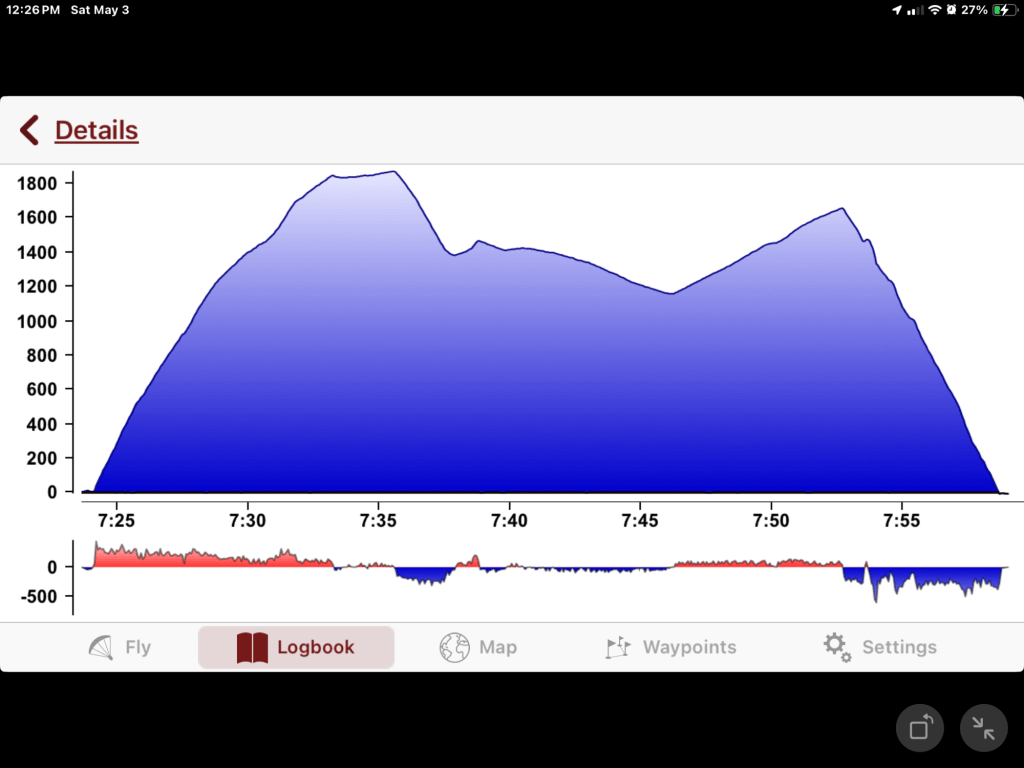
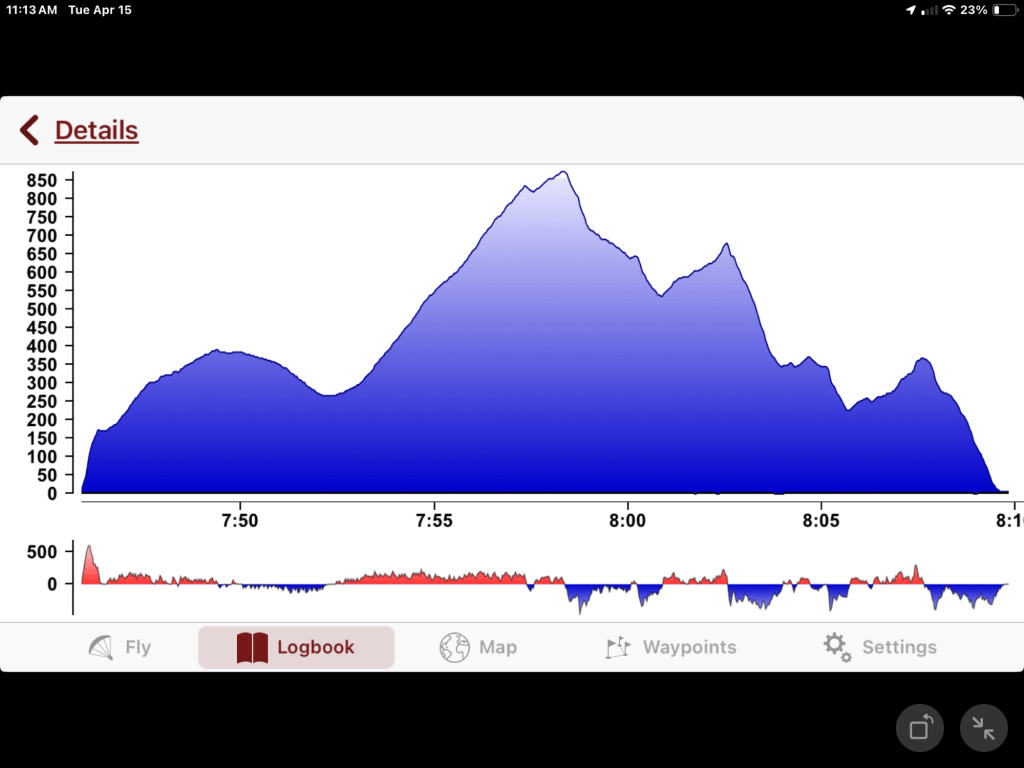
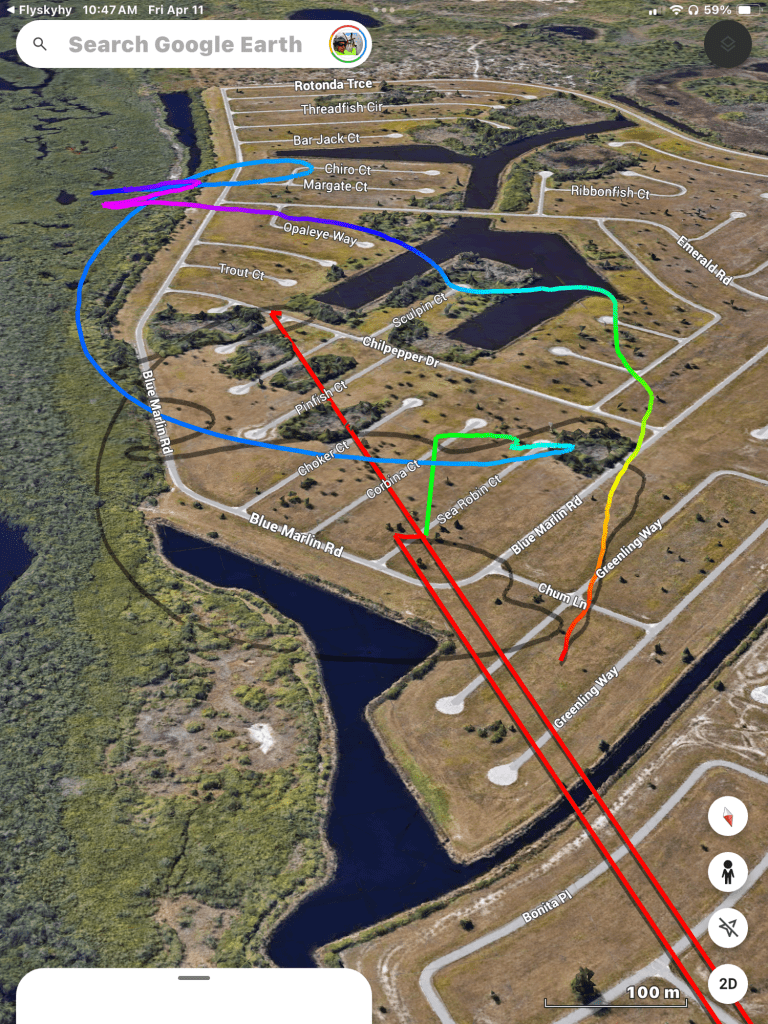
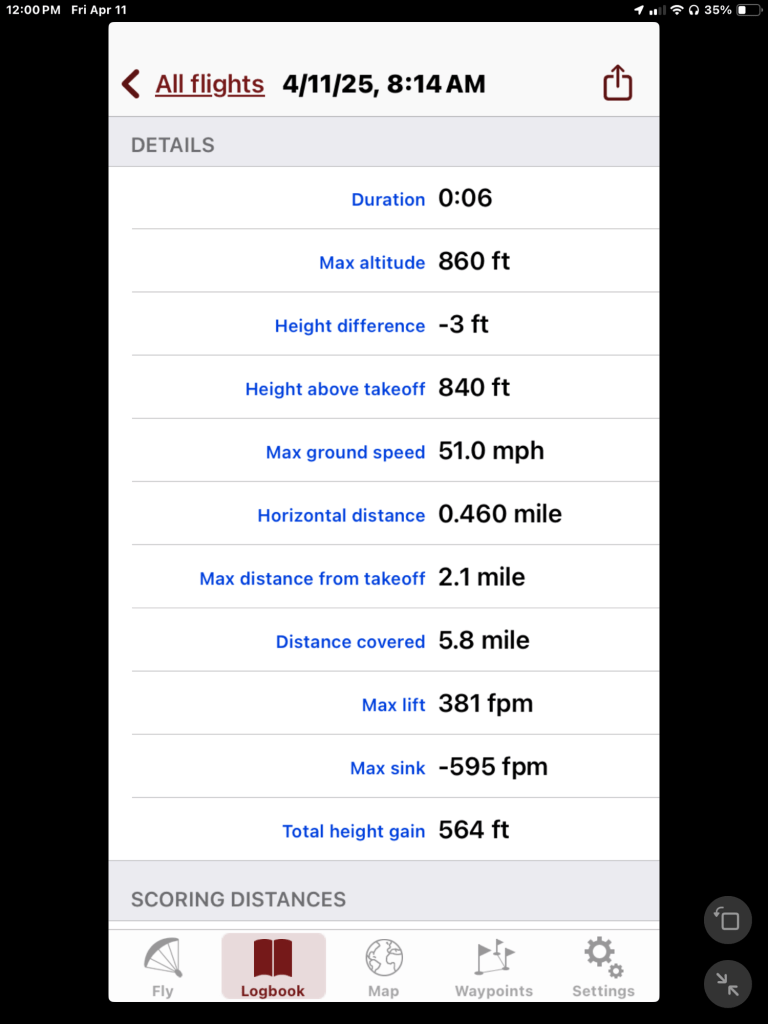
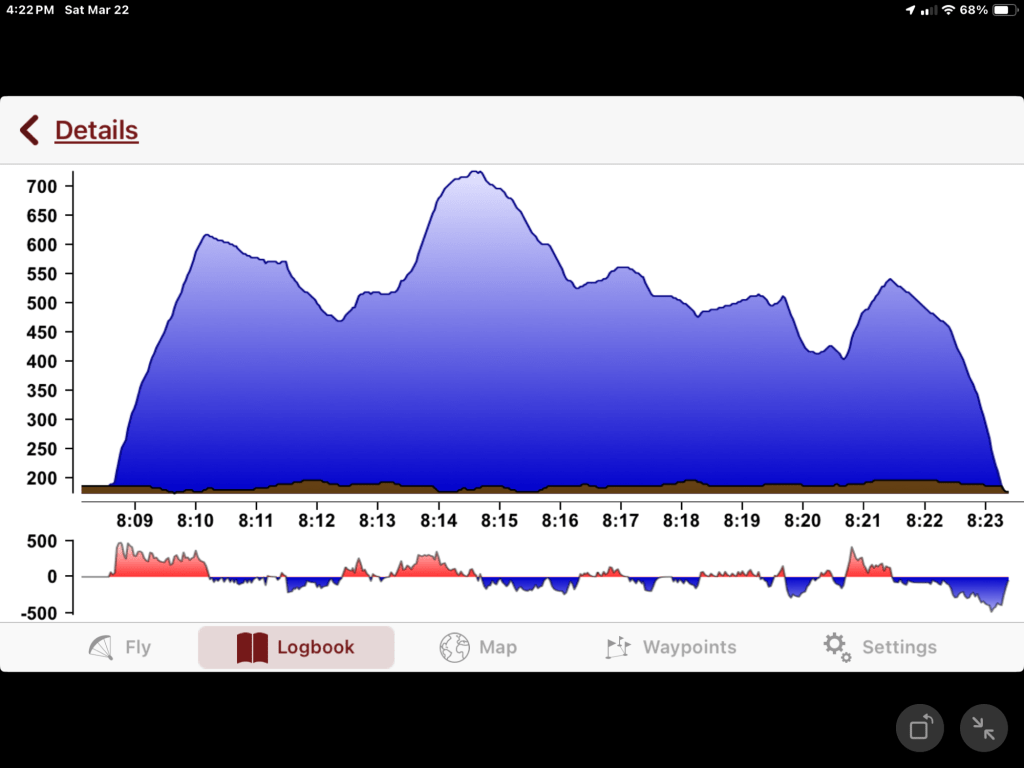
The bumpy layer was from the surface to 500 ft. At 600 ft. the wind was 18mph and the air was shifty. I got a feeling that this was going to be a short flight. I was still penetrating in neutral trim but it would have taken 20 minutes to get to the boatyard and with the wind building, there was no way I wanted to get downwind of the truck.
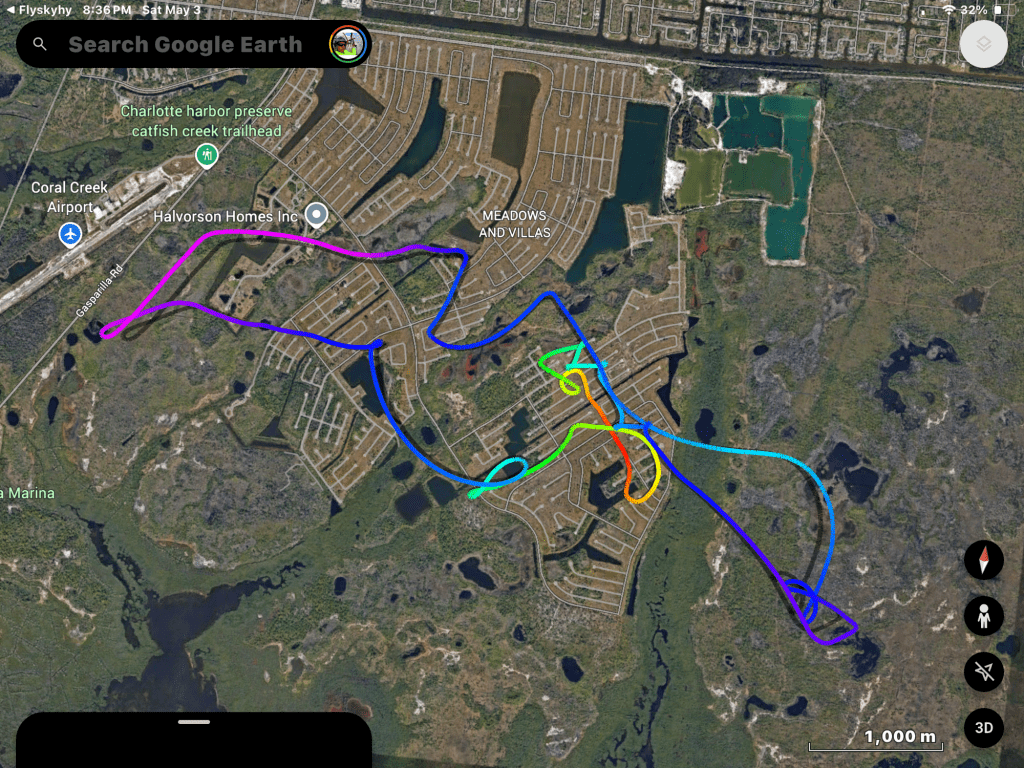
At 850 feet the engine died. The motor didn’t choke or give any warning, it just shutdown. The first thing I did, once I realized what had happened, was to scope out an emergency landing spot. ThenI tried to restart the motor. I could get the prop turning but… no Joy. After two long attempts I quit and concentrated on landing.
I probably could have made a couple of tight circles and landed closer to the truck but “the bumpy layer” and all the new power lines strongly suggested, a more conservative approach. I flew west over the main road and power lines. Then once clear, turned upwind to take advantage of the largest stretch of clear field. Good thing too, because as I needed most of the field to get down. Decent from the engine out, took 2 minutes at 450ft./min. Max was 595 ft./min. During some sink in the bumps.
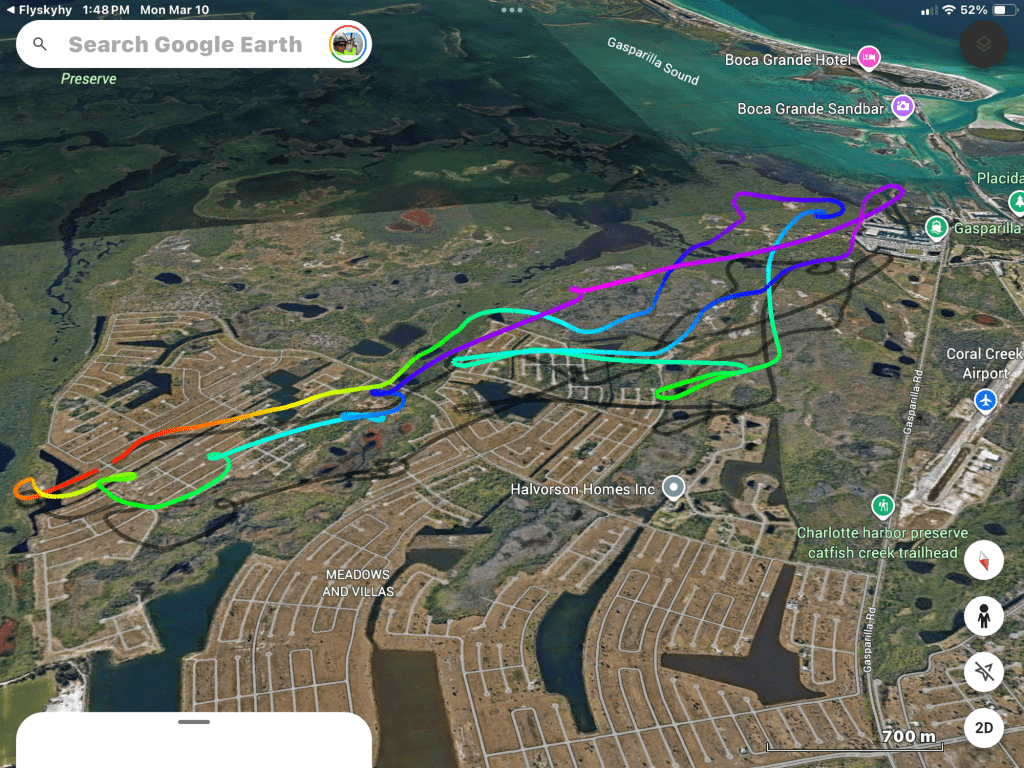
This was my first dead stick landing with this paramotor. Happily, it was picture perfect, running out of altitude and speed simultaneously… about a mile from the truck. Fortuitously, George, a wildlife photographer I had a nodding acquaintance with, saw me land and came by to give me a lift back to the truck. Thanks George.
It was a great day to be alive and ….
I cheated death again.

Side note . Poor preflight of the GoPro caused no video. Bummer, I would have loved to seen that crazy takeoff.
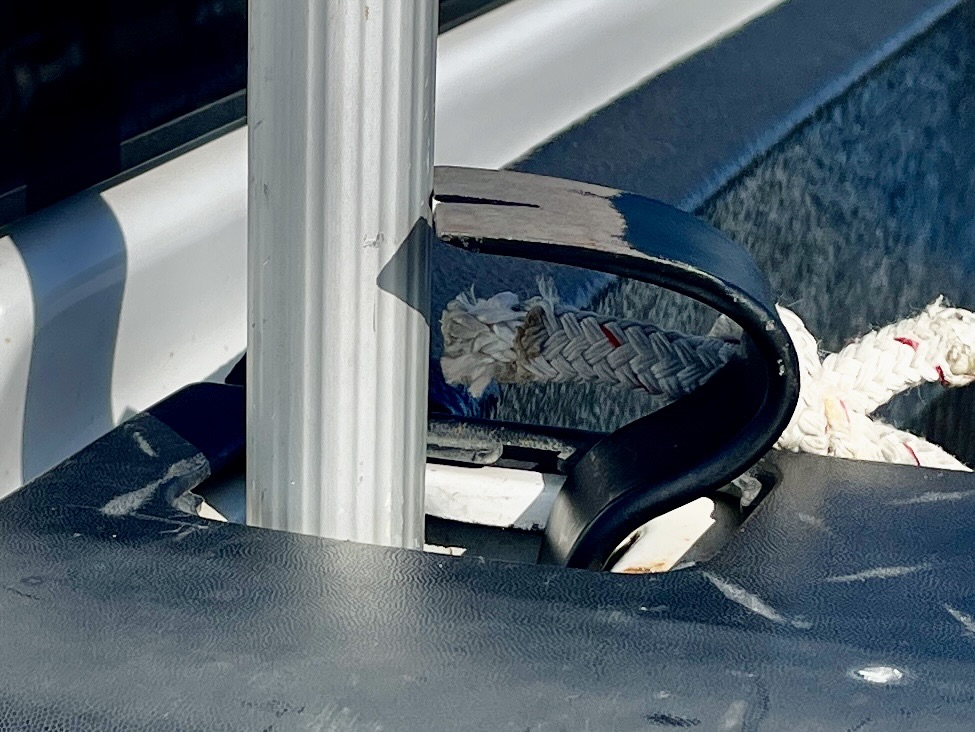
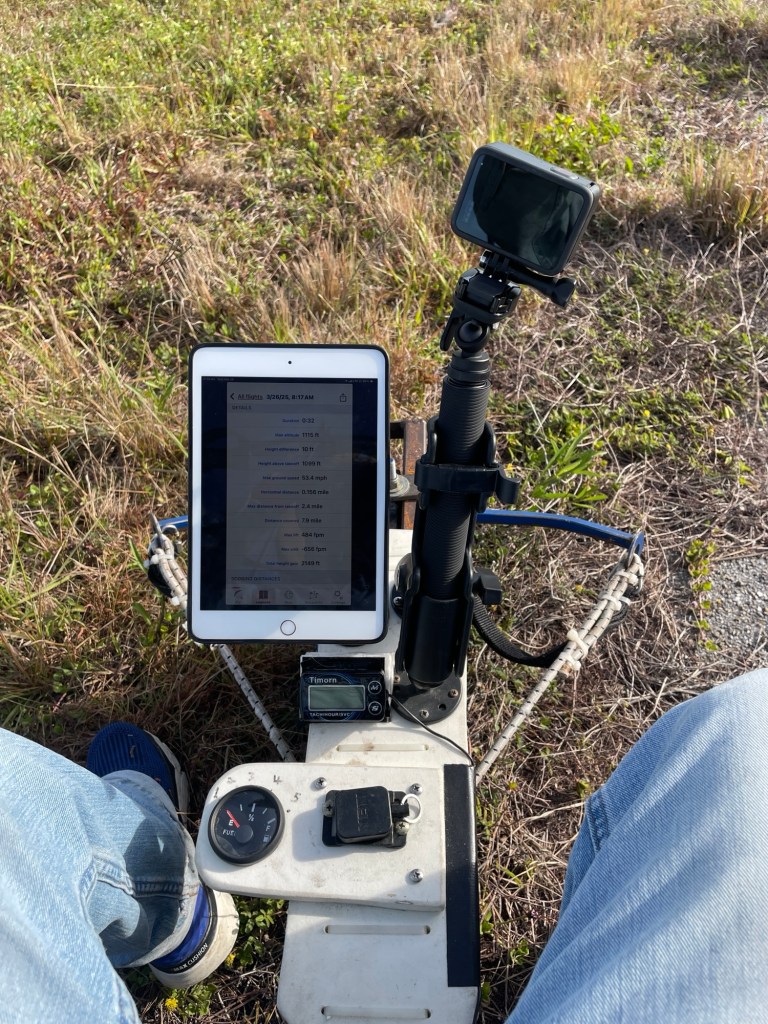
Started to troubleshoot and found the problem immediately. The fuel gauge is not reading correctly. It might have gotten dislodged when I dropped the truck into a gopher hole and busted an axle. It was reading 1/4 full and it was bone dry. I put in 4 gal of 93 octane and now….. it’s all good!
High winds aloft


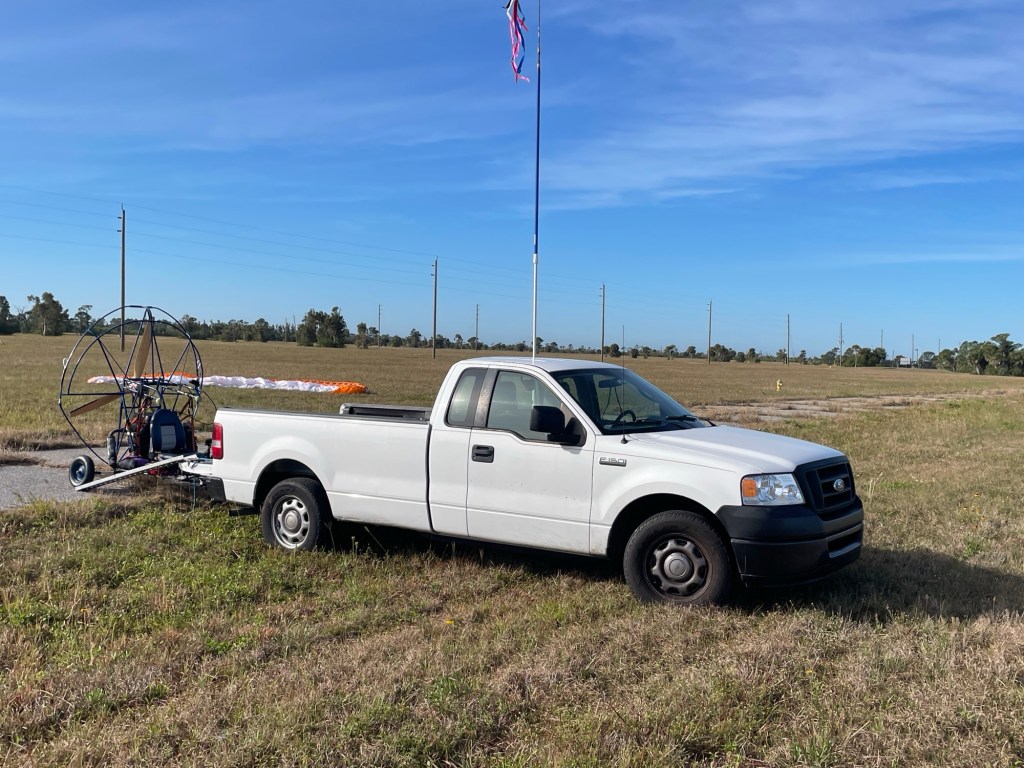


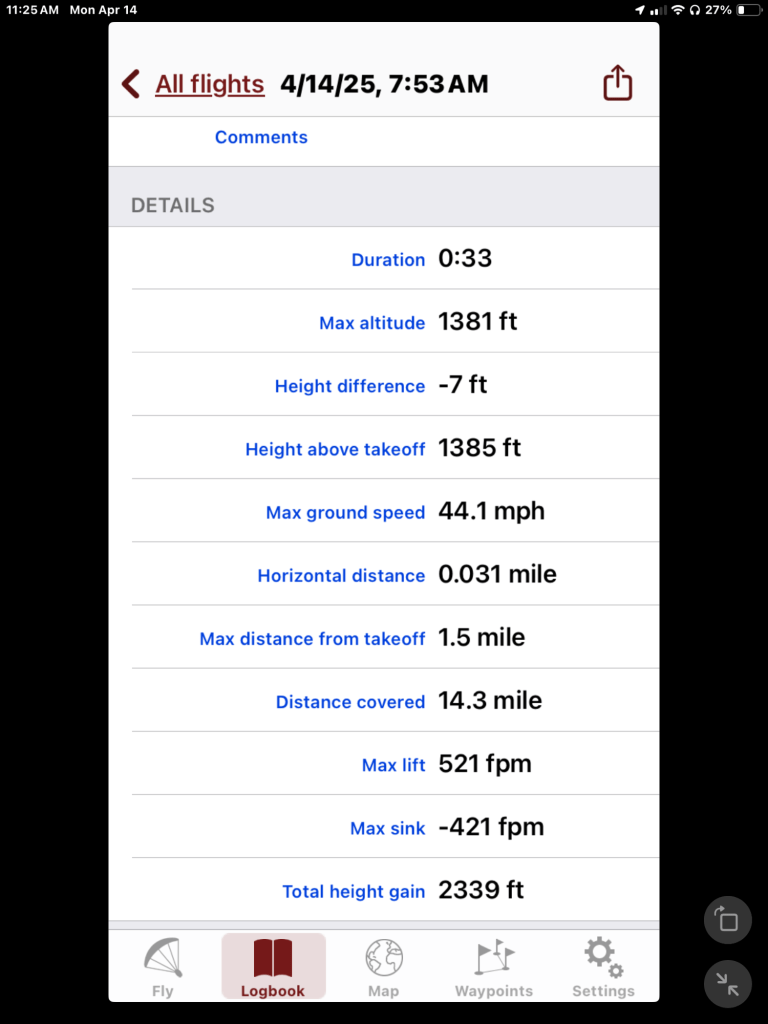
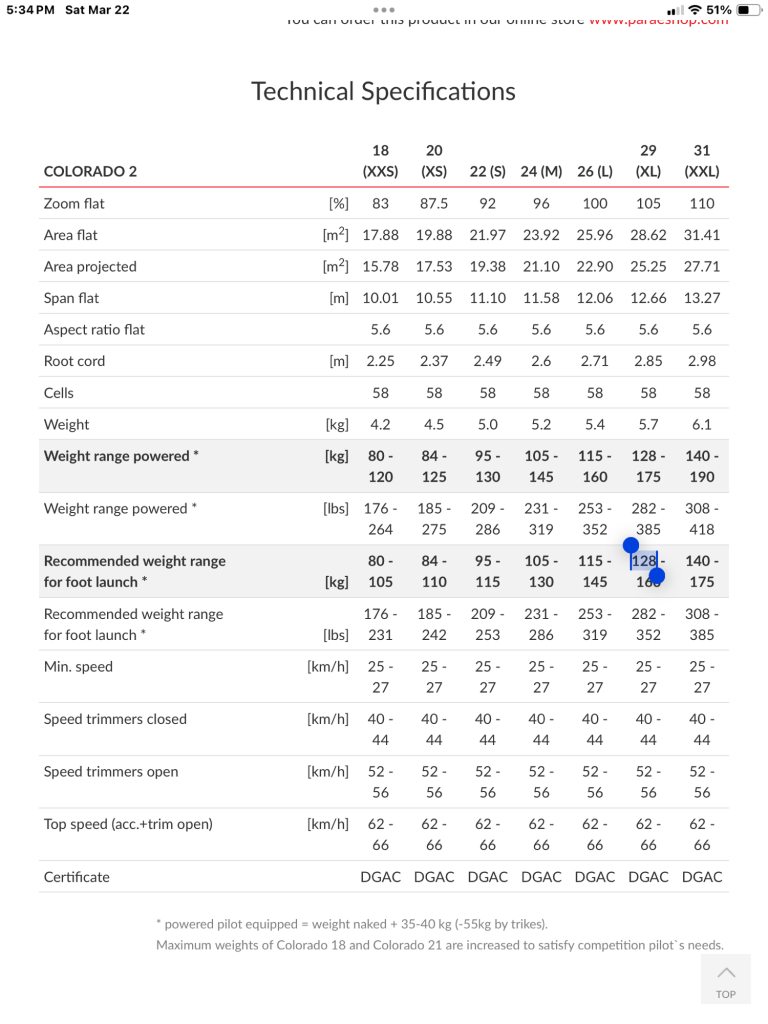
Demo of the MacPara Colorado 2, This wing is 27m which is 6 meters smaller than my current Colo (1st gen)27.
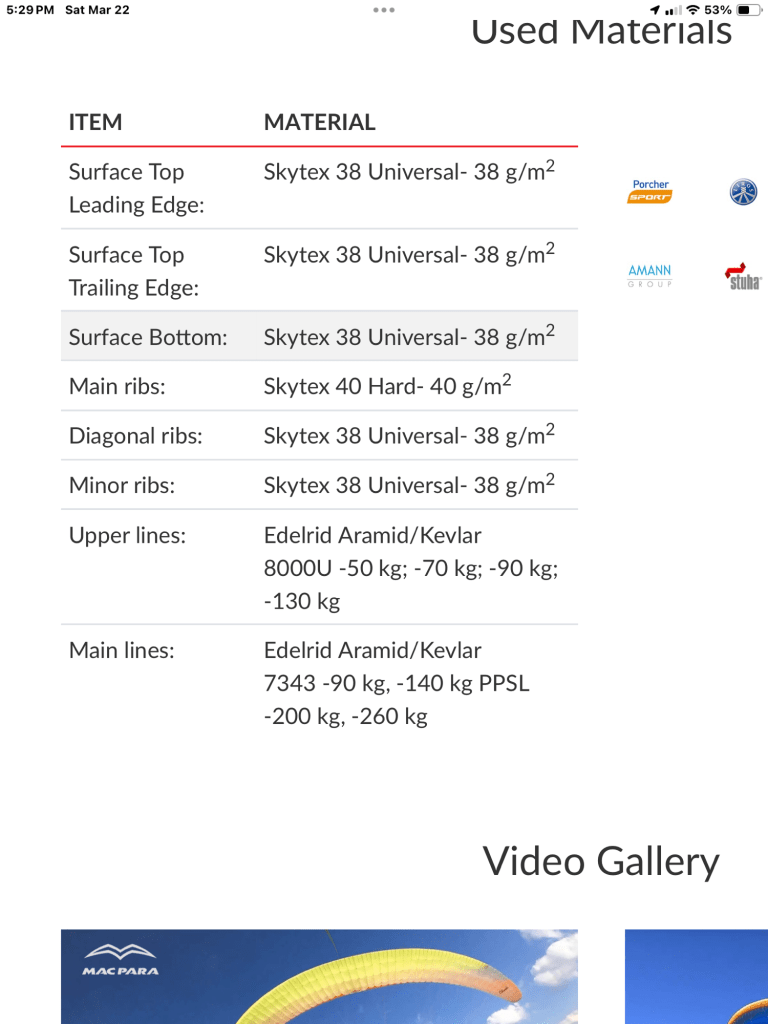
My first impression was how light this wing is. Partly due to the six less meters of fabric also the sailcloth seems lighter. The un-sheathed lines have been replaced with sheathed and the cascades have been simplified. Accordingly the risers are simpler and the webbing they are made from is a lighter spec. They still sport 2-d steering and two finger wing tip toggles but lack the bungees on the WTS to increase resistance.
It’s the same basic design style but without the expensive refinements that made the Colorado special. Sky-tec has been replaced with rip stop. Complex risers have been replaced with simpler ones that limit the pilots ability to tweak the steering configuration. High tech wind cheating un-sheathed lines are now thick Kevlar. The brake magnets were acceptable but weaker than the mod. 1, at least they are still on both sides of the toggle, which is stiffer that the previous wing.. The price was still a hefty $4600 but that can attributed to inflation and profit seeking because this wing is clearly less expensive to produce.
The wing came up a little crooked but responded to input and stabilized quickly. I chose not to use A-assists which was probably a mistake because I released a bit early. Fortunately the wing didn’t fall back.
Initial climb out was excellent but there was a noticeable pull to the left that had to be adjusted using trimmers. Cruise RPM WAS 3100. I was at the top of the placard for this wing and it showed with increased speed and stiff brakes.
The flare authority was poor but that could also be attributed to the pilot and unfortunately there was only one flight so no comparisons are possible.
The tip steering was fine but I wasn’t impressed with the 2-d steering. Again, more flights would have been helpful.
The temperature at launch was 40* F with nil wind. I would have liked to gone up to 2000+ ft but the cold air was keeping me low. No hard yanking and banking today.
Overall, it’s a nice wing that would be a lot of fun with a lighter rig but it’s not the wing for me.





It was a long drive but it was worth the time and money to know for sure that the Colorado 2 was not for me. It’s going to make a lot more sense to have new line sets on the APCO. and Colorado that add this wing to the inventory for considerably more money.


 Powered Paragliding. A most Personal form of Flight
You must be logged in to post a comment.